
Belief, Bible, Christianity, Environment, Faith, God's Economics, Gratitude, Peace, Quotes, Revival, Social Justice, Spirituality, Thoughts From the Porch

“As long as we operate inside any scarcity model, there will never be enough God or grace to go around. Jesus came to undo our notions of scarcity and tip us over into a worldview of absolute abundance. The Gospel reveals a divine world of infinity, a worldview of enough and more than enough. The Christian word for this undeserved abundance is “grace.” It is a major mental and heart conversion to move from a scarcity model to an abundance model and to live with an attitude of gratitude.”

Adapted from Richard Rohr, The Universal Christ: How a Forgotten Reality Can Change Everything We See, Hope For, and Believe (Convergent: 2019), 184-185

Photo by John Lambeth on Pexels.com
Beatitudes, Belief, Bible, Christian Mysticism, Christianity, Culture, Faith, Gifts, God's Economics, Grace, Gratitude, Prayer, Quotes, Relationships, Simplicity, Social Justice, Spirituality, Transformation, Uncategorized

A New Economy…

Thoughts From the Porch: A gorgeous Fall day greeted me this morning as I stepped out on the porch. Every day is gorgeous in my mind, but this morning was especially bright and inviting. My “porch time” has included an email series I’ve been receiving from the Center for Action and Contemplation. I’ve always appreciated Father Richard Rohr and I hope you will appreciate today’s meditation as well.

Richard Rohr’s Daily Meditation

From the Center for Action and Contemplation
Week Forty-eight

Economy: Old and New

The Gospel Economy
Sunday, November 24, 2019

Jesus said to the host who had invited him, “When you hold a lunch or dinner . . . invite the poor, the crippled, the lame, the blind; and blessed indeed will you be because of their inability to repay you.” —Luke 14:12-14

I’d like to begin this week’s meditations by contrasting two economies or worldviews. The first economy is capitalism, which is based on quid pro quo, reward and punishment thinking, and a retributive notion of justice. This much service or this much product requires this much payment or this much reward. It soon becomes the entire (and I do mean entire!) frame for all of life, our fundamental relationships (even marriage and children), basic self-image (“I deserve; you owe me; or I will be good and generous if it helps me, too”), and a faulty foundation for our relationship with God.

We’ve got to admit, this system of exchange seems reasonable to almost everybody today. And if we’re honest, it makes sense to us, too. It just seems fair. The only trouble is, Jesus doesn’t believe it at all, and he’s supposed to be our spiritual teacher. This might just be at the heart of what we mean by real conversion to the Gospel worldview, although few seem to have recognized this.

Let’s contrast this “meritocracy,” punishment/reward economy—basic capitalism which we in the United States all drink in with our mother’s milk—with what Jesus presents, which I’m going to call a gift economy. [1] In a gift economy, there is no equivalence between what we give and how much we get. Now I know we’re all squirming. We don’t like it, because we feel we’ve worked hard to get to our wonderful middle-class positions or wherever we are. We feel we have rights.

I admit that this position satisfies the logical mind. At the same time, if we call ourselves Christians, we have to deal with the actual Gospel. Now the only way we can do the great turnaround and understand this is if we’ve lived through at least one experience of being given to without earning. It’s called forgiveness, unconditional love, and mercy. If we’ve never experienced unearned, undeserved love, we will stay in the capitalist worldview where 2 + 2 = 4. I put in my 2, I get my 2 back. But we still remain very unsure, if not angry, about any free health care (physical, mental, or spiritual) or even free education, even though these benefits can be seen as natural human rights that support and sustain peoples’ humanity. All too often, we only want people like us to get free health care and education and bail outs.

Brothers and sisters, you and I don’t “deserve” anything, anything. It’s all a gift. But until we begin to live in the kingdom of God instead of the kingdoms of this world, we think, as most Christians do, exactly like the world. We like the world of seemingly logical equations. Basically, to understand the Gospel in its purity and in its transformative power, we have to stop counting, measuring, and weighing. We have to stop saying “I deserve and deciding who does not deserve. None of us “deserve”! Can we do that? It’s pretty hard . . . unless we’ve experienced infinite mercy and realize that it’s all a gift.

Gateway to Presence:
If you want to go deeper with today’s meditation, take note of what word or phrase stands out to you. Come back to that word or phrase throughout the day, being present to its impact and invitation.

[1] “A gift economy, gift culture, or gift exchange is a mode of exchange where valuables are not traded or sold, but rather given without an explicit agreement for immediate or future rewards. This contrasts with a barter economy or a market economy, where goods and services are primarily exchanged for value received. Social norms and customs govern gift exchange.” (https://en.wikipedia.org/wiki/Gift_economy)

Adapted from Richard Rohr, “Capitalist Economy and Gift Economy,” Homily (September 1, 2019), https://cac.org/podcasts/capitalist-economy-and-gift-economy/.

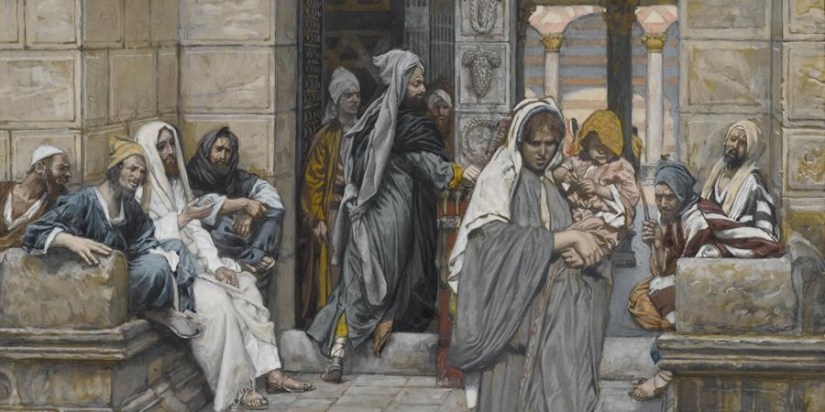
Image credit: Le Denier de la Veuve (The Widow’s Mite) (detail), James Tissot, between 1886 and 1894, Brooklyn Museum, Brooklyn, New York.

Activism, Beatitudes, Belief, Bible, Christianity, Faith, Love, Peace, Politics, Quotes, Red Letter Christians, Responsibility, Service to Others, Social Justice, Spirituality

Faith is Action

“Jesus wasn’t executed because he went around healing people; he was crucified as the worst kind of criminal because his Gospel message was viewed as dangerous by the ruling class. In fact, the entire Gospel of Luke is one long lesson in speaking truth to power—to the corrupt elite in Jerusalem. If we Christians claim to have anything to do with Jesus, then we must inherently be engaged with the political issues of our time.” – Peter Armstrong

Photo by Markus Spiske temporausch.com on Pexels.com
Autumn, Belief, Bible, Choices, Christianity, Community, Faith, Fall, Gifts, Grace, Gratitude, Hope, Prayer, Recovery, Serenity, Songs, Spirituality, Thoughts From the Porch, Transformation, Weddings, Writing

Brain Worms

Thoughts From the Porch:

Do you ever get brain worms? You know, those pesky little musical ditties that play over and over in your head. No matter what you’re doing the song or musical rift won’t go away. In fact, the more you try to think of something else the more persistent the song becomes. Sometimes they’re simply the last song you hear on the radio and other times it comes out of nowhere. Sometimes they come from the most unlikely sources.

Let me explain…

After an early freeze it’s been a string of beautiful Fall days here in North Texas. The sun was bright, trees have turned to true Fall colors, and the birds celebrate the morning in song. The coffee was fuller in flavor and I relished in the November morning in shorts and a t-shirt. Truly a blessed morning…

I was reading about Jesus’ first recorded miracle at a marriage feast in Cana: turning the water into wine. About halfway through I started humming a Kevin Fowler song, “The Lord Loves a Drinking Man”. Honestly, it isn’t the most spiritual thing to pop up during my prayer and meditation time. Click on the link and you’ll see what I mean.

Jesus turned the water to wine and “any man who can do that is a good friend of mine”. Yep…

Changing Water into Wine

John’s retelling of the miracle at Cana offers a brief glimpse into his kingdom. He says time and time again the kingdom of God is like a wedding feast and the Jews in Palestine knew how to throw a wedding feast. Family and friends came together from all over the region. The finest food was prepared, and the best wine was brought out first. The party was going to go on for a while so serve the best wine first and “after the guests have had their fill bring in the cheap stuff.” John 2.10 (The Message).

It was a big deal. Scholars say their wedding parties lasted for days. I got a taste of this when I was a groomsman in an Irish Catholic wedding. The reception was in the Coors Brewery Workers Union Hall if that offers you a clue. They prefer Irish whiskey to wine and that’s probably a story for another time, but I digress…

I’d like to think that God’s kingdom is a big celebration. The idea of sitting around singing angelic hymns for eternity sounds a bit boring. God’s kingdom is one of love, joy, and a heck-u-va party. I can’t think of anything better to celebrate.

Wine into Water

Ironically, for people like me Jesus seemed to have worked His miracle in reverse. He changed the wine into water. For me this is the most amazing miracle of all. Trapped in a swirling whirlpool of cheap wine (among other things) and total self-obsession, He lifted me to a life I never dreamed possible. He invited me into the feast (an analogy He uses often). I know longer settle for scraps of life. I have a seat at Abba’s table: and what a party it is.

I can only imagine that if this party is so good now, then how much more so will the big feast be?

I’m unbelievably thrilled and amazed at just how much He loved this drinking (among other things!) man. I’m happy His miracles aren’t contingent on my false piety and spiritual correctness; that His love is unconditional. He always works the right miracle whether it’s wine into water, or water into wine. Whatever you’re drinking, come on in and join the feast…

Photo by picjumbo.com on Pexels.com