Thoughts From the Porch
Wednesday was a long day. It was like any day really, but especially long when one spends it driving around DFW. Margaret is unable to get in my truck since it sits too high. We have been fortunate to use our kid’s car for her doctor appointments and such. It’s a KIA and sits low enough for Margaret to be able to get in and out. I’m not complaining mind you, but while a small car is great for her it’s not so great for me.
I’ve driven a pick-up truck for most of the last 30 years. In fact, I can’t remember the last car I owned. A ¾ ton truck is perfect for a guy who’s 6’3” and weighs in at 230 pounds. Heck, I even have enough head room for my beat-up old farm hat on. I like sitting above most of the other drivers. There’s a sense of security in that. You know, the ‘above the fray’ kind of thing.
Change doesn’t typically disturb me too much, but switching to a 2-door sub-compact car? It’s a bit like moving from a big rig to a go-cart. However, I’m grateful I still have the flexibility to fold and unfold myself in and out. Once I’m in it’s not so bad…
The other drawback in using our kid’s car is that I make the sixty-mile roundtrip twice a day to drop them off at work and pick them up. I haven’t driven in rush hour traffic in a long time. The farm is only fifteen minutes from the house: just hop on the freeway and there’s one stoplight between here and there. Any other time I work from home.
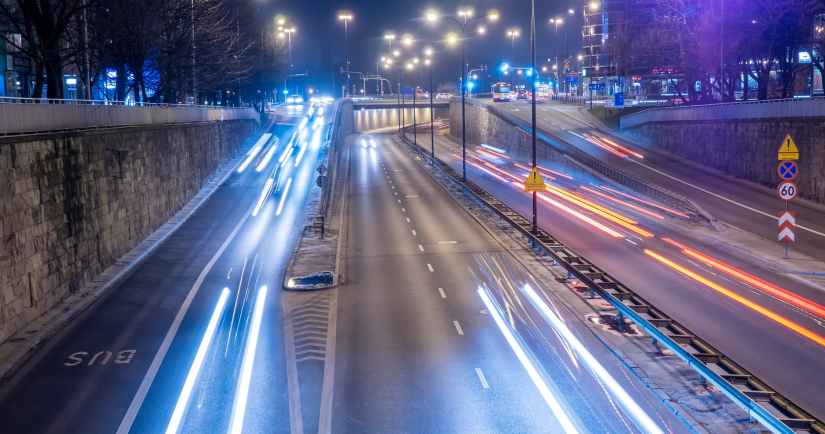
It’s not quite the same when you commute in a DFW rush hour and the closer you get to Dallas the worse traffic gets. It starts slowing on the east side of Fort Worth and by Arlington and Highway 360 it’s stop-and-go. That’s aggravating enough but something transpires once you cross the Dallas County line. Apparently, it’s a black hole of sorts that sucks any common courtesy and driving ability out the window.
I think I understand why our kid goes to bed so early. I was worn out after four hours of stop-and-go driving. If I had to do that daily my spirituality would fade into one-fingered salutes, horn honking, and yelling. I understand road rage much better, although shooting at someone is still a bit extreme for me…
After my dad was transferred to Colorado, our family returned to Fort Worth a couple of times a year. Every time I crossed the Texas state line, I was greeted by “Welcome to Texas” and beneath it was the line “Drive Friendly”. As we travelled up and down Highway 287, slower travelers would pull over to let us pass. We would do likewise for those who came up in our rear-view mirror. Once past, my father would raise his hand and wave as a thank you to the driver behind us.
If we were on a two-lane country road, each driver would raise a hand in a “howdy” to each other as they passed. People would hang back to let you merge on the freeway. When I came of driving age, I was taught that courtesy was as much a part of driving as the ability to handle a vehicle safely.
One of the things I’ve always loved about Fort Worth is its small town feel and friendliness. Common courtesy was paramount in social situations with others. Driving was a prime example. One spends a lot of time on the road living here. Even rush hour, albeit less tedious and congested than our neighbor to the east, was reasonably friendly. At least it was…
I’m quite willing to acknowledge that my perceptions may have become a bit nostalgic as I’ve grown older. The demographics of Fort Worth have changed. North Texas has grown faster than the infrastructure for America’s 16th largest city. Frustrations abound when construction delays are constant. Driving is a microcosm for what’s happening around us. As driving has become more frustrating and common courtesy less common, so too has the society around us.
All of this started me thinking. What if everyone could slow down, take a deep breath, and offer a friendly hand wave when someone lets you in on the freeway? What if you take a moment to acknowledge your neighbor with a hand wave as you drive down your neighborhood street? What if you wave an apology to the guy you just cut-off by accident?
I don’t know. Perhaps I’m a dreamer, but I think one little hand wave could change the world (or at least my little part of it!). When I exercise common courtesy on the way to the store, I’m more likely to hold the door for the person coming in or out. They say thank you and I’m more likely to be patient with that slower driver in front of me. I let that guy in on the freeway or simply wave a thank you to the person that let me in.
That simple hand wave set of a chain reaction of “niceness”. I’m not as stressed on the road. I become just a bit more relaxed. I’m nicer to the next person I meet. I smile more. In turn, maybe they’re a bit nicer to the next driver, the next store clerk, or the next coworker. In turn, who knows? Maybe world peace…
I’m so sure a simple way is the key I believe it could even change our neighbors to the east. Why not give it a try…