Activism, Belief, Choices, Community, Democracy, Faith, Grace, Hope, Love, Neighbors, Service to Others, Spirituality, Thoughts From the Porch, What Can I Do

What’s Really There…

It’s a fantastic late winter/early spring (depending on whether you use the meteorological or the Spring Equinox calendar) day here in North Texas. I’m still reeling from the time change to Daylight Savings. It always gets me no matter how hard I try to plan for it. I’m just tired and don’t want to do much of anything so here I sit on this beautiful afternoon, drinking coffee, and feeling somewhat guilty I’m not out at the farm. Not yet anyway…

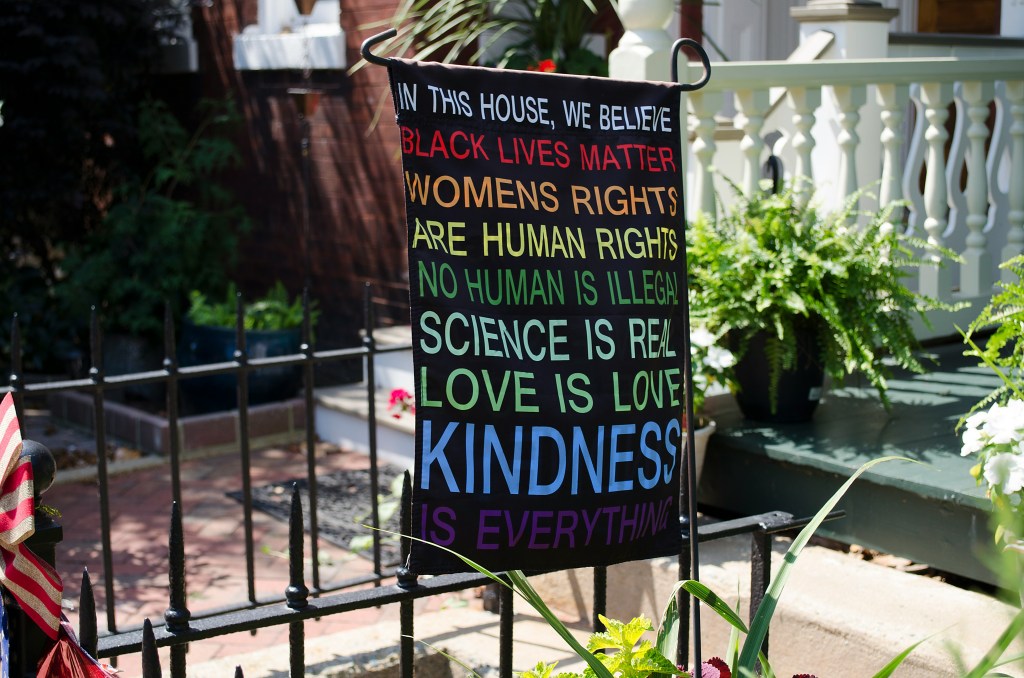
I took time to read a bit and catch a couple of lectures in my schoolwork. One of the articles I read was by one of my favorite authors and bloggers, John Pavlovitz. You can find him at https://johnpavlovitz.com/  I got turned on to him several years ago and when he started a social media network for people who still give a damn about things like empathy, compassion, and loving our neighbor I jumped to join. It’s a wonderful community of like-minded but unique individuals who come together to share about politics, organized religion, racial justice, activism and social justice, among many  other things.

Photo by ATC Comm Photo on Pexels.com

It gives me hope that people are still committed to loving our neighbors and the common good. That’s in short supply these days if you listen to the media and the extremists who tend to be much louder than most folks, that is. I choose to believe that most people aren’t filled with so much hate and vitriol as the far-right, the White Christian Nationalists, or the radical left for that matter. The media eats it up though. Extremism sells…

I would highly recommend John’s work to any of my fellows who believe the God is love, the Good News is just that, – Good News – and want to follow some good direction on just being a decent person. Love you guys!

Communication, Community, Culture, Down On the Farm, Family, Farmers Markets, Neighbors, Non-Profits, Opal's Farm, Relationships, Simplicity, Texas, Thoughts From the Porch, Uncategorized, Urban Farming, What Can I Do

Everyone Needs Community

It’s been a great week around these parts. My Assistant Manager, Joey, and I were in San Antonio earlier this week for the 31st Annual Texas Organic Farmers and Gardeners Association (TOFGA) Conference. We spent two days learning and sharing with other growers from all over the state. On Tuesday, I was part of a panel discussion on Agrotourism. We’d love to thank Kristin Song from Delve Experiences and the other panel members for helping us (and you, we hope) grow our agrotourism business. We are thrilled to be a TOFGA member!

The weather here has been unusually mild for Texas in February. The long-range forecasts, both from NOAA and The Old Farmers Almanac, point to a cold spell in the middle of this month and a last frost date of March 18th. I can’t wait to start getting the Spring crops in the ground. It’s been in the upper sixties and low seventies the last week. Spring Fever firmly has me in its grip. Still, it is February in North Texas…

This has been a week about community. We had our annual membership meeting of the Cowtown Farmers Market yesterday after the market. One of the questions put to all the members was, why do you sell at Cowton Farmers Market. My reason was clear – it’s all about community.

I spent the first part of the week at the TOFGA Conference. This was my fifth one and I’ve come to know people from all over the state of Texas. I look forward to being with them every year. I often learn more from the conversations outside the meeting rooms and that makes the conference expense more than simply worthwhile. It’s a community of farmers and food justice advocates I am so blessed to be a part of.

Cowtown Farmers Market is the same – both with the farmers and with our customers. A member of the market – another farmer – made a comment yesterday that explains the ethos at Cowtown Farmers Market. He said, “I don’t view anyone else there as competition”. This same member I’ve often seen help, or even sell, for another member farmer when they were sick or needed to be off.

We don’t operate from a paradigm of scarcity. We don’t need to stress and fracture relationships through constant competition. Farmers constantly refer customers to other customers who might have something they don’t have. I have benefitted from the wisdom many of our experienced farmers shared so freely. I’ve become a better farmer and a better person by knowing them.

I’ve also come to know many of our customers because they are there every week (and they usually tell me when they’re not going to be there for whatever reason).They’re there in the cold winter and they’re there during the heat of a Texas summer. I come to know what’s going on in their lives, their likes and dislikes, and they mine. Genuine conversations start – what’d you do this week, how’s the family, or asking about something they’d told me about a few weeks ago. There’s a continuity and a sense of community you simply will never find at your local Kroger or Albertsons.

I’d love to see you all come out to the market on Saturday mornings. Come join our wonderful community. Enjoy great people, great fun, and great food! If you can’t make it there, please come out to our new farm stand at 2500 LaSalle and be a part of the neighborhood community we’re proud to be a part of. Don’t worry. The community can never be too big, and besides, there’s always room for one more farmers market, right?

Bad Weather, Choices, Climate Change, Community, Conservation, Creation, Down On the Farm, Environment, Faith, Food Justice, Gardening, Hope, Neighbors, Non-Profits, Opal's Farm, Plowing, Preparation, Simplicity, Spirituality, Texas, Thoughts From the Porch, Transformation, Unity Unlimited, Inc., Urban Farming, What Can I Do

One Farm at a Time

What a week at Opal’s Farm! We have everything in for fall and winter and have started taking out spring leftovers, rebuilding beds, and solarizing them for weed control in the spring. We finally took out our tomato plants, but not before harvesting about a hundred and fifty pounds of tomatoes – and it’s ten days until Christmas. We love that a hard freeze hasn’t come yet, but we’re also a bit worried as this is another indicator of how strange our weather has become.

The weather is a “frienemy” for farmers – it brings the rain that helps the crops grow or the drought that kills them off. It’s the one thing we can’t control. We may do a rain dance or pray a freeze holds off until the crops come in, but in the end, the weather does what it will.

However, even weather has things it can’t control either – a warming climate changes the weather – leading to warmer average temperatures and more intense weather events. The intensity of our North Texas summer over the last two years is an example. In 2022, the heat came early, and the rain stopped. There was no rain from June 3rd until August 29th. It was much the same this year        with 2023 being the second hottest year on record according to the Texas Tribune and NOAA. Moreover, when it finally did rain, it rained so much and so heavily that Opal’s Farm suffered flash floods both years.

Hardiness Zones – the zones which show the lowest temperature in a zone and determine the growing season – have gradually moved northward. According to Yale Environment 360, hardiness zones were moved northward from 1990 to 2012 and are moving at a rate of just over thirteen miles per year. The heat is headed northward. Fort Worth has shifted from Zone 8b to Zone 8a. What and how much we grow changes as the zones move north.

So, What Do We Do?

Opal’s farms about two-and-a-third acres at present. We are growing into the full five acres granted to us by the Tarrant Regional Water District. We don’t expect to see major changes, the amount of land is negligible in the grand scheme of things. However, there is something we can do that’s consistent with our core values of resilience and regeneration.

First, we can continue to research and try non-native (but non-invasive) varieties of food crops that are both heat tolerant and drought resistant. Our salad mix uses Tokyo Bekana along with other Asian greens. Tokyo Bekana looks and tastes like lettuce (some say even better) but it’s actually related to Chinese cabbage. It fares much better than traditional lettuces that can only be grown in early Spring or late Fall. It can be grown year-round in North Texas.

We use this same practice on other crops as well. We are slowly beginning to turn to south Asian foods like bitter melon, bottle gourds, and yard-long beans. The beans are quite prolific and love the summer heat.

Secondly, we never leave exposed soil. Cover cropping is essential. Always have living roots. We are finishing up cover cropping all all non-food crop beds. We use Austrian Winter Peas and Elbon Rye in the winter time. Legumes like the peas fix nitrogen into the soil and the rye’s root system keep the soil broken up and able to retain water and oxygen better for the soil microbes. We use various mixes that we purchase from Green Cover Seed in the warmer months.

Finally, we sequester carbon in the soil. Our biointensive beds are no-till while the remainder of the farm is minimal till. Dr. Omar Harvey, with the Geosciences Department at Texas Christian University, had students researching carbon sequestration at Opal’s Farm beginning two years ago. The explanation of the methods used is several pages long, so I’ll not bore you with the process, but the results are important. Dr. Harvey’s students were able to quantify the carbon sequestered away on the farm and found it to be 168 metric tons per acre.

Why is that important?

It’s important for two reasons. One, the research confirmed not only the amount but the type of carbon – deep carbon. When the carbon is sequestered deep in the soil it stays there and is less likely to be released into the atmosphere. The carbon sequestered in the upper eight inches of soil is still available for the plants which is a winner for both the climate and us.

Our Sugar Snap Peas are blooming and will be available shortly!

I have mixed emotions about the second, and most economically beneficial, reason – that being the figure for carbon credits.  At four to five dollars per metric ton Opal’s could generate anywhere from nine to eleven hundred dollars per year in extra revenue. Alternative revenue streams are a must for small farmers.

However, the alternative here seems to be a bit of greenwashing. The idea that a company such as an airline can use carbon credits to meet their climate “goals” while continuing business as usual is somewhat opaque in nature. The bottom line however is that carbon is sequestered and can offset the gases released into the atmosphere. The more regenerative agriculture practiced, the more carbon stored away and an alternative income stream for farmers doing what they do naturally.

Whether for the economic benefits or for the common good, regenerative agriculture can play a large part in facing the climate crisis. Next Spring, we are attending classes to become Carbon Farm Planners. Agriculture can be part of the solution and the more we know the more equipped we are for positive change.

We may not be able to change the weather, but we can do our part to adapt and bring healthy, nutritious produce to Fort Worth and fight climate change in our little piece of Texas. As Ms. Opal often reminds me, “Be a committee of One”. I remember Dad telling me that “everybody complains about the weather, but nobody does anything about it”. Being a Committee of One, one small urban farm, is doing something about it. Join us in the fight. As Mother Teresa said, “If you can’t feed a hundred people then just feed one”…

Activism, Airplanes, Communication, Community, Down On the Farm, Events, Farmers Markets, Food Deserts, Food Equality, Food Insecurity, Food Justice, Food Waste, Gardening, Health, Landfills, Marginalized, Neighbors, Non-Profits, Nutrition, Opal's Farm, Public Policy, Regeneration, Relationships, Service Organizations, Service to Others, Social Justice, Thoughts From the Porch, Transformation, Unity Unlimited, Inc., Urban Farming, Volunteers, What Can I Do

Urban Ag and You

A couple of weeks ago, my Monday morning meeting ended early, so I sat at the Philadelphia Airport waiting for four hours for my plane home. I’m not good at sitting but I have little choice over the next seven hours or so. It was nice to catch up on a few things, but I prefer the open fields and growing plants to rows of chairs and sitting in an airborne cigar…

I was here to attend the Black Urban Growers National Conference, or BUGs as they call it. Philly has a strong urban agriculture movement with many farms and community gardens dotting the city. They even have a Director of Urban Agriculture as part of the Parks and Recreation Department for the city government. It was great to make some connections with folks here. Hopefully, we can begin to move city government in Tarrant County, Fort Worth, and the surrounding cities to move in a positive direction for urban ag and community gardens. Jesse Herrera, Linda Fulmer, and Grow SE have moved us a long way but there’s so much to do to make Fort Worth favorable to urban agriculture and eliminating food insecurity.

Six cities currently have Urban Agriculture leaders in city government – Philadelphia, Atlanta (whose director also spoke at BUGs and was the first city in the nation to appoint a director), New York City, Detroit, Austin, Boston, Seattle, and Portland. These are also areas where there are strong food policy councils. However, each agreed that community member advocacy was essential to the formation of urban ag programs. These positions work through the mayor’s office, sustainability offices, parks, or planning departments. While Tarrant County has a food policy council, they need support from our community to have influence over policy decisions at the county or municipal level. We need is citizen support to drive progress forward for urban agriculture.

Why Urban Agriculture?

There are three primary reasons for establishing urban agriculture policies in Tarrant County municipalities – the number of food deserts, public health, and supply chain issues.

  • In 2020, NBC5 news reported that Tarrant County was one of the Top Ten counties in the country for food insecurity ( https://www.nbcdfw.com/news/local/fighting-hunger-urban-farming-in-fort-worths-food-desert/2292808/ ). Moreover, the USDA identified over forty areas in Tarrant County that qualify as “food deserts” – areas that are over a mile away from a grocery store. Food “desert’ is something of a misnomer. Food apartheid represented the concept far better as most of these areas are in lower income areas or communities of color. Urban agriculture and farmstands or farmers markets can make a significant impact on accessibility to fresh food in these neighborhoods. It can be costly under present urban farm and garden ordinances to build infrastructure needed for urban ag.
  • Public health is drastically affected by lack of access to healthy food. The zip code 76102 is the unhealthiest zip code in the state of Texas. Life expectancy is 66.7 years old – twelve years below the national average ( https://www.star-telegram.com/news/local/fort-worth/article244137362.html ). While lack of access to healthy food is not the only reason for poor health outcomes, it is certainly the root of the problem. In the Southside, Morningside, and Hillside communities there are only a dozen convenience stores that only sell snacks and highly processed canned foods lacking nutritional value. Locally grown, nutrient-dense fresh vegetables help the body’s own defenses against heart disease, high blood pressure, diabetes, cancers, and obesity that lead to shorter lifespans and higher medical costs. Costs borne by all of us.
  • The COVID pandemic revealed serious flaws in our present food systems. Who doesn’t remember the higher food prices and empty store shelves of many items we use every day. Breaks in the supply chain have serious consequences for the retail grocery stores. Our food travels an average of 1500 miles from the farm to your table. To reach your grocer, it has to be picked before it’s ripe, sprayed with preservatives, shipped by rail or by truck to a distribution center and delivered to each individual store. It lacks the flavor and nutrient density so many of us crave. Locally grown produce is a solution to this problem.

Moreover, local urban farmers develop a sense of community around the local farmer’s market or farmstand. The community gets to know their local farmers and their neighbors better. “Screen time”

Is often replaced by real conversations. A sense of neighborhood pride replaces some of the isolation that often plagues our senior citizens. Opal’s Farm has been a member of the Cowtown Farmers Market for five years now. We’ve developed a loyal customer base and we’ve come to know our customers as friends. We’ve been an active part of our community, and many folks have volunteered at the farm as well as become our customers.

What Can I Do?

Access to land is often easier than we think. Learn about urban agriculture in your neighborhood. Are there any community gardens? If not, is there a place for one? Are there vacant lots, churches, or schools that might be good sites for a small urban farm or community garden. Are there local learning gardens to offer growing tips and support to neighborhoods? Do your local schools have school gardens that you might volunteer with? Is there a place to gather to bring local farmers and gardeners together to offer their goods and services to the neighborhood?

Find out what the urban agriculture and community garden ordinances (or if you even have them) are in your municipality. Is zoning an issue? Neighborhood associations are often a great place to start if you have one. If not, local code compliance or development departments can provide guidelines.

Here in Fort Worth, urban agriculture ordinances were almost non-existent and what we did have was more of a barrier than a help. A local initiative by County Commissioner Brooks Office called Grow SE brought local non-profits and urban farmers together to address this issue. Grow SE worked diligently to address and change the city ordinances that limit urban ag and have made it much easier to build the infrastructure to make it successful but – we have a long way to go!

Get involved with your local food policy council. Food Policy Councils were first authorized in the 2014 Farm Bill and re-emphasized in the 2018 Farm Bill. If your city does not have one, then start one. Here in Tarrant County, we are fortunate to have a council with working groups in urban ag and food waste (a significant issue as Fort Worth faces having to build the infrastructure for a new landfill). Food policy councils can have a major effect on local food policy and urban agriculture.

Contact your local city council member and make your voice heard. Attend city council meetings and ask your neighbors to do so as well. Talk to your local officials and let them know this is a big issue to deal with. Changing the food system and delivery to your table begins at the local level!

I’m excited to be home and to continue our Fall growing and prepping for next Spring. I’d love to have you come out and start your urban agriculture journey with Opal’s Farm. Come see the possibilities for positive change here in Fort Worth and Tarrant County. Bring your kids. Kids (and unfortunately many adults) have no idea where their food comes from. Once they learn how good food is grown and distributed to our communities, they get excited to be a part of the process. The fresh air, vitamin D, and “playing in the dirt” is great for them (and for you!) Come and see!

Christianity, Community, Culture, Emotional Health, Faith, Humility, Jesus, Marginalized, Opal's Farm, Prayer, Responsibility, Revival, Seeing Others, Service to Others, Songs, Songwriters, Spirituality, Thoughts From the Porch, What Can I Do

Too Late to be a Good Samaritan

Fall is normally my time for self-introspection. North Texas summers usually keep that habit away – one can only think of finding air conditioning! It’s been above one hundred degrees for most of the summer with constant excessive heat warnings. Nights have stayed above eighty degrees since the first week of July so there’s little relief when evening comes. Most of North Texas is in severe drought. I suspect the media is right when they refer to this as the “new normal”. The sad thing is that everyone seems to accept it and do little to mitigate the problem, but that’s another blog post…

Back to reflection…

It was 111 degrees according to my truck thermometer when I left the farm. I cranked the air conditioning and headed to the house for a Zoom meeting. It was a brief hour break on a hot summer day to enjoy the AC, grab a snack, and change out of sweat-soaked clothes. I headed towards the turn to Interstate Thirty and there he was – lying next to the entrance ramp – sun beating down on him a mere three feet from the shade of an overpass. He was on his back and his arms outstretched slightly to the sky above. He was in the direct sunlight with shade only a couple of feet away. It was obvious he wasn’t merely sleeping. He was dead. His arms were stiff, rigor mortis had set in, and his body bloated from the afternoon sun.

One officer from the Fort Worth police came followed by the Tarrant County Medical Examiner’s van. I stayed long enough to give a statement and notice all the cars going by. How long had he been there, and no one noticed, or cared enough, to stop and call 911? I remembered the parable of the Good Samaritan. I guess I wouldn’t qualify here. I didn’t get here soon enough. I wondered what I would’ve done if I did…

The crime scene tape was never put up, no investigation made, and the ME loaded the body to take back to the morgue. The whole affair was over in about thirty minutes. The police seemed put out that the ME was taking so long. Just another homeless guy. No signs of violent trauma so time to get on to more important things like the comfort of air-conditioned squad car.

The scene has been seared on my brain ever since. I can’t help but wonder who the man was – what was his name, where was his family? Few people are totally alone in this world although many feel that way. He was somebody’s son, maybe a father, or maybe a brother. Would they find his family and report his death? Would he be missed? Would anyone grieve over his passing? Would anyone care? The news came on that evening. No one talked about the passing of another homeless person. I wasn’t surprised. Anonymous dead homeless guys simply aren’t newsworthy.

The farm is close to the night shelter and Union Gospel Mission. The city has worked hard to isolate the homeless (or more PC – “unhoused”) population to the “mission district”. Still, there’s far more homeless people than there are beds. Around the bend in the river there are several acres of thickets between the old drive-in and Gateway Park. There you’ll find several homeless camps and their number is growing every year. If you look closely, you find camps all around the city – under bridges, wooded areas, abandoned houses. The Tarrant County Homeless Coalition reported that “more than 5,000 households experienced homelessness throughout 2022 in Tarrant County” (Fort Worth Star- Telegram, February 13th, 2023).

We often have some homeless folks who make their way along Trinity Trail above the farm. They will occasionally ask for a bottle of water or rest in the shade of the farm’s only tree. Sometimes they carry on loud, and sometimes angry conversations with people unseen by us. Mental illness accounts for a significant portion of the homeless population. Panhandlers covered all the main intersections from the freeway to the farm. It’s easy to look past them; to avoid eye contact and hope the stoplight changes before they approach the car. I know. I’m guilty at times.

I’ve been praying about that a lot the last couple of weeks. I’ve been in their shoes and yet I forget all about them when my life got back on track. Suddenly, I’m too busy “doing good things with the farm” to notice them, to really see them, or to have a kind word. I become the priest or the Levite in Jesus’ tale of the Good Samaritan. It’s not that I don’t care. I’m just in too big of a hurry and don’t want to have any distractions from the day ahead. I have important things to do – at least in my own mind – and I fail to see Jesus right in front of me (see Matthew Chapter 25…?). Nothing is too important to not to see and acknowledge the divine in each of God’s kids.

Joan Osborne recorded a song in 1995 that resonates with me today especially. It reminds me that I can see God everywhere. He might even be panhandling on the street corner.