“If life knocks you down nine times you get up ten”, Edgar would always tell me. The greatest compliment I’ve ever received was “there’s no quit in him”. Despite failures (and there have been many!) I’ve kept pressing forward. Thank you to all those who stand up again. You’ve shown me what persistence means.
I love being part of Cowtown Farmers Market. Market mornings are the high point of my week. I get to spend time with our regular customers and the vendors who have helped me so much along the way. All the division and strife our country is experiencing seems to disappear for a few hours.
We work hard to keep politics out of the market. However, I have a couple of bumper stickers on my truck that clearly define my personal political and spiritual stance. Usually, if any of our customers make a political comment, it’s folks who tell me they like my bumper stickers. It’s nice to know there are other Christians and Progressives out there in Fort Worth. Texas is not exactly known for social justice Christians and progressive politics.
I was setting up at Cowtown Farmers Market a couple of weeks ago. I was running a bit behind that Saturday. Customers tend to come earlier than the posted 8 AM start time. The market “old timers” – the regulars who have shopped there for years – get there early to get first pick on everything. The Covid crisis has also brought many new shoppers to Cowtown. The shortages at the beginning of the pandemic caused people to take a renewed interest in where their food comes from. Plus, outside markets are an excuse to get out and see others. Covid has isolated so many folks.
I was placing the week’s produce on the table when I heard someone remark “I don’t know if I can buy from someone who has a Bernie sticker on their truck”.
I looked up. A couple about my age stood there staring at me as if they were ready to pounce on any possible response I might say. I smiled, said “okay”, and went about my business.
Apparently, I didn’t give the anticipated response. The man declared, “That guy’s a socialist. Is that what you want?”
Looking back, I probably shouldn’t have even responded to begin with. Some people don’t want to discuss an issue. They only want to argue – no discussion involved. Unfortunately, I nibbled on the hook a bit. “How’d you get here this morning?”
“I drove”.
“On a public road?”, I asked.
“Yes, but my taxes paid for that” he retorted. His speech was becoming louder and more antagonistic.
I tried to de-escalate the conversation. I casually remarked, “Everyone is entitled to their opinion. I just know Bernie to be a good man. His was the only campaign to reach out and help our namesake, Ms. Opal with making Juneteenth a federal holiday”. I was praying they would move on.
“What?”, the man asked.
His wife chimed in, “You know what Juneteenth is. It’s that black holiday.”
He grumbled, “Great. Just what we need – another black day off we’ll have to pay for”.
That’s when he set the hook. I bit down hard and wasn’t letting this one go. “You know buddy, I’ll make this easy for you. I don’t sell to racist Trump supporters.”
I guess he wasn’t expecting that. He gasped and hurriedly walked away.
I immediately felt guilty about my retort. Market is no place for such behavior (although I shared this with a couple of the other vendors and received big thanks). I take my job seriously. I represent Opal’s Farm to the community. I never want to cast the farm in a negative light. Moreover, as a non-profit we refrain from political endorsement and don’t identify as left, right, or middle on the political spectrum. Our main mission is to provide “educational activities and resources to people, young and old, to foster unity and harmony within the community, the city, the state, the nation and the world regardless of race, culture or denomination.” My reply to our visitor at market didn’t exactly reflect our mission.
When I told Ms. Opal about the interchange she replied, “Now you know what I’ve been facing all my life”. Her words have stuck with me since that day.
I wish I could see that couple again and have a real discussion, not an argument. That seems impossible in our country currently. If I’m honest, there was a time in my life when I might have thought of Juneteenth as a “black” holiday. Celebrating the freedom of a whole people is cause for celebration but it simply didn’t apply to me. There was no way to understand its importance because I didn’t share in the experience. At least I didn’t think so.
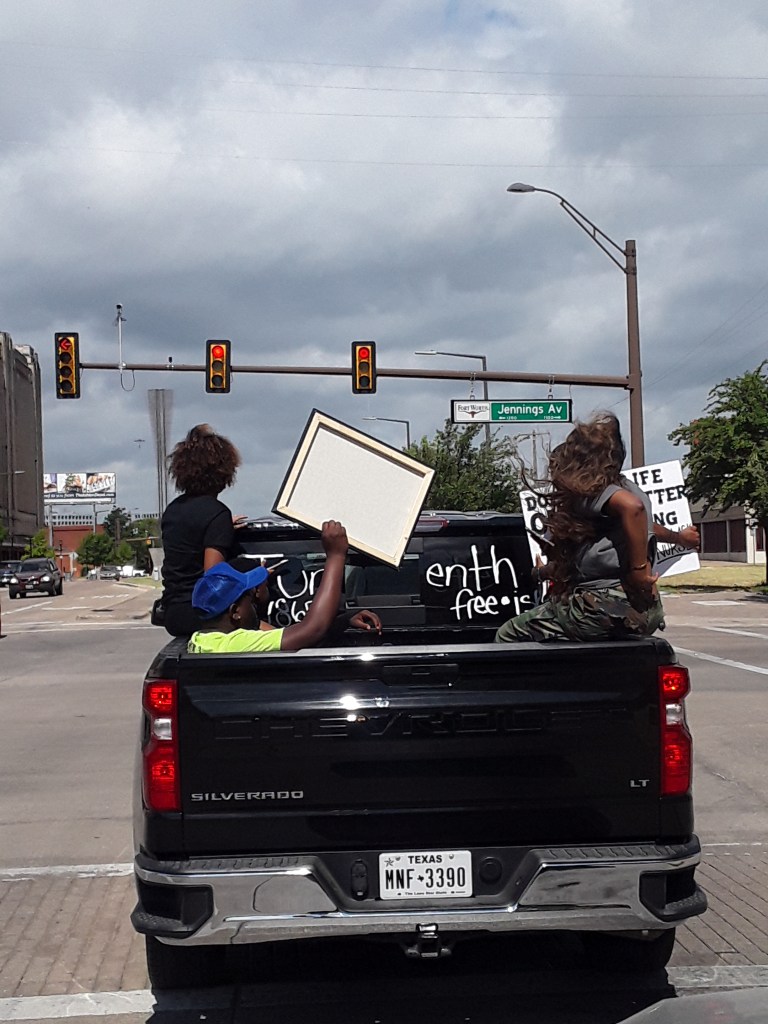
Part of the Juneteenth Caravan
It has been my privilege and honor to be a part of Unity Unlimited, Inc. and Opal’s Farm. When I became the Farm Manager and part of Unity, I began to spend a lot of time with Ms. Opal. Although she retired from teaching in the Fort Worth Independent School District, she hasn’t stopped teaching. I’ve learned more about my community and myself in the last two years that I ever did in all my years at school and the education continues…
Ms. Opal
Opal Lee has spent a lifetime as an educator, activist, and advocate for making Juneteenth a Federal holiday. She always tells everyone that it’s a unifier – for everyone regardless of color. Today I get it. Juneteenth is not only a celebration of emancipation for black slaves – it’s emancipation for everyone.
It’s emancipation from old ideas and social constructs. I always leaned far to the left in socio-political matters. However, being “liberal” is its own brand of white (or class) supremacy as well intentioned as it may be. Liberal white folks and the privilege afforded them does not in any way mean they know what’s best for others, especially people of color and other cultures.
Juneteenth allowed me to begin the honest self-examination that shed new light on old ideas. It freed me to acknowledge my own privilege and prejudices. Juneteenth corrected my vision and allowed me to love and serve others in a new, better way. It facilitated spiritual growth in ways I cannot put into words. It also freed me to make living amends for my well-intentioned failures by freeing me to be an ally for others and not having to have all the answers for them or myself.
Ultimately, it freed me to have deep, meaningful relationships and grow my community. That is the end result of true emancipation – a broad all-encompassing community that serves and supports one another. That’s something for everyone to celebrate and something we need now more than ever…
To learn more about Juneteenth, Ms. Opal Lee, Opal’s Walk to DC, Unity Unlimited Inc., and making Juneteenth a National Holiday please go to:
My sons and I went to an Arbor Day festival back in 1992. The concert that day featured Jimmy LaFave. It only took two songs into the show to send me hurrying to the table where I could purchase his then-new release, Austin Skyline. I’ve been a fan ever since.
I was tinkering around the house when I heard his familiar voice come over the stereo. I remembered that day long ago and how much fun the boys and I had. Today it brought a sadness I can’t put into words no matter how hard I try.
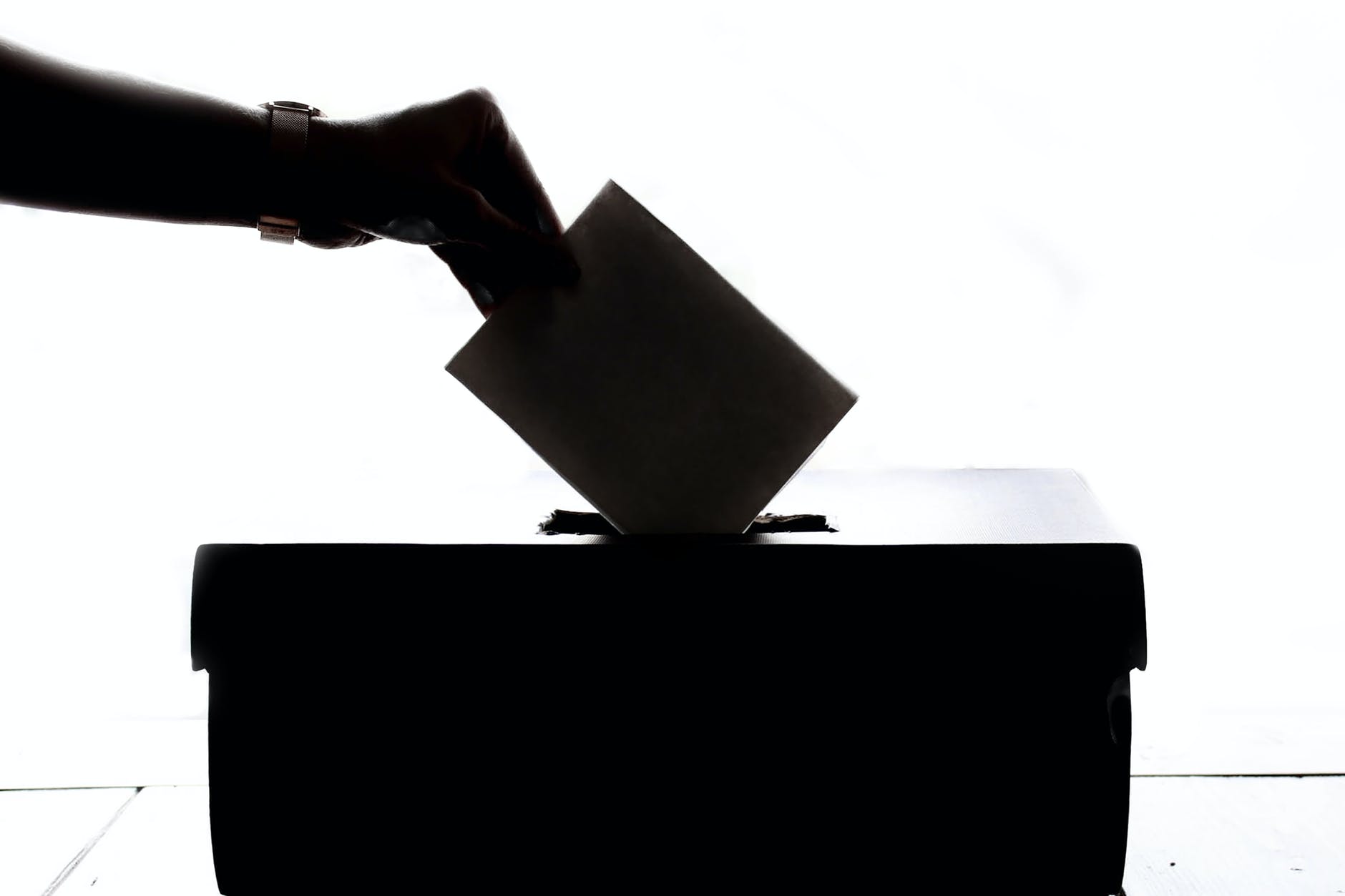
Yesterday was one of the best days I’ve had all year. I received notice that my new subsoiler for my tractor was ready to pick up. Then I got to cast my early vote in the 2020 election. Other small farmers are about the only ones who can understand my excitement about a subsoiler, but I hope everyone shares in the privilege of voting.
A couple of days ago, NPR reported that Texas leads the nation in early voting. I spoke with one of the poll workers yesterday who said they’ve had a line all day every day since early voting began. The pundits call this one of the most important elections in American history. Given the increase in voter participation I would be inclined to agree with them.
There was a time when I questioned whether I should participate in political systems or not. I was disheartened and frustrated by the hypocrisy I saw in the Christian Right. As Lord Acton said, “Absolute power corrupts absolutely”. Once the Christian Right got a bit of political power and voice… need I say more…
As a Jesus follower I know where my true citizenship lies – I don’t serve Caesar – but that doesn’t not absolve of participation in the political process. How I use my vote is of paramount importance.
I believe that my vote is a vote for those who have no voice – who will best serve the poor, the marginalized, and what Jesus called “the least of these”. Who will best implement policies that benefit them?
“Those who want to live according to biblical truth have a political responsibility to try to bring about the kingdom of God as much as possible and as soon as possible.”
– Virginia Mollenkott
My prayer today is that each of you will vote and do so according to your principles and values. I did yesterday and regardless of the outcome on Tuesday, it was a great day.


 gregoryjoel.com