Community, Connection, Creation, Culture, Dallas Cowboys, Donations, Down On the Farm, Environment, Faith, Fighting Poverty, Food Deserts, Food Insecurity, God's Economics, Neighbors, Non-Profits, Nutrition, Regeneration, Service Organizations, Service to Others, Social Justice, Thanksgiving, The Holidays, Unity Unlimited, Inc., Urban Farming, Volunteers, What Can I Do

How to Have Happy Holidays

Down on the Farm

I need to confess something. I skipped the traditional Thanksgiving Dallas Cowboy game. I ate more than I should have yesterday, especially the desserts. Although our Thanksgiving celebration was small, a couple of the kids and a few good friends, there was an overabundance of food. We all ate until our tummies were full and then added a tad more for insurance. I trust many of you did the same. Unfortunately, many of your neighbors did not.

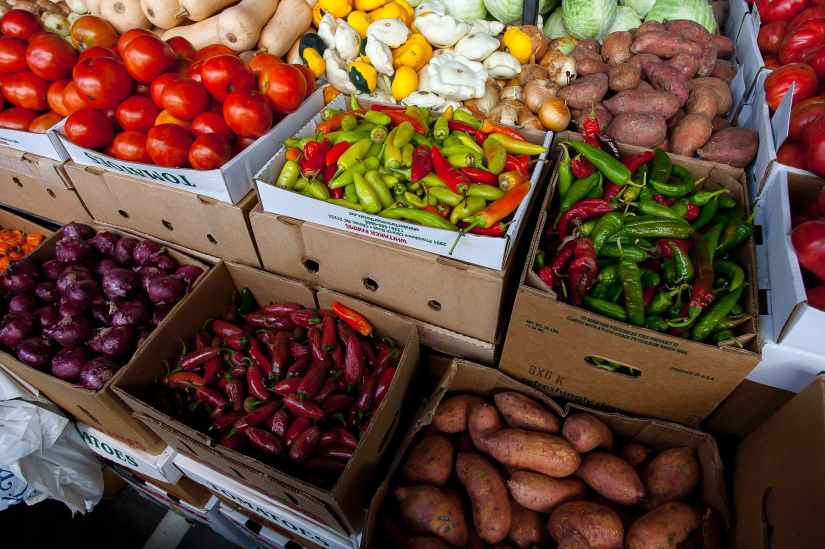
Most of us don’t deal with food insecurity. We hop in the car and head to the grocery store. The option for healthy eating habits with lots fresh fruits and vegetables have a wide array to choose from. We make our selections and go home. That’s not the case for many of our neighbors right here in Tarrant County.

Photo by Pixabay on Pexels.com

According to the Taste Project, “In the state of Texas alone food insecurity is higher than the national average at 17 percent. In Fort Worth’s Tarrant county community food insecurity is at 18.1 percent. That is 2.7 percent above the national average covering a total of 340,620 people who are food insecure” (italics mine). Those 340,260 people can’t guarantee they will have enough to eat today. Thanksgiving for them is often a reminder how precarious their situation is.

The mission of Opal’s Farm is to end food insecurity in Tarrant County, one neighborhood at a time. Everyone has the right to healthy food no matter where they live. If they can’t get to the store, we bring the grocery store to them. Moreover, we seek to educate our often-neglected neighbors in the preparation and health benefits of nutritious fresh fruits and vegetables. We believe in a three-prong approach to ending hunger in Fort Worth:

  1. Through growing organic fresh produce on our five-acre farm and bringing it to affected neighborhoods.
  2. Through education programs such for children and adults that let everyone know how important a healthy diet is, how prepare fresh food, and how to develop their own farming skills to offer a hand up, not just a hand-out.
  3. Through employment and job training, especially for those who have difficulty finding employment due to previous felony incarceration or other life-altering events.

If you’d like to join our mission, we have a golden opportunity this coming Tuesday. Facebook announced that it will provide matching contributions for much of what is donated on Giving Tuesday, December 3rd, 2019.

That means you dollar doubled and has a greater impact for Opal’s Farm. Imagine one seed becoming, one meal becoming two, and each family fed becoming two families fed. Most importantly, those people may be the people down the street of next door to you. Every dollar stays in Fort Worth!

Please plan your donation today and make your donation on Giving Tuesday, December 3rd, and join us on our mission.

You can also donate through our website, www.unityunlimited.com

Become an urban farmer today…

Belief, Christianity, Community, Environment, Faith, God's Economics, Hope, Public Policy, Quotes

“To work its magic for the economy, free enterprise needs plenty of room and not too many restraints. But to achieve public justice, free enterprise, like the urge to consume, needs to be tamed and guided. That requires a delicate balance, one that is endlessly debated, but which touches the central nerve of justice—not justice as an abstract idea, but as basic opportunity for children and others whose lives frequently hang in the balance.”

Arthur Simon, How Much Is Enough?: Hungering for God in an Affluent Culture (Baker Books: 2003), 18, 104-105.

Photo by Pixabay on Pexels.com
Belief, Bible, Christianity, Environment, Faith, God's Economics, Gratitude, Peace, Quotes, Revival, Social Justice, Spirituality, Thoughts From the Porch

“As long as we operate inside any scarcity model, there will never be enough God or grace to go around. Jesus came to undo our notions of scarcity and tip us over into a worldview of absolute abundance. The Gospel reveals a divine world of infinity, a worldview of enough and more than enough. The Christian word for this undeserved abundance is “grace.” It is a major mental and heart conversion to move from a scarcity model to an abundance model and to live with an attitude of gratitude.”

Adapted from Richard Rohr, The Universal Christ: How a Forgotten Reality Can Change Everything We See, Hope For, and Believe (Convergent: 2019), 184-185

Photo by John Lambeth on Pexels.com
Christian Mysticism, Community, Creation, Faith, Gifts, God's Economics, Material, Practice, Quotes, Recovery, Simplicity, Spirituality, Wealth

Sacred, not Cheap…

“When I use the word spiritual, I am not contradistinguishing it from the material. I have little patience with any philosophy or religion that seeks to transcend the material realm. Indeed, the separation of the spiritual from the material is instrumental in our heinous treatment of the material world. So when I speak of meeting our spiritual needs, it is not to keep cranking out the cheap, generic, planet-killing stuff while we meditate, pray, and prattle on about angels, spirit, and God. It is to treat relationship, circulation, and material life itself as sacred. Because they are.” – Charles Eisenstein

Photo by Tim Gouw on Pexels.com
Beatitudes, Belief, Bible, Christian Mysticism, Christianity, Culture, Faith, Gifts, God's Economics, Grace, Gratitude, Prayer, Quotes, Relationships, Simplicity, Social Justice, Spirituality, Transformation, Uncategorized

A New Economy…

Thoughts From the Porch: A gorgeous Fall day greeted me this morning as I stepped out on the porch. Every day is gorgeous in my mind, but this morning was especially bright and inviting. My “porch time” has included an email series I’ve been receiving from the Center for Action and Contemplation. I’ve always appreciated Father Richard Rohr and I hope you will appreciate today’s meditation as well.

Richard Rohr’s Daily Meditation

From the Center for Action and Contemplation

Week Forty-eight

Economy: Old and New

The Gospel Economy
Sunday, November 24, 2019

Jesus said to the host who had invited him, “When you hold a lunch or dinner . . . invite the poor, the crippled, the lame, the blind; and blessed indeed will you be because of their inability to repay you.” —Luke 14:12-14

I’d like to begin this week’s meditations by contrasting two economies or worldviews. The first economy is capitalism, which is based on quid pro quo, reward and punishment thinking, and a retributive notion of justice. This much service or this much product requires this much payment or this much reward. It soon becomes the entire (and I do mean entire!) frame for all of life, our fundamental relationships (even marriage and children), basic self-image (“I deserve; you owe me; or I will be good and generous if it helps me, too”), and a faulty foundation for our relationship with God.

We’ve got to admit, this system of exchange seems reasonable to almost everybody today. And if we’re honest, it makes sense to us, too. It just seems fair. The only trouble is, Jesus doesn’t believe it at all, and he’s supposed to be our spiritual teacher. This might just be at the heart of what we mean by real conversion to the Gospel worldview, although few seem to have recognized this.

Let’s contrast this “meritocracy,” punishment/reward economy—basic capitalism which we in the United States all drink in with our mother’s milk—with what Jesus presents, which I’m going to call a gift economy. [1] In a gift economy, there is no equivalence between what we give and how much we get. Now I know we’re all squirming. We don’t like it, because we feel we’ve worked hard to get to our wonderful middle-class positions or wherever we are. We feel we have rights.

I admit that this position satisfies the logical mind. At the same time, if we call ourselves Christians, we have to deal with the actual Gospel. Now the only way we can do the great turnaround and understand this is if we’ve lived through at least one experience of being given to without earning. It’s called forgiveness, unconditional love, and mercy. If we’ve never experienced unearned, undeserved love, we will stay in the capitalist worldview where 2 + 2 = 4. I put in my 2, I get my 2 back. But we still remain very unsure, if not angry, about any free health care (physical, mental, or spiritual) or even free education, even though these benefits can be seen as natural human rights that support and sustain peoples’ humanity. All too often, we only want people like us to get free health care and education and bail outs.

Brothers and sisters, you and I don’t “deserve” anything, anything. It’s all a gift. But until we begin to live in the kingdom of God instead of the kingdoms of this world, we think, as most Christians do, exactly like the world. We like the world of seemingly logical equations. Basically, to understand the Gospel in its purity and in its transformative power, we have to stop counting, measuring, and weighing. We have to stop saying “I deserve and deciding who does not deserve. None of us “deserve”! Can we do that? It’s pretty hard . . . unless we’ve experienced infinite mercy and realize that it’s all a gift.

Gateway to Presence:
If you want to go deeper with today’s meditation, take note of what word or phrase stands out to you. Come back to that word or phrase throughout the day, being present to its impact and invitation.

[1] “A gift economy, gift culture, or gift exchange is a mode of exchange where valuables are not traded or sold, but rather given without an explicit agreement for immediate or future rewards. This contrasts with a barter economy or a market economy, where goods and services are primarily exchanged for value received. Social norms and customs govern gift exchange.” (https://en.wikipedia.org/wiki/Gift_economy)

Adapted from Richard Rohr, “Capitalist Economy and Gift Economy,” Homily (September 1, 2019), https://cac.org/podcasts/capitalist-economy-and-gift-economy/.

Image credit: Le Denier de la Veuve (The Widow’s Mite) (detail), James Tissot, between 1886 and 1894, Brooklyn Museum, Brooklyn, New York.