Autumn, Community, Environment, Events, Faith, Farmers Markets, Food Equality, Food Justice, Gratitude, Neighbors, Non-Profits, Opal's Farm, Regeneration, Service to Others, Simplicity, Social Justice, Thoughts From the Porch, Unity Unlimited, Inc., Urban Farming, Volunteers

Just An Update

Greetings to you all. I haven’t written much this month. I’m still trying to process the Election night results. I had thought people might’ve grown tired of the circus that is forty-five and now forty-seven-elect. I’ll leave that to the pundits to deal with. The farm doesn’t much care about politics. It just keeps on being Opal’s Farm – food grows, people are fed, and life goes on.

Things have just been incredibly nuts at the farm (in a good way mind you). Every time I think its’s going to slow down the “to do” list gets longer. We are having bumper crops this Fall, and the weather has been absolutely wonderful, making me somewhat sad when the day is over. It’s just too nice not to be working.

We held the Second Annual High Strides Against Diabetes 5K and Fun Run and the after-party last Saturday. We had such a great time with awesome food and fun. Next year, the race will be held in Dallas at Joppy Momma’s Farm. We alternate years for the race. Kim High, the Founder and Farm Manager for Joppy Momma’s has a great team that did so much to make this a successful event. I, on the other hand, should not have Event Planner on my resume. This was so much work! Thank you Kim, Joppy Momma’s, and all the folks from Dallas who worked so hard to put this together. It’s already time to start planning for next year!

We had a special luncheon at the farm with our friends from Houston, the Black United Fund, Inc. this Saturday. We discussed ways we can continue to grow and empower our communities to grow all over this great state. We believe in taking care of each other and building our communities through the medium of good healthy food that we all need so desperately. It was a honor and a privilege to host the event and we’re looking forward to our future collaboration.

The biggest thing going on at the farm right now though is the amazing amount of fresh produce we’re growing this Fall. We’re experiencing record yields and beautiful, fresh wholesome produce. We’d love to see you at either Cowtown Farmers Market or at Opal’s Farm Stand (at the entrance to the farm) every Saturday morning, rain or shine, from 8 AM until Noon. We accept SNAP-EBT benefits at both locations and be sure to look for our weekly specials.

We’d love to see you at the farm. Volunteers are always welcomed and appreciated. We’d never have the success Opal’s Farm has seen if it weren’t for all the volunteers who have helped us grow over the last six years. We’d love to have you come out, get your hands dirty , and enjoy the great Fall days with us.

Community, Connection, Creation, Down On the Farm, Environment, Faith, God's Economics, Gratitude, Neighbors, Non-Profits, Opal's Farm, Regeneration, Relationships, Service Organizations, Service to Others, Simplicity, Spirituality, Thoughts From the Porch, Urban Farming

The Gang is Back

July is almost over, and this may well be only the second time I’ve posted this month. We’ve been unseasonably cool (and wet!) off and on this summer. We are below our twenty-four triple digit days average. We’re enjoying the cooler weather, since August is right around the corner. It’s the hottest month of the year here so anytime it’s below a hundred degrees it’s a pleasant cool summer day…

The national news and the upcoming General Election have garnered the public’s attention over the last couple of weeks. I’d love to chime in on that front, but lately I’ve found I simply need to concentrate on what’s right in front of me and turn off the political noise that surrounds me – for my own sanity. I still plan to exercise my civic duty and vote – which I hope each one of you does – but I need to step back, turn on the music instead of National Public Radio, and spend my days working and enjoying the beauty of the farm, friends, and family.

We get to see some beautiful birds at the farm. A Great Blue Heron couple has made their nest somewhere on the overgrown sandbar south of the farm. Snowy Egrets frequent the banks of the Trinity looking for fish and small marine animals. We have a Cooper’s Hawks that lives close by (that eliminates the bird threat to our tomatoes) and even a Bald Eagle that comes around (although extremely infrequently).

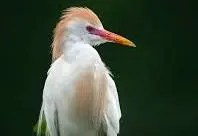
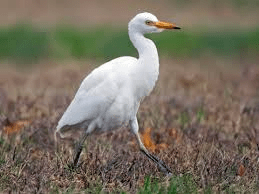
Twice a year, usually during Spring and Fall planting, the Cattle Egrets, the Cowbirds as we always called them, drop in to eat the small insects that preparing for planting and turning beds usually brings out. They are much smaller than their Snowy brothers, and always come in groups – sometimes three or four groups on different areas of the farm and they’re always entertaining. Their little tan mohawk pops up and their jowls vibrate every time I come close.

Inevitably, there is always one outlier, one whose curiosity outweighs his fear, and always sticks around when the rest of the flock (which seems to be more like a gang!) flies away. He’ll follow me to see what’s going on and often looks at me as if saying “What’s up?”. I am under no illusion – I anthropomorphize our feathery friends – and it’s probably all in my imagination, but hey, I worked alone at the farm for a long time before Joey, Greg, and the guys came. I found my community amongst my wild feathery and furry friends.

One of the things I love about Opal’s Farm is the relationship we have with the wildlife on and around the farm. I take pride in knowing that our animal friends fit right into the environment we labor in. Each has an important place in how the farm operates – even what most consider to be pests. Don’t get me wrong: a pest is a problem, but nature has a way of dealing with them if we just let it take its course.

We have a ton of field mice at the farm. Most are field rats, but I call them mice because that’s what our volunteers would rather hear. There’s nothing more frustrating than picking a gorgeous watermelon or cantaloupe and finding a large hole in the bottom where a mouse had dinner. However, we lose more melons to two-legged predators than we do to mice and rats because we have coyotes, bobcats, rat snakes, and hawks that keep the rodent population manageable. When the ecosystem is in balance it takes care of itself.

We choose regenerative agriculture precisely for this reason. Nature does a far better job of keeping things in check than any chemical pest or weed control can ever do. It doesn’t have negative consequences either. Most of all, I get to enjoy it every day and be thankful to a creator that already took care of any problems I have in this regard. What a way to live life.

I’m getting ready to head to the farm again. I’m grateful for the rain we’ve had in July, but the reality is that it just isn’t enough during any North Texas summer. I’ll run the irrigation, prep a couple of beds, and hope my Egret friends drop by…

(An important aside – my wife’s father passed away on Friday. I’ll most likely be gone a couple of days this week. If you’re a praying person, please offer some prayers for my wife, Margaret, and her family.)

Bad Weather, Choices, Climate Change, Community, Conservation, Creation, Down On the Farm, Environment, Faith, Food Justice, Gardening, Hope, Neighbors, Non-Profits, Opal's Farm, Plowing, Preparation, Simplicity, Spirituality, Texas, Thoughts From the Porch, Transformation, Unity Unlimited, Inc., Urban Farming, What Can I Do

One Farm at a Time

What a week at Opal’s Farm! We have everything in for fall and winter and have started taking out spring leftovers, rebuilding beds, and solarizing them for weed control in the spring. We finally took out our tomato plants, but not before harvesting about a hundred and fifty pounds of tomatoes – and it’s ten days until Christmas. We love that a hard freeze hasn’t come yet, but we’re also a bit worried as this is another indicator of how strange our weather has become.

The weather is a “frienemy” for farmers – it brings the rain that helps the crops grow or the drought that kills them off. It’s the one thing we can’t control. We may do a rain dance or pray a freeze holds off until the crops come in, but in the end, the weather does what it will.

However, even weather has things it can’t control either – a warming climate changes the weather – leading to warmer average temperatures and more intense weather events. The intensity of our North Texas summer over the last two years is an example. In 2022, the heat came early, and the rain stopped. There was no rain from June 3rd until August 29th. It was much the same this year        with 2023 being the second hottest year on record according to the Texas Tribune and NOAA. Moreover, when it finally did rain, it rained so much and so heavily that Opal’s Farm suffered flash floods both years.

Hardiness Zones – the zones which show the lowest temperature in a zone and determine the growing season – have gradually moved northward. According to Yale Environment 360, hardiness zones were moved northward from 1990 to 2012 and are moving at a rate of just over thirteen miles per year. The heat is headed northward. Fort Worth has shifted from Zone 8b to Zone 8a. What and how much we grow changes as the zones move north.

So, What Do We Do?

Opal’s farms about two-and-a-third acres at present. We are growing into the full five acres granted to us by the Tarrant Regional Water District. We don’t expect to see major changes, the amount of land is negligible in the grand scheme of things. However, there is something we can do that’s consistent with our core values of resilience and regeneration.

First, we can continue to research and try non-native (but non-invasive) varieties of food crops that are both heat tolerant and drought resistant. Our salad mix uses Tokyo Bekana along with other Asian greens. Tokyo Bekana looks and tastes like lettuce (some say even better) but it’s actually related to Chinese cabbage. It fares much better than traditional lettuces that can only be grown in early Spring or late Fall. It can be grown year-round in North Texas.

We use this same practice on other crops as well. We are slowly beginning to turn to south Asian foods like bitter melon, bottle gourds, and yard-long beans. The beans are quite prolific and love the summer heat.

Secondly, we never leave exposed soil. Cover cropping is essential. Always have living roots. We are finishing up cover cropping all all non-food crop beds. We use Austrian Winter Peas and Elbon Rye in the winter time. Legumes like the peas fix nitrogen into the soil and the rye’s root system keep the soil broken up and able to retain water and oxygen better for the soil microbes. We use various mixes that we purchase from Green Cover Seed in the warmer months.

Finally, we sequester carbon in the soil. Our biointensive beds are no-till while the remainder of the farm is minimal till. Dr. Omar Harvey, with the Geosciences Department at Texas Christian University, had students researching carbon sequestration at Opal’s Farm beginning two years ago. The explanation of the methods used is several pages long, so I’ll not bore you with the process, but the results are important. Dr. Harvey’s students were able to quantify the carbon sequestered away on the farm and found it to be 168 metric tons per acre.

Why is that important?

It’s important for two reasons. One, the research confirmed not only the amount but the type of carbon – deep carbon. When the carbon is sequestered deep in the soil it stays there and is less likely to be released into the atmosphere. The carbon sequestered in the upper eight inches of soil is still available for the plants which is a winner for both the climate and us.

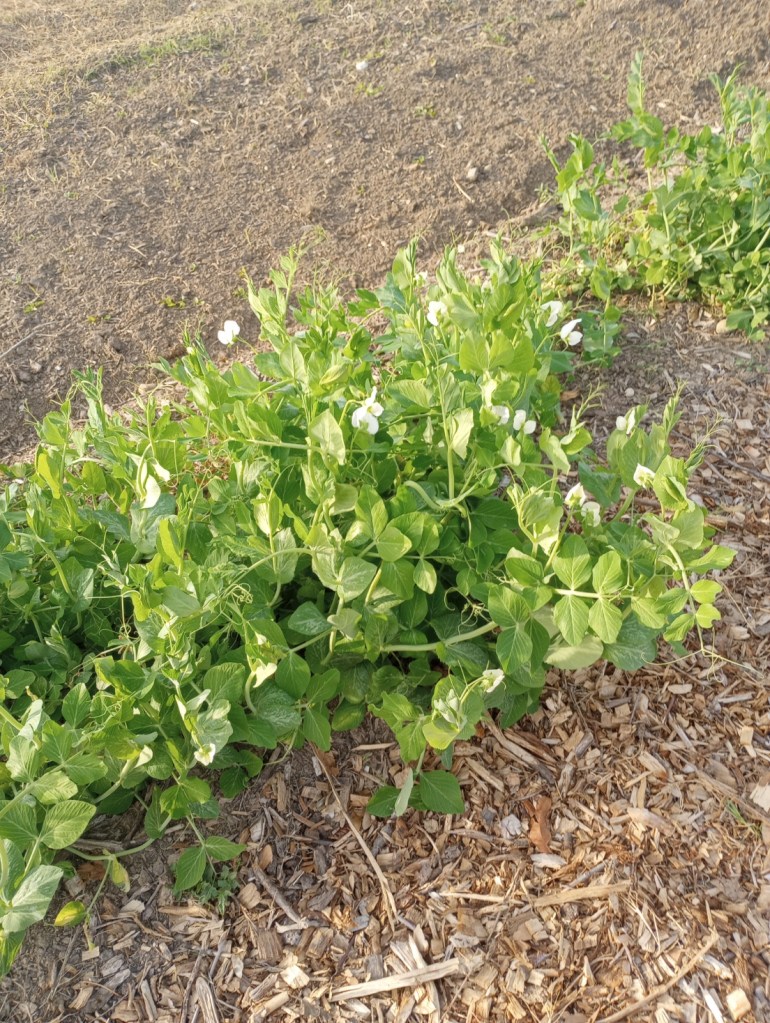
Our Sugar Snap Peas are blooming and will be available shortly!

I have mixed emotions about the second, and most economically beneficial, reason – that being the figure for carbon credits.  At four to five dollars per metric ton Opal’s could generate anywhere from nine to eleven hundred dollars per year in extra revenue. Alternative revenue streams are a must for small farmers.

However, the alternative here seems to be a bit of greenwashing. The idea that a company such as an airline can use carbon credits to meet their climate “goals” while continuing business as usual is somewhat opaque in nature. The bottom line however is that carbon is sequestered and can offset the gases released into the atmosphere. The more regenerative agriculture practiced, the more carbon stored away and an alternative income stream for farmers doing what they do naturally.

Whether for the economic benefits or for the common good, regenerative agriculture can play a large part in facing the climate crisis. Next Spring, we are attending classes to become Carbon Farm Planners. Agriculture can be part of the solution and the more we know the more equipped we are for positive change.

We may not be able to change the weather, but we can do our part to adapt and bring healthy, nutritious produce to Fort Worth and fight climate change in our little piece of Texas. As Ms. Opal often reminds me, “Be a committee of One”. I remember Dad telling me that “everybody complains about the weather, but nobody does anything about it”. Being a Committee of One, one small urban farm, is doing something about it. Join us in the fight. As Mother Teresa said, “If you can’t feed a hundred people then just feed one”…