
The scene beyond my window is rather drab. A blast of cold Arctic air exploded across North Texas yesterday afternoon. It brought with it the cutting icy North wind that plagues the Southern plains every winter. The “feels like” temperatures this morning were in the single digits and they’re predicting eighty-plus hours below freezing and sleet for this evening. Folks in these parts are understandably nervous. Ice brings out the worst in Texas drivers and the memory of Winter Storm Uri in 2021 is still fresh to anyone who lived here then. The power grid crashed, Texans went for days without power and water, and 246 people died from storm-related issues.
Last year saw a major ice storm at the end of January. We were at the Texas Organic Farmers and Gardeners Association Conference in Dallas and left early because of the roads. One of our employees ended up staying at the motel that night. One night turned into a week. Texans do not do well in cold weather. It doesn’t storm often but when it does look out!
Fortunately, we’ve had ample time to prepare for this Arctic visitor. Store shelves are empty of non-perishables and bottled water. Gas tanks are full and homes lucky enough to have a generator are standing by. People take the weather forecast a bit more seriously since the winter of ’21.
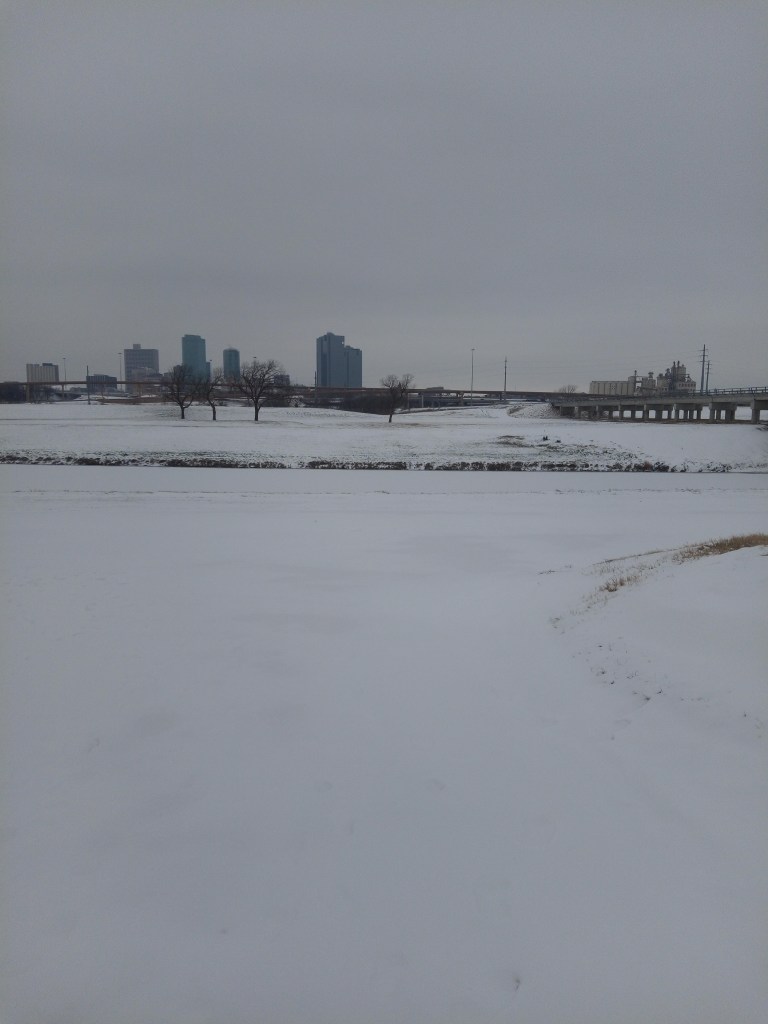
( Opal’s Farm and the frozen Trinity River February 2021 )
Personally, I haven’t had much time to prepare our house. I still must make a run to Home Depot. My neighbor said they had some outdoor faucet covers hidden in the back of the store. Information like that is like finding gold. We try to take care of each other in our neighborhood. I have, however, taken steps to prepare Opal’s Farm the best we can to save our winter crops. Frost cloth has been double-spread on the bio-intensive section and several of the hundred-foot rows. Prayers have been said, fingers have been crossed, and if I had a rabbit’s foot, I’m sure I’d be holding it close. We’ll keep you posted…
On a lighter, and somewhat warmer note (it was cool but warmer yesterday), we moved Opal’s Farm Stand hours to Saturday afternoons from 1:30 PM to 4:00 PM. We found his to be more convenient for our neighbors and the traffic on Sylvania isn’t rushing between jobs. We had several customers yesterday afternoon. This complements our mornings at Cowtown Farmers Market and our delivery for Hao’s Grocery and Café. We can harvest once a week to bring quality fresh produce to our community.
Anyway…
My fur-babies don’t seem to be bothered by the single-digit temperatures. They are out running around and playing as I sit here. Sitting here watching them got me to thinking about this blog. I’ve always called it “Thoughts From the Porch” because that was the place my thoughts and coffee ran freely since this journey began. I no longer spend my mornings on the front porch. It’s not because it’s cold. When you smoke it really doesn’t matter if it’s the summer Texas heat or the winter freeze, you’re driven to suffer outside.
However, that changed on November 1st of last year. That’s the day I quit smoking. I’ve been cigarette-less since then. The cravings have become less severe most of the time. The operative word being “most”. Other days – not so much. Staying off the porch has been a good move so here I sit. I still get a good view of the world through the patio door next to my office. It’s a constant reminder of God’s goodness and grace in our lives.
Maybe it’s time to find another name for this? Let me know your thoughts!
Please stay warm and safe through this cold snap. Stay inside, make it a family day or a day of introspection. Enjoy the time and pray the lights don’t go out…


 gregoryjoel.com