Climate Change, Community, Down On the Farm, Environment, Neighbors, Opal's Farm, Service Organizations, Service to Others, Texas, Thoughts From the Porch, Unity Unlimited, Inc., Urban Farming

West Texas Winds

Good morning to our Opal’s Farm family. We’ve had a great week down at the farm. We been busy with Spring planting and most of the farm didn’t even blow away! Some empty rain barrels were blown about a quarter-mile down the farm but other than that we suffered little wind damage. I hope you all (and all your patio furniture) stayed grounded during this March outburst.

Folks may place Fort Worth in north central Texas but it is where the west begins. We got a reminder when the wind brought West Texas to us in the form of a major dust cloud. The haze in the air reminded us of old sepia-toned photographs of Fort Worth. When I took my wife to her son’s house in Haslet Friday it was scenes from the Dust Bowl. Given the looming threat of higher prices and possible recession we might be reliving the thirties. History may not repeat itself but it’s definitely circular.

It all reminded me of a song I thought I’d share this Sunday morning. I think of it on windy west Texas days like we’ve had this week…

Bad Weather, Choices, Climate Change, Community, Connection, Creation, Down On the Farm, Events, Family, Farmers Markets, Goodness, Grace, Gratitude, Hope, Letting Go, Marginalized, Non-Profits, Opal's Farm, Pets, Positive Thinking, Prayer, Preparation, Regeneration, Relationships, Rescue Animals, Service Organizations, Service to Others, Spirituality, Texas, Thoughts From the Porch, Trinity River, Unity Unlimited, Inc., Urban Farming

Burrrr…

The scene beyond my window is rather drab. A blast of cold Arctic air exploded across North Texas yesterday afternoon. It brought with it the cutting icy North wind that plagues the Southern plains every winter. The “feels like” temperatures this morning were in the single digits and they’re predicting eighty-plus hours below freezing and sleet for this evening. Folks in these parts are understandably nervous. Ice brings out the worst in Texas drivers and the memory of Winter Storm Uri in 2021 is still fresh to anyone who lived here then. The power grid crashed, Texans went for days without power and water, and 246 people died from storm-related issues.

Last year saw a major ice storm at the end of January. We were at the Texas Organic Farmers and Gardeners Association Conference in Dallas and left early because of the roads. One of our employees ended up staying at the motel that night. One night turned into a week. Texans do not do well in cold weather. It doesn’t storm often but when it does look out!

Fortunately, we’ve had ample time to prepare for this Arctic visitor. Store shelves are empty of non-perishables and bottled water. Gas tanks are full and homes lucky enough to have a generator are standing by. People take the weather forecast a bit more seriously since the winter of ’21.

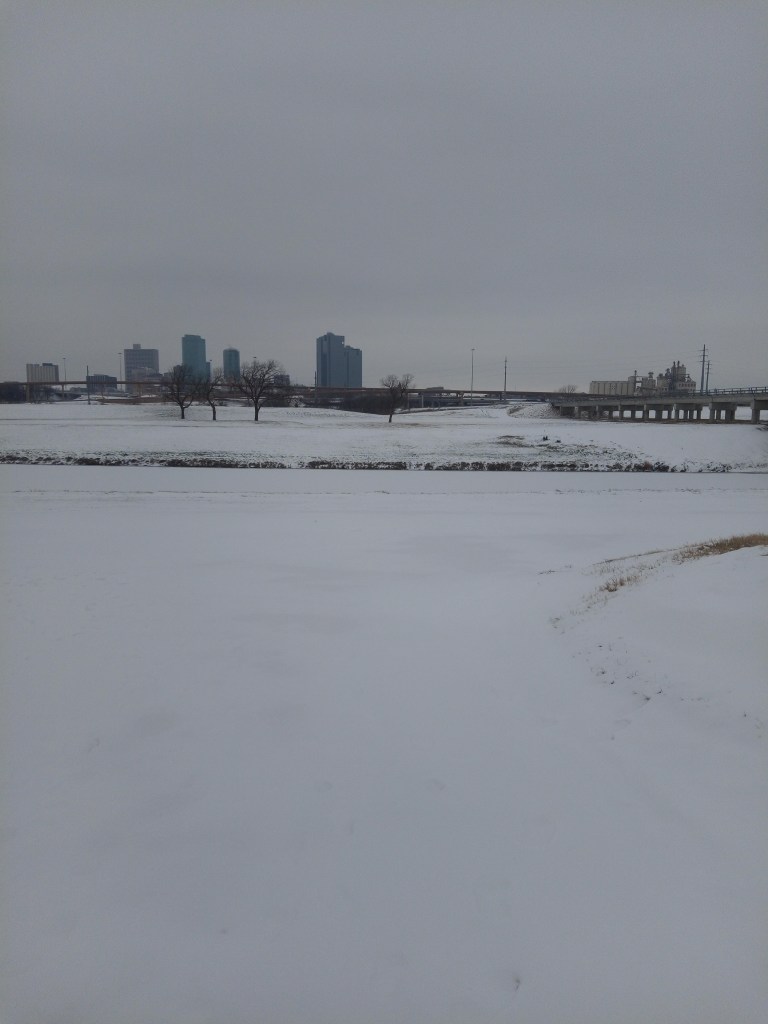
( Opal’s Farm and the frozen Trinity River February 2021 )

Personally, I haven’t had much time to prepare our house. I still must make a run to Home Depot. My neighbor said they had some outdoor faucet covers hidden in the back of the store. Information like that is like finding gold. We try to take care of each other in our neighborhood. I have, however, taken steps to prepare Opal’s Farm the best we can to save our winter crops. Frost cloth has been double-spread on the bio-intensive section and several of the hundred-foot rows. Prayers have been said, fingers have been crossed, and if I had a rabbit’s foot, I’m sure I’d be holding it close. We’ll keep you posted…

On a lighter, and somewhat warmer note (it was cool but warmer yesterday), we moved Opal’s Farm Stand hours to Saturday afternoons from 1:30 PM to 4:00 PM. We found his to be more convenient for our neighbors and the traffic on Sylvania isn’t rushing between jobs. We had several customers yesterday afternoon. This complements our mornings at Cowtown Farmers Market and our delivery for Hao’s Grocery and Café. We can harvest once a week to bring quality fresh produce to our community.

Anyway…

My fur-babies don’t seem to be bothered by the single-digit temperatures. They are out running around and playing as I sit here. Sitting here watching them got me to thinking about this blog. I’ve always called it “Thoughts From the Porch” because that was the place my thoughts and coffee ran freely since this journey began. I no longer spend my mornings on the front porch. It’s not because it’s cold. When you smoke it really doesn’t matter if it’s the summer Texas heat or the winter freeze, you’re driven to suffer outside.

However, that changed on November 1st of last year. That’s the day I quit smoking. I’ve been cigarette-less since then. The cravings have become less severe most of the time. The operative word being “most”. Other days – not so much. Staying off the porch has been a good move so here I sit. I still get a good view of the world through the patio door next to my office. It’s a constant reminder of God’s goodness and grace in our lives.

Maybe it’s time to find another name for this? Let me know your thoughts!

Please stay warm and safe through this cold snap. Stay inside, make it a family day or a day of introspection. Enjoy the time and pray the lights don’t go out…

Bad Weather, Choices, Climate Change, Community, Conservation, Creation, Down On the Farm, Environment, Faith, Food Justice, Gardening, Hope, Neighbors, Non-Profits, Opal's Farm, Plowing, Preparation, Simplicity, Spirituality, Texas, Thoughts From the Porch, Transformation, Unity Unlimited, Inc., Urban Farming, What Can I Do

One Farm at a Time

What a week at Opal’s Farm! We have everything in for fall and winter and have started taking out spring leftovers, rebuilding beds, and solarizing them for weed control in the spring. We finally took out our tomato plants, but not before harvesting about a hundred and fifty pounds of tomatoes – and it’s ten days until Christmas. We love that a hard freeze hasn’t come yet, but we’re also a bit worried as this is another indicator of how strange our weather has become.

The weather is a “frienemy” for farmers – it brings the rain that helps the crops grow or the drought that kills them off. It’s the one thing we can’t control. We may do a rain dance or pray a freeze holds off until the crops come in, but in the end, the weather does what it will.

However, even weather has things it can’t control either – a warming climate changes the weather – leading to warmer average temperatures and more intense weather events. The intensity of our North Texas summer over the last two years is an example. In 2022, the heat came early, and the rain stopped. There was no rain from June 3rd until August 29th. It was much the same this year        with 2023 being the second hottest year on record according to the Texas Tribune and NOAA. Moreover, when it finally did rain, it rained so much and so heavily that Opal’s Farm suffered flash floods both years.

Hardiness Zones – the zones which show the lowest temperature in a zone and determine the growing season – have gradually moved northward. According to Yale Environment 360, hardiness zones were moved northward from 1990 to 2012 and are moving at a rate of just over thirteen miles per year. The heat is headed northward. Fort Worth has shifted from Zone 8b to Zone 8a. What and how much we grow changes as the zones move north.

So, What Do We Do?

Opal’s farms about two-and-a-third acres at present. We are growing into the full five acres granted to us by the Tarrant Regional Water District. We don’t expect to see major changes, the amount of land is negligible in the grand scheme of things. However, there is something we can do that’s consistent with our core values of resilience and regeneration.

First, we can continue to research and try non-native (but non-invasive) varieties of food crops that are both heat tolerant and drought resistant. Our salad mix uses Tokyo Bekana along with other Asian greens. Tokyo Bekana looks and tastes like lettuce (some say even better) but it’s actually related to Chinese cabbage. It fares much better than traditional lettuces that can only be grown in early Spring or late Fall. It can be grown year-round in North Texas.

We use this same practice on other crops as well. We are slowly beginning to turn to south Asian foods like bitter melon, bottle gourds, and yard-long beans. The beans are quite prolific and love the summer heat.

Secondly, we never leave exposed soil. Cover cropping is essential. Always have living roots. We are finishing up cover cropping all all non-food crop beds. We use Austrian Winter Peas and Elbon Rye in the winter time. Legumes like the peas fix nitrogen into the soil and the rye’s root system keep the soil broken up and able to retain water and oxygen better for the soil microbes. We use various mixes that we purchase from Green Cover Seed in the warmer months.

Finally, we sequester carbon in the soil. Our biointensive beds are no-till while the remainder of the farm is minimal till. Dr. Omar Harvey, with the Geosciences Department at Texas Christian University, had students researching carbon sequestration at Opal’s Farm beginning two years ago. The explanation of the methods used is several pages long, so I’ll not bore you with the process, but the results are important. Dr. Harvey’s students were able to quantify the carbon sequestered away on the farm and found it to be 168 metric tons per acre.

Why is that important?

It’s important for two reasons. One, the research confirmed not only the amount but the type of carbon – deep carbon. When the carbon is sequestered deep in the soil it stays there and is less likely to be released into the atmosphere. The carbon sequestered in the upper eight inches of soil is still available for the plants which is a winner for both the climate and us.

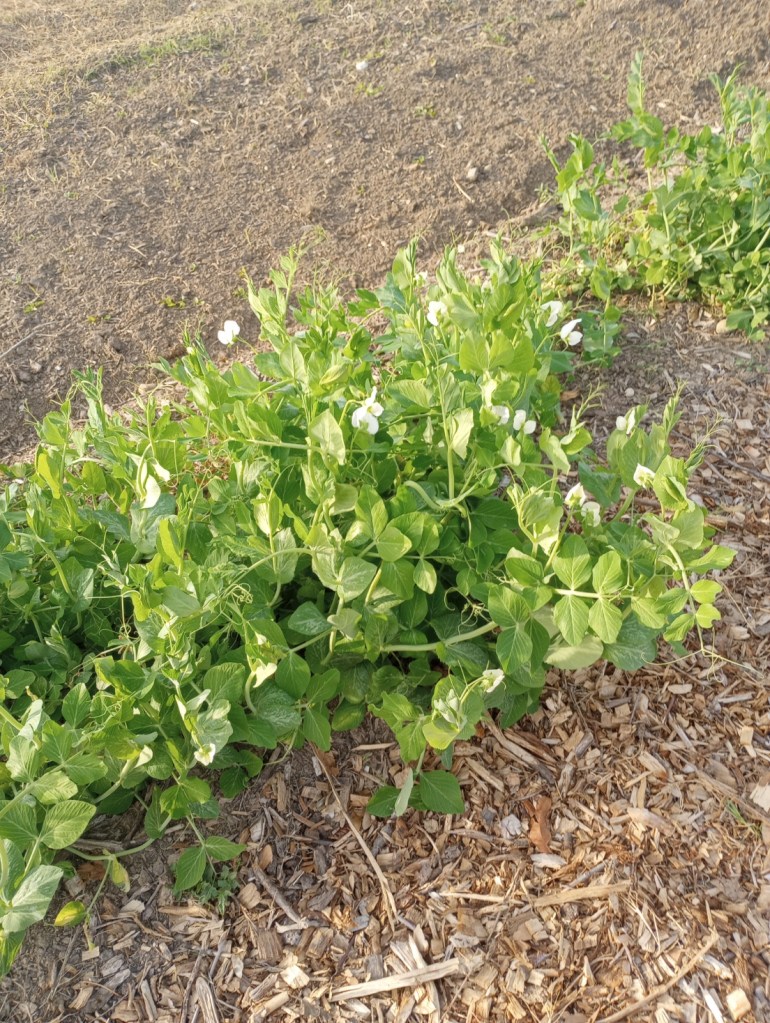
Our Sugar Snap Peas are blooming and will be available shortly!

I have mixed emotions about the second, and most economically beneficial, reason – that being the figure for carbon credits.  At four to five dollars per metric ton Opal’s could generate anywhere from nine to eleven hundred dollars per year in extra revenue. Alternative revenue streams are a must for small farmers.

However, the alternative here seems to be a bit of greenwashing. The idea that a company such as an airline can use carbon credits to meet their climate “goals” while continuing business as usual is somewhat opaque in nature. The bottom line however is that carbon is sequestered and can offset the gases released into the atmosphere. The more regenerative agriculture practiced, the more carbon stored away and an alternative income stream for farmers doing what they do naturally.

Whether for the economic benefits or for the common good, regenerative agriculture can play a large part in facing the climate crisis. Next Spring, we are attending classes to become Carbon Farm Planners. Agriculture can be part of the solution and the more we know the more equipped we are for positive change.

We may not be able to change the weather, but we can do our part to adapt and bring healthy, nutritious produce to Fort Worth and fight climate change in our little piece of Texas. As Ms. Opal often reminds me, “Be a committee of One”. I remember Dad telling me that “everybody complains about the weather, but nobody does anything about it”. Being a Committee of One, one small urban farm, is doing something about it. Join us in the fight. As Mother Teresa said, “If you can’t feed a hundred people then just feed one”…

Awe, Climate Change, Community, Connection, Creation, Down On the Farm, Environment, Opal's Farm, Relationships, Seasons, Simplicity, Spirituality, Summer, Thoughts From the Porch, Trinity River

Egrets, Yep, Egrets

I’m sitting at home alone tonight. That’s not a bad thing. It just is. Margaret has been in the hospital and moved to a rehab hospital for a couple of weeks. I’ve daily trips to the hospital, Opal’s Farm, the hospital, and back home to work. Add to that all the Juneteenth festivities and I can safely say its’ been a crazy busy June!

I’m harvesting between 400 and 600 pounds of tomatoes per week since everything started to come in during May. Sales have been great at the market, but with so many tomatoes I’ve had to start selling them to another non-profit that serves the WIC clinics in Dallas and to the Tarrant Area Food Bank. Delivering to Dallas has not been one of my favorite tasks although I love the folks at Owenwood Farm. I still maintain that the best thing to come out of Dallas is Interstate Thirty West…

Needless to say, this is the first opportunity I’ve had to sit down and write for the last two months. It’s also the first chance I’ve had to catch up with many of the blogs I follow as well and sit down to go through my personal email account. If you haven’t seen a like or comment, please don’t take it personal. I simply haven’t had time to read.

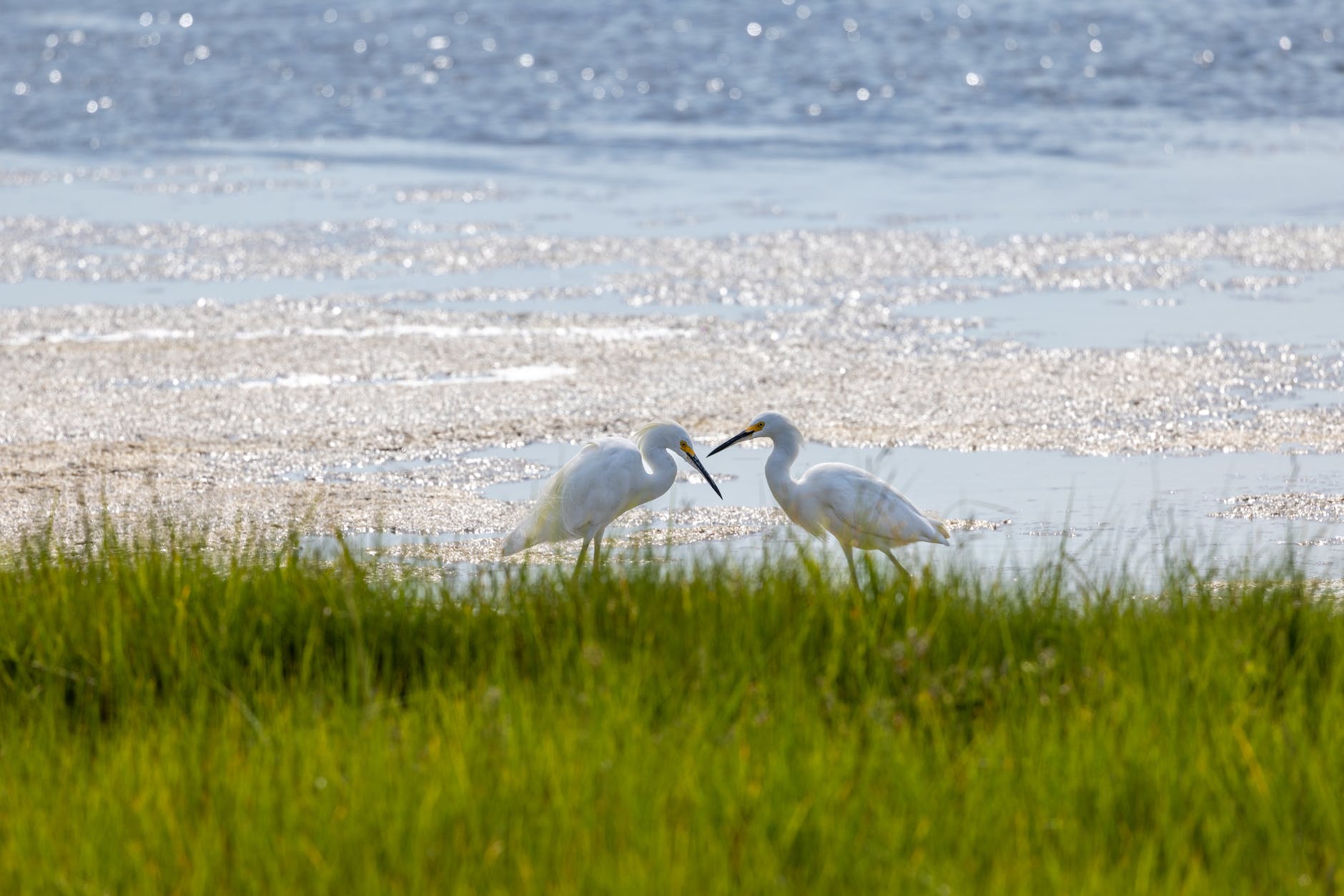
 I’ve said all that so I can now talk about what’s been on my mind the last month – Egrets. Yep, birds. After a couple of months of silence, one would think I have more to say but… Egrets -those beautiful, long-legged white birds related to Herons. We used to call them cowbirds when I was little because of the way they hung around, and on, the cattle to eat insect pests. I see them frequently at the farm. Mostly nesting and wading about searching for food on the far bank of the Trinity River.

Photo by Mohan Nannapaneni on Pexels.com

We even have some state wildlife and research students with a tracker following the birds they’ve tagged. I’m happy to report that they shall have an abundance of birds to tag this year. There was an unusually heavy baby boom this Spring. The farm is often covered in groups of young Egrets walking about and I’ve become acquainted with some of them. At least I think I have…

This probably doesn’t mean anything to anyone else, but since my cataract surgery in May I’ve been able to see better than I have in many years. My vision is so clear now that I’ve been able to see things I’ve never noticed before like Egrets and their personalities. I’m fully aware of the human tendency to anthropomorphize other creatures but I’m convinced they are much like us – at least the young ones anyway.

Juvenile Egrets are smaller in stature as young ones tend to be. Unlike their parents (who by the way both take care of the nesting and young) they aren’t all white. They have a tan section on their head, breast, back feathers. Occasionally they will raise their head feathers to reveal a small, tan mohawk. It fades to white as they grow older. They always hang around in groups of ten to fifteen. They have one young guy who they’ve appointed leader – they seem to follow pretty much everywhere. If he moves north, they all move north, if he takes off, they all take off in file behind him – that is, all except for one.

I love this little guy – I imagine him to be a bird version of me. He’s always the last one to fly or walk away when I come down the road or walk up to the pumphouse. I can relate. I was usually the one picked last or left behind. The others sense danger approaching and tend to take off as soon as I get close, but this little guy hangs around. He’s allowed me to get closer each day. Each day he grows more curious about this big, flightless biped that talks to him as if we share the same language. His head tilts one way and then the other. He’s even ventured a couple of steps toward me if I stand still long enough. I’m sure passers-by would find me a tad insane standing in a field talking to a bird. I’m okay with that. The young fellow makes for good company on a hot day.

Over the last week the groups of young birds have gotten smaller and less frequent. It appears that most have moved on to do what it is that Egrets do. I’d move on too with the triple-digit heat we’ve had of late – at least somewhere with some shade. There’s been some hangers-on. I’m sure they live with mom and dad. Most of the remaining young birds are professional students of some kind – they never seem to graduate and move out on their own. That’s been my experience anyway…

I wish them all well as they move on to adult things. I’ll miss my companions but like everything else in life, there are seasons for everything and everyone. The farm is a great teacher about the cycle of life all flora and fauna, and people, go through. It’s also been a sage, teaching me how interconnected the world is – how interdependent we are. I learn daily the need for responsible stewardship and just how awesome God’s creation is.

With that I’m off to the farm to irrigate. We’re fortunate that our water is virtually free. It takes a lot to survive the Texas summer, especially in the days of climate change and warming temperatures. The UV rays of the sun have been exceptionally strong this year – a constant reminder of the new normal and our responsibility to keep it from getting worse. After all, I want to have the Egrets around to talk to for a long time…