A huge thank you needs to go out to all the folks that came out to Cowtown Farmers Market yesterday. The weather was outstanding and it was so good to see so many of our old friends who stayed home over the winter. We had new vendors and some returning old ones. The Black Rooster Bakery sat up right next to us after their winter leave. I’m not sure it was such a great thing on my budget though. Joey and I certainly didn’t go hungry yesterday…
Speaking of not going hungry – Brushy Creek Farms has returned to Cowtown after a winter break and more of our produce vendors will be coming back as Spring moves forward. If we don’t have what you’re looking for then one of our other farms should be able to help you out.
We’ve had an exciting week at Opal’s Farm. Our BCS tractor is back from its Spring servicing at Homestead Equipment down by Waco. They are the only BCS dealership in Texas but well worth any drive you may have if you’re purchasing new equipment or servicing old ones. We’d love to say a heartfelt thank you as we were able to finish our tomato beds and start on the rest of the Spring crop beds.
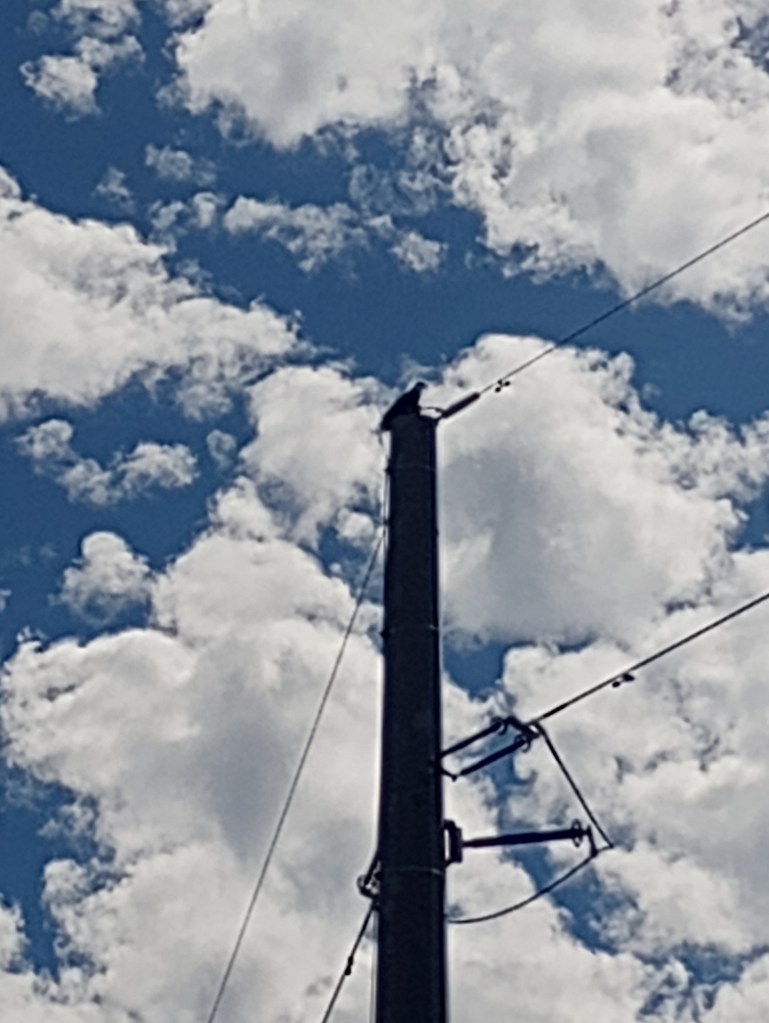
We also had a special visitor this week. It’s the first time I’ve ever seen a Bald Eagle at the farm. When he first flew by, I thought it was one of the Turkey Vultures we see daily. When he got closer, I realized what I was seeing. He was a majestic sight as he flew to perch on the giant utility pole at the south end of the farm. I tried to get a good picture but honestly, I’m not much of a photographer and I couldn’t get the light right. What you see is what you get unfortunately. I tried later when he was by the river, but he took off before I could capture a good image. I hope he finds us a good space to hunt at Opal’s Farm. We’d love to have him back.
We’d also love to give a shout out to all our volunteers returning after a long winter! The warm days we’ve experienced have brought some our old friends out and more are coming. We hope you can come enjoy Spring planting with us.
I get to see the gorgeous weather outside my office window, but I’m reminded that it’s only March 3rd. North Texas weather has a way of fooling everyone into a false sense of “Spring Fever”. The last frost date is supposed to be March 18th so maybe, just maybe, Spring is setting in…
What a week it’s been. We’ve had a gorgeous week of upper sixties and seventy-plus degree weather followed by a weekend of rain. We’d love to thank everyone who braved the elements to come out to Cowtown Farmers Market on Saturday morning. I spoke with one of our customers who said, “I can’t not be here. I can’t eat that stuff they sell at the store”. I love you! People like you are our best ambassadors! Once you’ve had local it’s hard to have anything else.
I appreciate the commitment to fresh, local, and extremely healthy produce that so many of you have. It really becomes evident on days like yesterday. I enjoy the families that bring their children and teach them the importance of healthy eating. I get excited when the kids point to a bunch of turnips or kale and ask if Mom and Dad can buy that for them. That’s the highlight of my day.
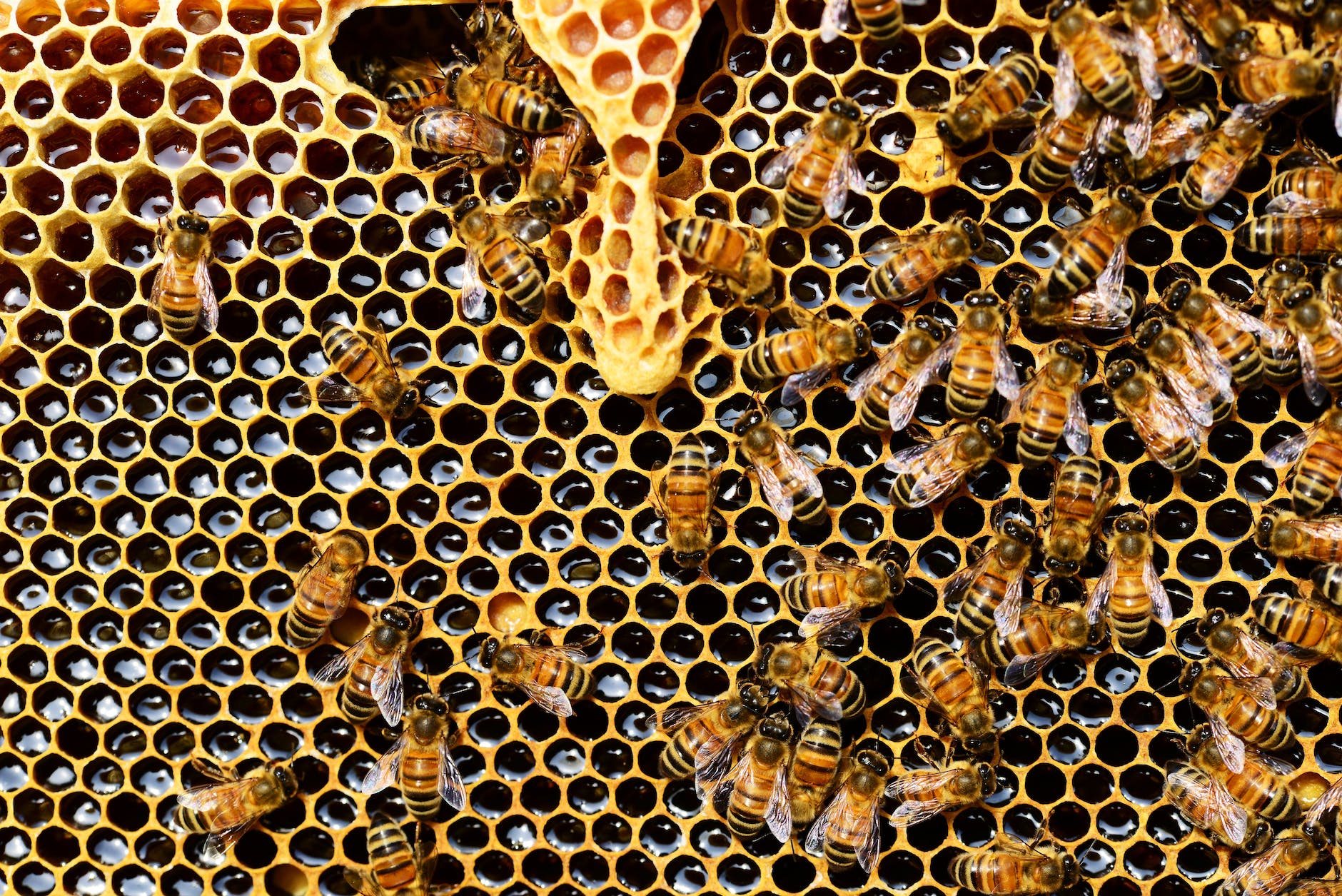
We started bee hives with the help of Brent Bennett from Green Hands Farm almost two years ago. Brent is a Master Beekeeper and has helped us reach the point where we had our first honey harvest a couple of weeks ago. Opal’s honey is not only local (which is essential for allergy help), raw, and unfiltered, it’s some of the best honey available in Fort Worth.
We plant a lot of buckwheat in the Spring. We use it between rows to attract beneficial insects as part of our integrated pest management. It’s also a favorite of our bees who bring that wonderful buckwheat taste to our honey. Come on out to Cowtown Farmers Market next Saturday and try some.
We’re working with Brent to start beekeeping classes in the Spring. Please keep an eye out for the details and sign-up site to come!
Thanks again to one and all for your support of Opal’s Farm and our local farmers markets.
It’s been a great week around these parts. My Assistant Manager, Joey, and I were in San Antonio earlier this week for the 31st Annual Texas Organic Farmers and Gardeners Association (TOFGA) Conference. We spent two days learning and sharing with other growers from all over the state. On Tuesday, I was part of a panel discussion on Agrotourism. We’d love to thank Kristin Song from Delve Experiences and the other panel members for helping us (and you, we hope) grow our agrotourism business. We are thrilled to be a TOFGA member!
The weather here has been unusually mild for Texas in February. The long-range forecasts, both from NOAA and The Old Farmers Almanac, point to a cold spell in the middle of this month and a last frost date of March 18th. I can’t wait to start getting the Spring crops in the ground. It’s been in the upper sixties and low seventies the last week. Spring Fever firmly has me in its grip. Still, it is February in North Texas…
This has been a week about community. We had our annual membership meeting of the Cowtown Farmers Market yesterday after the market. One of the questions put to all the members was, why do you sell at Cowton Farmers Market. My reason was clear – it’s all about community.
I spent the first part of the week at the TOFGA Conference. This was my fifth one and I’ve come to know people from all over the state of Texas. I look forward to being with them every year. I often learn more from the conversations outside the meeting rooms and that makes the conference expense more than simply worthwhile. It’s a community of farmers and food justice advocates I am so blessed to be a part of.
Cowtown Farmers Market is the same – both with the farmers and with our customers. A member of the market – another farmer – made a comment yesterday that explains the ethos at Cowtown Farmers Market. He said, “I don’t view anyone else there as competition”. This same member I’ve often seen help, or even sell, for another member farmer when they were sick or needed to be off.
We don’t operate from a paradigm of scarcity. We don’t need to stress and fracture relationships through constant competition. Farmers constantly refer customers to other customers who might have something they don’t have. I have benefitted from the wisdom many of our experienced farmers shared so freely. I’ve become a better farmer and a better person by knowing them.
I’ve also come to know many of our customers because they are there every week (and they usually tell me when they’re not going to be there for whatever reason).They’re there in the cold winter and they’re there during the heat of a Texas summer. I come to know what’s going on in their lives, their likes and dislikes, and they mine. Genuine conversations start – what’d you do this week, how’s the family, or asking about something they’d told me about a few weeks ago. There’s a continuity and a sense of community you simply will never find at your local Kroger or Albertsons.
I’d love to see you all come out to the market on Saturday mornings. Come join our wonderful community. Enjoy great people, great fun, and great food! If you can’t make it there, please come out to our new farm stand at 2500 LaSalle and be a part of the neighborhood community we’re proud to be a part of. Don’t worry. The community can never be too big, and besides, there’s always room for one more farmers market, right?
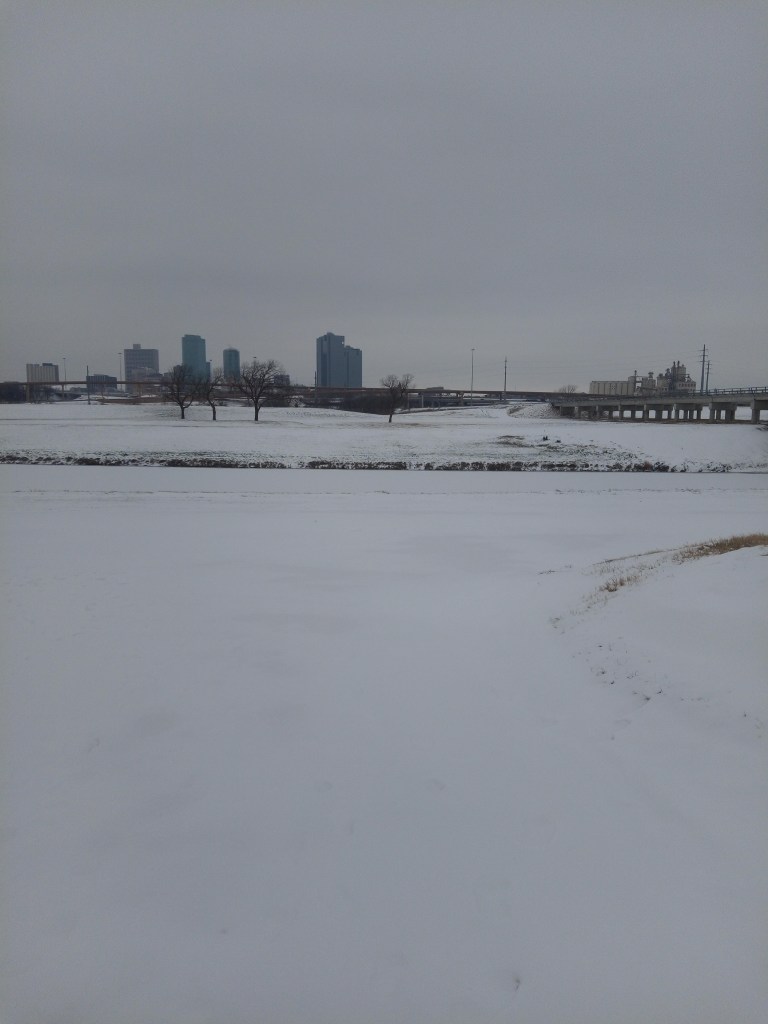
The scene beyond my window is rather drab. A blast of cold Arctic air exploded across North Texas yesterday afternoon. It brought with it the cutting icy North wind that plagues the Southern plains every winter. The “feels like” temperatures this morning were in the single digits and they’re predicting eighty-plus hours below freezing and sleet for this evening. Folks in these parts are understandably nervous. Ice brings out the worst in Texas drivers and the memory of Winter Storm Uri in 2021 is still fresh to anyone who lived here then. The power grid crashed, Texans went for days without power and water, and 246 people died from storm-related issues.
Last year saw a major ice storm at the end of January. We were at the Texas Organic Farmers and Gardeners Association Conference in Dallas and left early because of the roads. One of our employees ended up staying at the motel that night. One night turned into a week. Texans do not do well in cold weather. It doesn’t storm often but when it does look out!
Fortunately, we’ve had ample time to prepare for this Arctic visitor. Store shelves are empty of non-perishables and bottled water. Gas tanks are full and homes lucky enough to have a generator are standing by. People take the weather forecast a bit more seriously since the winter of ’21.
( Opal’s Farm and the frozen Trinity River February 2021 )
Personally, I haven’t had much time to prepare our house. I still must make a run to Home Depot. My neighbor said they had some outdoor faucet covers hidden in the back of the store. Information like that is like finding gold. We try to take care of each other in our neighborhood. I have, however, taken steps to prepare Opal’s Farm the best we can to save our winter crops. Frost cloth has been double-spread on the bio-intensive section and several of the hundred-foot rows. Prayers have been said, fingers have been crossed, and if I had a rabbit’s foot, I’m sure I’d be holding it close. We’ll keep you posted…
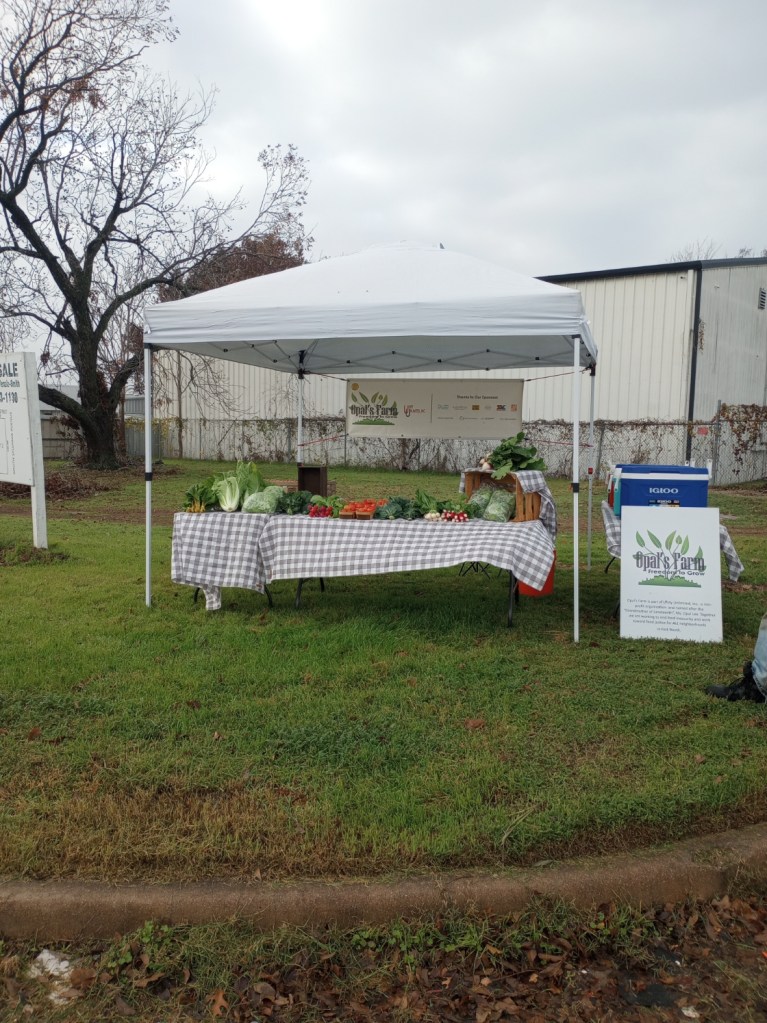
On a lighter, and somewhat warmer note (it was cool but warmer yesterday), we moved Opal’s Farm Stand hours to Saturday afternoons from 1:30 PM to 4:00 PM. We found his to be more convenient for our neighbors and the traffic on Sylvania isn’t rushing between jobs. We had several customers yesterday afternoon. This complements our mornings at Cowtown Farmers Market and our delivery for Hao’s Grocery and Café. We can harvest once a week to bring quality fresh produce to our community.
Anyway…
My fur-babies don’t seem to be bothered by the single-digit temperatures. They are out running around and playing as I sit here. Sitting here watching them got me to thinking about this blog. I’ve always called it “Thoughts From the Porch” because that was the place my thoughts and coffee ran freely since this journey began. I no longer spend my mornings on the front porch. It’s not because it’s cold. When you smoke it really doesn’t matter if it’s the summer Texas heat or the winter freeze, you’re driven to suffer outside.
However, that changed on November 1st of last year. That’s the day I quit smoking. I’ve been cigarette-less since then. The cravings have become less severe most of the time. The operative word being “most”. Other days – not so much. Staying off the porch has been a good move so here I sit. I still get a good view of the world through the patio door next to my office. It’s a constant reminder of God’s goodness and grace in our lives.
Maybe it’s time to find another name for this? Let me know your thoughts!
Please stay warm and safe through this cold snap. Stay inside, make it a family day or a day of introspection. Enjoy the time and pray the lights don’t go out…
My inbox has been filled with “Best of 2023” lists from the various writers and organizations I follow. As 2023 winds down I find myself thinking about all the wonderful things that have happened at Opal’s Farm and the ups and downs of the past year I’ve encountered personally. So, with that in mind I present to you the Best of 2023 for Opal’s Farm.
Ms. Opal
The biggest happening at the farm is always Ms. Opal herself. Each passing year reminds me of the blessing of her presence. Her love for others, her stamina and exhortations to become a “committee of one”, and her tireless work for our community revitalize us daily to make the farm the place to come for food, education, and the promise of food justice. She constantly reminds us that the walk toward equality and justice is one step and often with one person at a time. Our energy is always revitalized by her leadership.
Tomorrow my wife and I will celebrate New Year’s Day the way we have since I started at Opal’s Farm. At two in the afternoon, we’ll be present for her New Year’s Day dinner – along with a couple of hundred others! When we received the RSVP invitation it listed her accomplishments in 2023 so I’ll share them here:
Texas Senate portrait reveal – hers is only the second woman’s portrait to hang in the Texas Senate Chamber. The other is Congresswoman Barbara Jordan.
Three honorary doctorates
Two events with Cynt Marshall of the Dallas Mavericks
Several assemblies at schools with young people
Conversation with Brian Stevenson for the National Juneteenth Museum
Several visits to the White House
Visit with the Governor to talk about the National Juneteenth Museum
Reveal of portrait for the National Art Gallery
Inducted into the Texas Women’s Hall of Fame
Received two EMMY Awards – both the Governor’s Award and the Award for best documentary
New Awareness
Ms. Opal also visited the USDA People’s Garden in Washington DC and was featured in a national article for the USDA Natural Resource Conservation Service (NRCS). Both our Executive Director, Dione Sims, and I were invited to a roundtable discussion with Congressman Marc Veasy and US Department of Agriculture, Xochitl Torres Small along with a small group of local non-profits and City Council members.
The USDA is beginning to take a serious look at both local and urban farms and our food system. They opened their Urban Farm office in Dallas this year – one of ten cities to have one. Opal’s is by no means the only urban farm in Fort Worth, but we have had the privilege of hosting the NRCS staff for our area several times as they learn and extend their work to urban agriculture.
NRCS engineers have given us new plans and specifications for better irrigation at the farm. We are changing our irrigation over the winter months so we can grow more food for our community.
New and Old People
The Spring growing season was a time of transition for Opal’s Farm. Our previous Assistant Farm Manager, Amber Carr, helped build the infrastructure for our bio-intensive third-of-an-acre. She left the farm in July, and we were blessed to have Joseph (Joey) Hughes step in this Fall to take over our bio-intensive section. Joey came to us from World Hunger Relief in Waco and has an extensive background in education and urban agriculture. We’ve extended our programs to include agrotourism and educational programs for the community. We’ve also partnered with Delve Experience to a make tours and education more accessible through their website https://delveexperiences.com/ .
We’ve continued to build our partnership with Tarleton State University. In the coming year two new programs for both the community and previously incarcerated individuals will begin. We are presently finishing the curriculum and the final details. We’re excited to share this with you as 2024 begins (more to come!).
On Friday, December 22nd, we held our first-ever farmstand at the corner of Sylvania and LaSalle near the entrance to the farm. We are now able to support a regular farmstand on a weekly basis for the United Riverside neighborhood of which we are proud to be a part of (you don’t have to be a neighbor to come!). We are presently open from 10 AM to 2 PM but this might change as we get more input from our neighbors.
We’ve long hoped to be able to have our own farm stand and the final incentive came in November when we became authorized to accept SNAP benefits. This has been a game-changer for meeting our community goals. Please feel free to come by and check us out. You can tour Opal’s Farm while you’re there.
We’ve had some awesome volunteers this year and particularly this Fall. Stacey Harwood returned from medical leave as our Volunteer Coordinator in September and has done an amazing job getting some big projects done. We’ve had more time this Fall to plant more hundred-foot beds and expand our biointensive beds. We could not have done it without our volunteers and Stacey’s help. We want you to know how treasured and appreciate our volunteers are. You make the farm complete!
There have been so many things that have made 2023 a successful and major growth year at the farm. I have no doubt I’ve left some significant moments out. What I can tell you is that donors really stepped up this year to make 2023 and the coming year special. We’d like to thank the Enterprise Foundation with Enterprise Car Rental and the Stewart Family Foundation for the special awards that will keep Opal’s Farm expanding through 2024. We’d also like to thank KPMG Inc. and JP Morgan Chase for their continued support!
I cannot finish the “Best of” list without a thanks to our Executive Director, Dione Sims. We are a program of Unity Unlimited, Inc. and Unity’s support and belief in Opal’s Farm is what drives us. Dione spends many hours with all the various programs Unity does throughout the year, but she always has time for the farm. Thank you, Dione, for being an awesome leader, a friend, and a mentor!
On a personal note…
This past year has been incredibly hectic. It’s often difficult to “stop and smell the roses”. I, for one, have learned the value of tasking time to count God’s blessings. I am one of the most fortunate people I know. I get to go play in the dirt – to do what I truly love and am passionate about – and I get to do it every day.
Any kind of farming, whether it be urban or rural, is hard, but rewarding work. On the 110 degree days in August I ask the same question – why do I do this stuff? Then, I go to the markets we attend, and I get to see and know the people we serve. You all have made the year wonderful.
I hope and pray that 2024 brings you all joy, peace, and happiness. Thank you for being part of the Opal’s Farm family.

 gregoryjoel.com