Communication, Community, Composting, Conservation, Down On the Farm, Environment, Food Justice, Gratitude, Non-Profits, Opal's Farm, Service Organizations, Service to Others, The Holidays, Unity Unlimited, Inc., Urban Farming

Early Christmas!

It’s almost Christmas and I haven’t done well in keeping our friends up to date with Opal’s Farm this December. I guess you could include October and November in that as well. It’s been a hectic Fall! Our unseasonably warm weather and only occasional cold spells have been great for the farm.

Thanks to the Conservation and Environment Fund at North Texas Community Foundation we’re looking forward to a great Winter and an even better Spring. Christmas came early for Opal’s Farm when we were awarded a grant from the Conservation and Environment Fund at North Texas Community Foundation. We’ll be adding new pollinator habitats throughout the farm, improving soil health with better composting, and expanding our production area so that we can feed more of our neighbors while taking care of the land we’ve been so graciously been granted by the Tarrant Regional Water District.

“North Texas Community Foundation drives meaningful change through charitable investment. The Foundation helps donors meet the needs of our community by providing tax-efficient strategies to support the causes they care about most. At the core of everything we do is a network of generous individuals, families and businesses intent on shaping the future of North Texas for good, forever. Learn more at northtexascf.org.

Bad Weather, Choices, Climate Change, Community, Conservation, Creation, Down On the Farm, Environment, Faith, Food Justice, Gardening, Hope, Neighbors, Non-Profits, Opal's Farm, Plowing, Preparation, Simplicity, Spirituality, Texas, Thoughts From the Porch, Transformation, Unity Unlimited, Inc., Urban Farming, What Can I Do

One Farm at a Time

What a week at Opal’s Farm! We have everything in for fall and winter and have started taking out spring leftovers, rebuilding beds, and solarizing them for weed control in the spring. We finally took out our tomato plants, but not before harvesting about a hundred and fifty pounds of tomatoes – and it’s ten days until Christmas. We love that a hard freeze hasn’t come yet, but we’re also a bit worried as this is another indicator of how strange our weather has become.

The weather is a “frienemy” for farmers – it brings the rain that helps the crops grow or the drought that kills them off. It’s the one thing we can’t control. We may do a rain dance or pray a freeze holds off until the crops come in, but in the end, the weather does what it will.

However, even weather has things it can’t control either – a warming climate changes the weather – leading to warmer average temperatures and more intense weather events. The intensity of our North Texas summer over the last two years is an example. In 2022, the heat came early, and the rain stopped. There was no rain from June 3rd until August 29th. It was much the same this year        with 2023 being the second hottest year on record according to the Texas Tribune and NOAA. Moreover, when it finally did rain, it rained so much and so heavily that Opal’s Farm suffered flash floods both years.

Hardiness Zones – the zones which show the lowest temperature in a zone and determine the growing season – have gradually moved northward. According to Yale Environment 360, hardiness zones were moved northward from 1990 to 2012 and are moving at a rate of just over thirteen miles per year. The heat is headed northward. Fort Worth has shifted from Zone 8b to Zone 8a. What and how much we grow changes as the zones move north.

So, What Do We Do?

Opal’s farms about two-and-a-third acres at present. We are growing into the full five acres granted to us by the Tarrant Regional Water District. We don’t expect to see major changes, the amount of land is negligible in the grand scheme of things. However, there is something we can do that’s consistent with our core values of resilience and regeneration.

First, we can continue to research and try non-native (but non-invasive) varieties of food crops that are both heat tolerant and drought resistant. Our salad mix uses Tokyo Bekana along with other Asian greens. Tokyo Bekana looks and tastes like lettuce (some say even better) but it’s actually related to Chinese cabbage. It fares much better than traditional lettuces that can only be grown in early Spring or late Fall. It can be grown year-round in North Texas.

We use this same practice on other crops as well. We are slowly beginning to turn to south Asian foods like bitter melon, bottle gourds, and yard-long beans. The beans are quite prolific and love the summer heat.

Secondly, we never leave exposed soil. Cover cropping is essential. Always have living roots. We are finishing up cover cropping all all non-food crop beds. We use Austrian Winter Peas and Elbon Rye in the winter time. Legumes like the peas fix nitrogen into the soil and the rye’s root system keep the soil broken up and able to retain water and oxygen better for the soil microbes. We use various mixes that we purchase from Green Cover Seed in the warmer months.

Finally, we sequester carbon in the soil. Our biointensive beds are no-till while the remainder of the farm is minimal till. Dr. Omar Harvey, with the Geosciences Department at Texas Christian University, had students researching carbon sequestration at Opal’s Farm beginning two years ago. The explanation of the methods used is several pages long, so I’ll not bore you with the process, but the results are important. Dr. Harvey’s students were able to quantify the carbon sequestered away on the farm and found it to be 168 metric tons per acre.

Why is that important?

It’s important for two reasons. One, the research confirmed not only the amount but the type of carbon – deep carbon. When the carbon is sequestered deep in the soil it stays there and is less likely to be released into the atmosphere. The carbon sequestered in the upper eight inches of soil is still available for the plants which is a winner for both the climate and us.

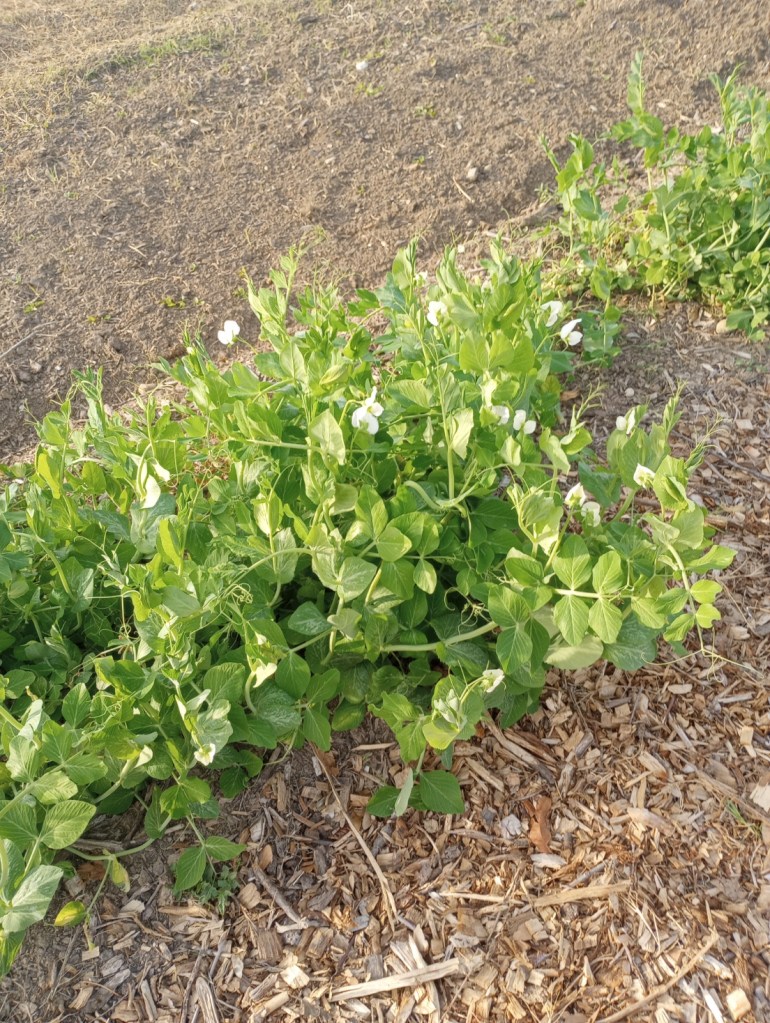
Our Sugar Snap Peas are blooming and will be available shortly!

I have mixed emotions about the second, and most economically beneficial, reason – that being the figure for carbon credits.  At four to five dollars per metric ton Opal’s could generate anywhere from nine to eleven hundred dollars per year in extra revenue. Alternative revenue streams are a must for small farmers.

However, the alternative here seems to be a bit of greenwashing. The idea that a company such as an airline can use carbon credits to meet their climate “goals” while continuing business as usual is somewhat opaque in nature. The bottom line however is that carbon is sequestered and can offset the gases released into the atmosphere. The more regenerative agriculture practiced, the more carbon stored away and an alternative income stream for farmers doing what they do naturally.

Whether for the economic benefits or for the common good, regenerative agriculture can play a large part in facing the climate crisis. Next Spring, we are attending classes to become Carbon Farm Planners. Agriculture can be part of the solution and the more we know the more equipped we are for positive change.

We may not be able to change the weather, but we can do our part to adapt and bring healthy, nutritious produce to Fort Worth and fight climate change in our little piece of Texas. As Ms. Opal often reminds me, “Be a committee of One”. I remember Dad telling me that “everybody complains about the weather, but nobody does anything about it”. Being a Committee of One, one small urban farm, is doing something about it. Join us in the fight. As Mother Teresa said, “If you can’t feed a hundred people then just feed one”…

Choices, Community, Conservation, Creation, Elders, Environment, Equal Rights, Heroes, History, Hope, Indigenous Peoples, Monday Mornings, Quotes, Regeneration, Social Justice, Spirituality, Thoughts From the Porch, Transformation, What Can I Do

“If we are to heal our ecological wounds, we need to shift from settler views of individual land ownership to Indigenous views of communal land stewardship.” – Liuan Huska, “Rethinking Property Rights”

Communication, Community, Composting, Conservation, Creation, Culture, Donations, Down On the Farm, Environment, Faith, Fighting Poverty, Food Deserts, Food Equality, Food Insecurity, Food Justice, Food Waste, Gratitude, Health, Marginalized, Neighbors, Non-Profits, Nutrition, Opal's Farm, Regeneration, Service Organizations, Service to Others, Social Justice, Spirituality, Spring, Springtime, Thoughts From the Porch, Transformation, Unity Unlimited, Inc., Urban Farming, Volunteers, What Can I Do

Betting on Spring

I was sitting on the porch drinking coffee and listening to the sweet songs of the mockingbird that perches on our catalpa tree every Spring. When I got to the Opal’s Farm, I saw the first robins skittering across the newly turned soil. We had what I hope is the last freeze this past Friday night. The lettuces and Tokyo Bekana that was beginning to sprout survived with flying colors. I feel ready to say that Spring has finally sprung here in North Texas. Then again, it is North Texas…

I love when the robins flock to the farm. I enjoy watching them because I know that they know where the worms are and earthworms are one indicator of healthy soil. I pulled some turnips yesterday and saw the mycelium covering their roots. My kids laugh at me about how excited I get to see such things but quite frankly, I don’t care. Healthy soils mean healthy plants. Healthy plants mean wonderful flavor and maximum nutritional value for our customers and those we serve!

This Spring promises to be a pronounced difference from last year. The historic 2021 ice storm and the uncommonly wet May caused dramatic losses to our Spring crops. Everything seems to be on track this year for a successful Spring for Opal’s Farm. Our compost pile is growing (Thank you Carpool Compost!) along with our wood chips for mulch (Thank you J Davis Tree Company!). In fact, we have wood chips available to our community if anyone needs some for their Spring gardens!

We weren’t at Cowtown Farmers Market this week, but we will be there next Saturday. It’s been hit and miss since the first of the year. We didn’t even get to go to market from the first week in January until last week. It was so good to see so many of our regular customers and share Saturday morning with our fellow vendors. We missed you all! We have some of the most awesome folks who share their Saturday mornings with us.

Our Spring Volunteer Sign Up calendar will be updated today. Stacey Harwood, our Volunteer Coordinator, tells me that weekends are beginning to fill up with large groups coming out so be sure and schedule your groups as soon as possible.

We can’t even begin to tell you how excited we are that Spring is finally here. Come and join us as we work the soil, plant Spring crops, and eagerly await the anticipated abundance Opal’s Farm gives us each year!

As always – you can donate to Opal’s Farm at http://www.unityunlimited.org or at our stall at Cowtown Farmers Market. Every dollar you donate to Opal’s Farm is goes to providing a healthy meal to our neighbors. Every dollar you spend at Cowtown Farmers Market helps those with no access to fresh, nutritious produce have a healthy meal and builds our neglected communities!

Communication, Community, Conservation, Creation, Down On the Farm, Education, Environment, Events, Fall, Food Justice, Hope, Neighbors, Non-Profits, Opal's Farm, Regeneration, Service Organizations, Social Justice, Unity Unlimited, Inc., Urban Farming

New Beginnings at the Farm

The Fall crops are in and doing well. The greens are abundant, the tomatoes ripening quickly, and the peppers have been supercharged by the cool night air. We’re taking more and more to market and more coming in the next two weeks. Come and see us at Cowtown Farmers Market and prepare for the holidays!

This is our favorite time of year at Opal’s Farm. The mornings have a slight chill in the air. The summer heat is left behind. The high temperatures hover around seventy to eighty degrees – perfect weather for working. There’s time to clean old beds and prepare new ones for Spring.

The pace seems more relaxed and laid-back. It’s also the perfect time to reflect on our mission, our vision, and our values and focus on the truly important things Opal’s Farm is about. Are we staying the course? How can we do things better? It’s a time to refocus, make sure we’re following the best path toward our goals, and look forward to the coming year (yes, friends, it’s only two months away…).

Our Mission Statement

Building vibrant local communities through regenerative urban farming, faithful gathering, and lasting fellowship

Our Vision

We imagine a world where diversity is evident, opportunities are plentiful, and divisions are crossed, all in pursuit of lasting unity. Opal’s Farm creates community empowerment through food. Through our work we hope to generate a replicable model of community building, engagement, and empowerment.

In keeping with our Mission Opal’s Farm is proud to be part of the Farm Manager Apprenticeship program starting on Wednesday, November 3rd. Grow SE, with a grant from the United Way, is beginning a nine-month Apprenticeship Program for three new farmers from Southeast Fort Worth.

They will be working side by side Grow SE farmers to learn how to plan, build, and grow their own crops using regenerative, organic means of building healthy soil and healthy plants. They’ll each build their own fifth of an acre plot, from planting to harvest, and then market their crops. They will take the knowledge and experienced they gain to their respective communities in Southeast Fort Worth – joining the urban agriculture movement to bring healthy fresh produce to neighborhoods that need it most.

We’ll be introducing you to the inspiring young men in coming posts and keep you updated on our progress.

We’d love to have you come out (weather permitting) on Wednesday, November 3rd at 10:00 AM and celebrate the beginning of the Farm Manager Apprenticeship Program with us. Come meet our new farmers and be a part of the Opal’s community.