Activism, Airplanes, Communication, Community, Down On the Farm, Events, Farmers Markets, Food Deserts, Food Equality, Food Insecurity, Food Justice, Food Waste, Gardening, Health, Landfills, Marginalized, Neighbors, Non-Profits, Nutrition, Opal's Farm, Public Policy, Regeneration, Relationships, Service Organizations, Service to Others, Social Justice, Thoughts From the Porch, Transformation, Unity Unlimited, Inc., Urban Farming, Volunteers, What Can I Do

Urban Ag and You

A couple of weeks ago, my Monday morning meeting ended early, so I sat at the Philadelphia Airport waiting for four hours for my plane home. I’m not good at sitting but I have little choice over the next seven hours or so. It was nice to catch up on a few things, but I prefer the open fields and growing plants to rows of chairs and sitting in an airborne cigar…

I was here to attend the Black Urban Growers National Conference, or BUGs as they call it. Philly has a strong urban agriculture movement with many farms and community gardens dotting the city. They even have a Director of Urban Agriculture as part of the Parks and Recreation Department for the city government. It was great to make some connections with folks here. Hopefully, we can begin to move city government in Tarrant County, Fort Worth, and the surrounding cities to move in a positive direction for urban ag and community gardens. Jesse Herrera, Linda Fulmer, and Grow SE have moved us a long way but there’s so much to do to make Fort Worth favorable to urban agriculture and eliminating food insecurity.

Six cities currently have Urban Agriculture leaders in city government – Philadelphia, Atlanta (whose director also spoke at BUGs and was the first city in the nation to appoint a director), New York City, Detroit, Austin, Boston, Seattle, and Portland. These are also areas where there are strong food policy councils. However, each agreed that community member advocacy was essential to the formation of urban ag programs. These positions work through the mayor’s office, sustainability offices, parks, or planning departments. While Tarrant County has a food policy council, they need support from our community to have influence over policy decisions at the county or municipal level. We need is citizen support to drive progress forward for urban agriculture.

Why Urban Agriculture?

There are three primary reasons for establishing urban agriculture policies in Tarrant County municipalities – the number of food deserts, public health, and supply chain issues.

  • In 2020, NBC5 news reported that Tarrant County was one of the Top Ten counties in the country for food insecurity ( https://www.nbcdfw.com/news/local/fighting-hunger-urban-farming-in-fort-worths-food-desert/2292808/ ). Moreover, the USDA identified over forty areas in Tarrant County that qualify as “food deserts” – areas that are over a mile away from a grocery store. Food “desert’ is something of a misnomer. Food apartheid represented the concept far better as most of these areas are in lower income areas or communities of color. Urban agriculture and farmstands or farmers markets can make a significant impact on accessibility to fresh food in these neighborhoods. It can be costly under present urban farm and garden ordinances to build infrastructure needed for urban ag.
  • Public health is drastically affected by lack of access to healthy food. The zip code 76102 is the unhealthiest zip code in the state of Texas. Life expectancy is 66.7 years old – twelve years below the national average ( https://www.star-telegram.com/news/local/fort-worth/article244137362.html ). While lack of access to healthy food is not the only reason for poor health outcomes, it is certainly the root of the problem. In the Southside, Morningside, and Hillside communities there are only a dozen convenience stores that only sell snacks and highly processed canned foods lacking nutritional value. Locally grown, nutrient-dense fresh vegetables help the body’s own defenses against heart disease, high blood pressure, diabetes, cancers, and obesity that lead to shorter lifespans and higher medical costs. Costs borne by all of us.
  • The COVID pandemic revealed serious flaws in our present food systems. Who doesn’t remember the higher food prices and empty store shelves of many items we use every day. Breaks in the supply chain have serious consequences for the retail grocery stores. Our food travels an average of 1500 miles from the farm to your table. To reach your grocer, it has to be picked before it’s ripe, sprayed with preservatives, shipped by rail or by truck to a distribution center and delivered to each individual store. It lacks the flavor and nutrient density so many of us crave. Locally grown produce is a solution to this problem.

Moreover, local urban farmers develop a sense of community around the local farmer’s market or farmstand. The community gets to know their local farmers and their neighbors better. “Screen time”

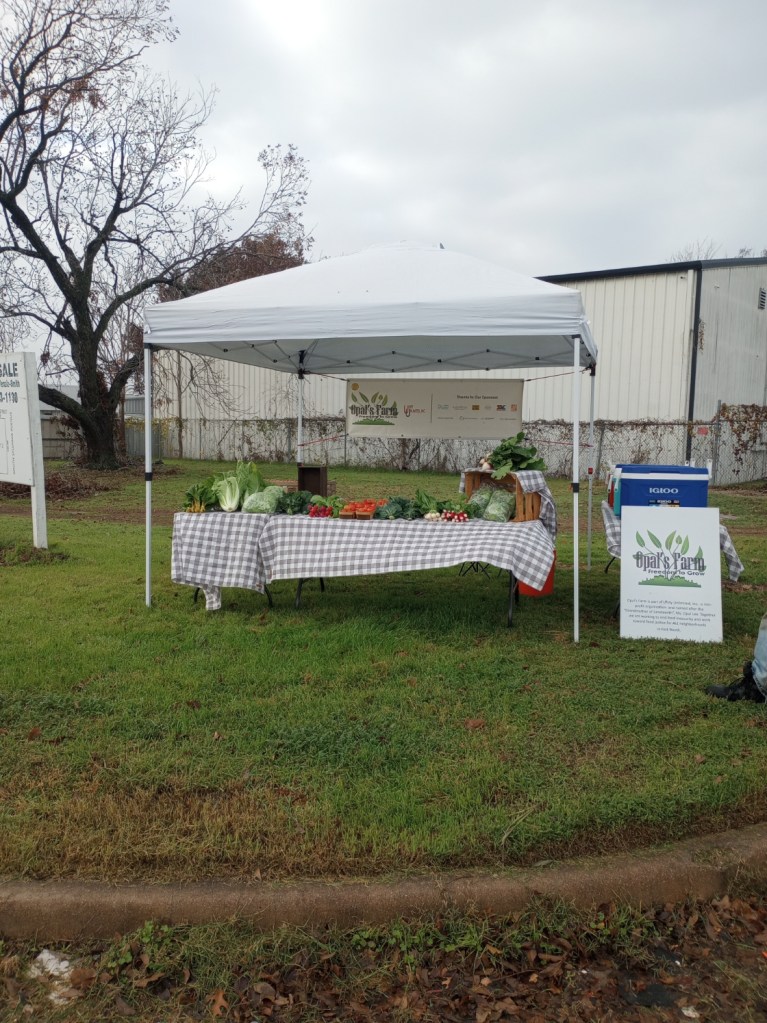
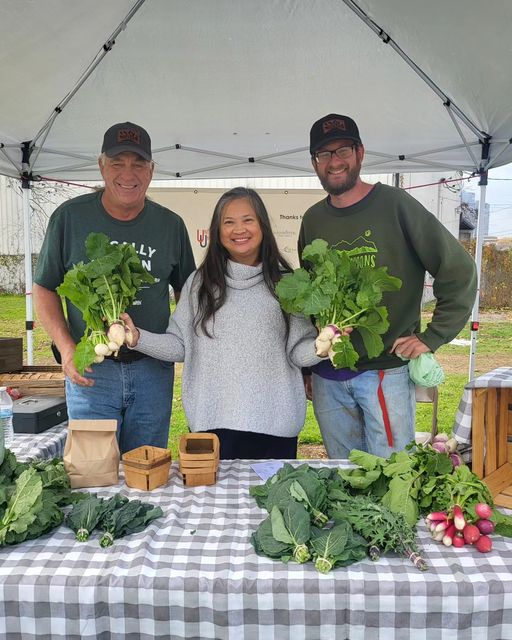
Is often replaced by real conversations. A sense of neighborhood pride replaces some of the isolation that often plagues our senior citizens. Opal’s Farm has been a member of the Cowtown Farmers Market for five years now. We’ve developed a loyal customer base and we’ve come to know our customers as friends. We’ve been an active part of our community, and many folks have volunteered at the farm as well as become our customers.

What Can I Do?

Access to land is often easier than we think. Learn about urban agriculture in your neighborhood. Are there any community gardens? If not, is there a place for one? Are there vacant lots, churches, or schools that might be good sites for a small urban farm or community garden. Are there local learning gardens to offer growing tips and support to neighborhoods? Do your local schools have school gardens that you might volunteer with? Is there a place to gather to bring local farmers and gardeners together to offer their goods and services to the neighborhood?

Find out what the urban agriculture and community garden ordinances (or if you even have them) are in your municipality. Is zoning an issue? Neighborhood associations are often a great place to start if you have one. If not, local code compliance or development departments can provide guidelines.

Here in Fort Worth, urban agriculture ordinances were almost non-existent and what we did have was more of a barrier than a help. A local initiative by County Commissioner Brooks Office called Grow SE brought local non-profits and urban farmers together to address this issue. Grow SE worked diligently to address and change the city ordinances that limit urban ag and have made it much easier to build the infrastructure to make it successful but – we have a long way to go!

Get involved with your local food policy council. Food Policy Councils were first authorized in the 2014 Farm Bill and re-emphasized in the 2018 Farm Bill. If your city does not have one, then start one. Here in Tarrant County, we are fortunate to have a council with working groups in urban ag and food waste (a significant issue as Fort Worth faces having to build the infrastructure for a new landfill). Food policy councils can have a major effect on local food policy and urban agriculture.

Contact your local city council member and make your voice heard. Attend city council meetings and ask your neighbors to do so as well. Talk to your local officials and let them know this is a big issue to deal with. Changing the food system and delivery to your table begins at the local level!

I’m excited to be home and to continue our Fall growing and prepping for next Spring. I’d love to have you come out and start your urban agriculture journey with Opal’s Farm. Come see the possibilities for positive change here in Fort Worth and Tarrant County. Bring your kids. Kids (and unfortunately many adults) have no idea where their food comes from. Once they learn how good food is grown and distributed to our communities, they get excited to be a part of the process. The fresh air, vitamin D, and “playing in the dirt” is great for them (and for you!) Come and see!

Adoption, Depression, Emotional Health, Events, Generations, Gratitude, Grief, History, Parents, Relationships, Songs, Stories, Thoughts From the Porch, Writing

The Prodigal Son…

I was enjoying some time on the front porch last night before going to bed. It was still warm at 9:30 PM here in Texas so I didn’t intend to spend too much time, but grief had other plans…

I lost my mother a couple of weeks ago. I returned to Kentucky last weekend for the funeral. I visited with my brothers at Momma’s house for a while on Saturday. The general consensus being we were all simply trying to process that Momma was gone. The air was filled with sadness and the emptiness was an oppressive reminder of why we were there.

My little sister arrived and promptly ignored any of the things Momma and I had talked about concerning my brother Danny who is deaf. She made it clear that Danny wasn’t coming to visit, and they had it all under control. My other brother voiced his support as well. I guess I felt a little blind-sided. It dawned on me that things were going to be far different with Momma gone. The events at the funeral were further confirmation of this fact.

I know we all have a different grief process. Funerals are not for everyone. The grief is far too raw and mostly keeps the family in a numb state. There are things to be done in preparation for the event and the choreography of remembering one’s loved one requires some degree of detachment from the one lost just to make it to the day of the funeral.

The funeral (or the politically correct term – “celebration of life”) followed the pattern of most such occasions – the viewing, the family reception line, and the line of friend of the deceased walking past the family to pay their respects. I chose not to stand in line until my son insisted that I go up there and stand with the family – my family. I wasn’t in line long before it became apparent (at least felt like) I wasn’t welcome in the reception line. I returned to my seat (which was in the family section) and spent the remaining time talking to Margaret and my cousins who had come from Texas to send Momma off.

When the funeral was over, we followed in the procession to the cemetery. There was a brief graveside service and my brother-in-law, Adam, who is the go-to expert on family history (he’s an amazing wealth of knowledge) told me about all the folks and relatives buried around Momma. We then went to Flint Ridge, the family farm, and ate a meal provided by Momma’s church. Afterward, goodbyes were said, and we all left to return home and begin the full process of grieving.

I returned to Fort Worth the next day and the hours of the return drive were mostly filled with silence and occasional conversation about the feelings I had. My wife Margaret and I are both in recovery and one of our mantras is “feelings are not facts”. Just because I felt isolated and uncomfortable doesn’t mean that my brothers and sisters tried to make me feel that way. By the time I got home the farm had so many things going that I was lost in trying to play catch-up. Maybe that explains last night’s flood of sobs.

Suddenly, I felt a loneliness I haven’t known in a long while. The losses hit with the force of hurricane winds – my momma, my mom and dad, my son Jeremy, my dear friend and mentor, Jim, my best friend David, and my friend Eduardo. It didn’t seem to matter that my life is still full of people I love dearly and that love me – my wife, my oldest son, my step kids, my sponsor and confidant, Edgar, Ms. Opal, Dione and my Unity family. It just felt cold and alone. The tears welled up and when the dam broke, I couldn’t stop crying and slinging snot. I wanted to hold my grandchildren (teenagers probably wouldn’t like that) and call my son, Adrian, right away.

The last few years have seen unimaginable loss for me. It shouldn’t surprise me. My family, good friends, and I all qualify as senior citizens (young senior citizens I might add), and these things happen as we get older. It’s how life is. I don’t know what the future holds. I’ve learned to live in the moment, one day at a time, so I don’t have to figure out my Kentucky family right now. I simply need to feel my feelings, love my family and friends, and carry on the work God has given me to do each day. Amid it all I need to find the things for which I’m grateful.

Some days will be easy. Some days will not. I’ve walked this path before, and each loss affects me differently. I simply need to let it be until the feelings are more stable. Grief is a rollercoaster and while the ride finds its end, the memories (and the scars) remain.

I came in and the stereo was playing “The Funeral” by the Turnpike Troubadours. God must love irony because He couldn’t have timed a better song to hear. It’s how I felt at Momma’s funeral. Maybe you get what I mean…

Christianity, Community, Culture, Emotional Health, Faith, Humility, Jesus, Marginalized, Opal's Farm, Prayer, Responsibility, Revival, Seeing Others, Service to Others, Songs, Songwriters, Spirituality, Thoughts From the Porch, What Can I Do

Too Late to be a Good Samaritan

Fall is normally my time for self-introspection. North Texas summers usually keep that habit away – one can only think of finding air conditioning! It’s been above one hundred degrees for most of the summer with constant excessive heat warnings. Nights have stayed above eighty degrees since the first week of July so there’s little relief when evening comes. Most of North Texas is in severe drought. I suspect the media is right when they refer to this as the “new normal”. The sad thing is that everyone seems to accept it and do little to mitigate the problem, but that’s another blog post…

Back to reflection…

It was 111 degrees according to my truck thermometer when I left the farm. I cranked the air conditioning and headed to the house for a Zoom meeting. It was a brief hour break on a hot summer day to enjoy the AC, grab a snack, and change out of sweat-soaked clothes. I headed towards the turn to Interstate Thirty and there he was – lying next to the entrance ramp – sun beating down on him a mere three feet from the shade of an overpass. He was on his back and his arms outstretched slightly to the sky above. He was in the direct sunlight with shade only a couple of feet away. It was obvious he wasn’t merely sleeping. He was dead. His arms were stiff, rigor mortis had set in, and his body bloated from the afternoon sun.

One officer from the Fort Worth police came followed by the Tarrant County Medical Examiner’s van. I stayed long enough to give a statement and notice all the cars going by. How long had he been there, and no one noticed, or cared enough, to stop and call 911? I remembered the parable of the Good Samaritan. I guess I wouldn’t qualify here. I didn’t get here soon enough. I wondered what I would’ve done if I did…

The crime scene tape was never put up, no investigation made, and the ME loaded the body to take back to the morgue. The whole affair was over in about thirty minutes. The police seemed put out that the ME was taking so long. Just another homeless guy. No signs of violent trauma so time to get on to more important things like the comfort of air-conditioned squad car.

The scene has been seared on my brain ever since. I can’t help but wonder who the man was – what was his name, where was his family? Few people are totally alone in this world although many feel that way. He was somebody’s son, maybe a father, or maybe a brother. Would they find his family and report his death? Would he be missed? Would anyone grieve over his passing? Would anyone care? The news came on that evening. No one talked about the passing of another homeless person. I wasn’t surprised. Anonymous dead homeless guys simply aren’t newsworthy.

The farm is close to the night shelter and Union Gospel Mission. The city has worked hard to isolate the homeless (or more PC – “unhoused”) population to the “mission district”. Still, there’s far more homeless people than there are beds. Around the bend in the river there are several acres of thickets between the old drive-in and Gateway Park. There you’ll find several homeless camps and their number is growing every year. If you look closely, you find camps all around the city – under bridges, wooded areas, abandoned houses. The Tarrant County Homeless Coalition reported that “more than 5,000 households experienced homelessness throughout 2022 in Tarrant County” (Fort Worth Star- Telegram, February 13th, 2023).

We often have some homeless folks who make their way along Trinity Trail above the farm. They will occasionally ask for a bottle of water or rest in the shade of the farm’s only tree. Sometimes they carry on loud, and sometimes angry conversations with people unseen by us. Mental illness accounts for a significant portion of the homeless population. Panhandlers covered all the main intersections from the freeway to the farm. It’s easy to look past them; to avoid eye contact and hope the stoplight changes before they approach the car. I know. I’m guilty at times.

I’ve been praying about that a lot the last couple of weeks. I’ve been in their shoes and yet I forget all about them when my life got back on track. Suddenly, I’m too busy “doing good things with the farm” to notice them, to really see them, or to have a kind word. I become the priest or the Levite in Jesus’ tale of the Good Samaritan. It’s not that I don’t care. I’m just in too big of a hurry and don’t want to have any distractions from the day ahead. I have important things to do – at least in my own mind – and I fail to see Jesus right in front of me (see Matthew Chapter 25…?). Nothing is too important to not to see and acknowledge the divine in each of God’s kids.

Joan Osborne recorded a song in 1995 that resonates with me today especially. It reminds me that I can see God everywhere. He might even be panhandling on the street corner.

Awe, Climate Change, Community, Connection, Creation, Down On the Farm, Environment, Opal's Farm, Relationships, Seasons, Simplicity, Spirituality, Summer, Thoughts From the Porch, Trinity River

Egrets, Yep, Egrets

I’m sitting at home alone tonight. That’s not a bad thing. It just is. Margaret has been in the hospital and moved to a rehab hospital for a couple of weeks. I’ve daily trips to the hospital, Opal’s Farm, the hospital, and back home to work. Add to that all the Juneteenth festivities and I can safely say its’ been a crazy busy June!

I’m harvesting between 400 and 600 pounds of tomatoes per week since everything started to come in during May. Sales have been great at the market, but with so many tomatoes I’ve had to start selling them to another non-profit that serves the WIC clinics in Dallas and to the Tarrant Area Food Bank. Delivering to Dallas has not been one of my favorite tasks although I love the folks at Owenwood Farm. I still maintain that the best thing to come out of Dallas is Interstate Thirty West…

Needless to say, this is the first opportunity I’ve had to sit down and write for the last two months. It’s also the first chance I’ve had to catch up with many of the blogs I follow as well and sit down to go through my personal email account. If you haven’t seen a like or comment, please don’t take it personal. I simply haven’t had time to read.

 I’ve said all that so I can now talk about what’s been on my mind the last month – Egrets. Yep, birds. After a couple of months of silence, one would think I have more to say but… Egrets -those beautiful, long-legged white birds related to Herons. We used to call them cowbirds when I was little because of the way they hung around, and on, the cattle to eat insect pests. I see them frequently at the farm. Mostly nesting and wading about searching for food on the far bank of the Trinity River.

Photo by Mohan Nannapaneni on Pexels.com

We even have some state wildlife and research students with a tracker following the birds they’ve tagged. I’m happy to report that they shall have an abundance of birds to tag this year. There was an unusually heavy baby boom this Spring. The farm is often covered in groups of young Egrets walking about and I’ve become acquainted with some of them. At least I think I have…

This probably doesn’t mean anything to anyone else, but since my cataract surgery in May I’ve been able to see better than I have in many years. My vision is so clear now that I’ve been able to see things I’ve never noticed before like Egrets and their personalities. I’m fully aware of the human tendency to anthropomorphize other creatures but I’m convinced they are much like us – at least the young ones anyway.

Juvenile Egrets are smaller in stature as young ones tend to be. Unlike their parents (who by the way both take care of the nesting and young) they aren’t all white. They have a tan section on their head, breast, back feathers. Occasionally they will raise their head feathers to reveal a small, tan mohawk. It fades to white as they grow older. They always hang around in groups of ten to fifteen. They have one young guy who they’ve appointed leader – they seem to follow pretty much everywhere. If he moves north, they all move north, if he takes off, they all take off in file behind him – that is, all except for one.

I love this little guy – I imagine him to be a bird version of me. He’s always the last one to fly or walk away when I come down the road or walk up to the pumphouse. I can relate. I was usually the one picked last or left behind. The others sense danger approaching and tend to take off as soon as I get close, but this little guy hangs around. He’s allowed me to get closer each day. Each day he grows more curious about this big, flightless biped that talks to him as if we share the same language. His head tilts one way and then the other. He’s even ventured a couple of steps toward me if I stand still long enough. I’m sure passers-by would find me a tad insane standing in a field talking to a bird. I’m okay with that. The young fellow makes for good company on a hot day.

Over the last week the groups of young birds have gotten smaller and less frequent. It appears that most have moved on to do what it is that Egrets do. I’d move on too with the triple-digit heat we’ve had of late – at least somewhere with some shade. There’s been some hangers-on. I’m sure they live with mom and dad. Most of the remaining young birds are professional students of some kind – they never seem to graduate and move out on their own. That’s been my experience anyway…

I wish them all well as they move on to adult things. I’ll miss my companions but like everything else in life, there are seasons for everything and everyone. The farm is a great teacher about the cycle of life all flora and fauna, and people, go through. It’s also been a sage, teaching me how interconnected the world is – how interdependent we are. I learn daily the need for responsible stewardship and just how awesome God’s creation is.

With that I’m off to the farm to irrigate. We’re fortunate that our water is virtually free. It takes a lot to survive the Texas summer, especially in the days of climate change and warming temperatures. The UV rays of the sun have been exceptionally strong this year – a constant reminder of the new normal and our responsibility to keep it from getting worse. After all, I want to have the Egrets around to talk to for a long time…