Activism, Anxiety, Bad Weather, Beatitudes, Belief, Common Sense, Communication, Community, Consequences, Emotional Health, Environment, Freedom, God's Economics, Goodness, Grace, Grandchildren, Gratitude, Hope, Listening, Marginalized, Marriage, Miracles, Neighbors, Peace, Service to Others, Spirituality, Stories, Thoughts From the Porch, Transformation, Trust, What Can I Do

The clock is Ticking Again

It was sometime during the early years of the Reagan Administration. I can’t remember the date exactly, but I’ve never forgotten the events that night. It was clear and despite the city lights, the stars twinkled brightly on the late winter’s night. I had taken a moment to sit on our big front porch to take in the beauty of the evening before going to bed. I smoked my last cigarette of the day and shut off the lights as I walked through the living room, the kitchen, and down the back stairs to the warmth of our small bedroom in the basement.

Our house was an old farmhouse built in 1890 and sat on two large city lots. It was built long before the area known as Washington Park grew up around it and had much different architecture than the Craftsmen and Victorian homes that came in the early 1900s. It was small – only 950 square feet – and finished in stucco with a flat roof. It even had the old concrete path to where the outhouse would’ve been in its early years. The basement had been finished with two small bedrooms my first wife and I shared next to our boy’s bedroom. It always felt so cozy on a long winter’s night, and I rarely had insomnia issues after sliding into the inviting warmth of the covers and my wife’s arms. It wasn’t much but it was our piece of paradise in the middle of Denver’s urban sprawl.

I’m not sure of the exact time it happened but it was in the early morning hours when sleep is so deep that even one’s dreams are on hold. It was the kind of sleep that we all long for: peaceful and restful. It was also the deep sleep that made it virtually impossible to awaken with a clear mind – the mind remained in that state long after the body was jolted awake. That’s when it happened.

The long, loud scream of the warning sirens blew in the basement window; waning and ebbing as the siren made its circular motion. My wife and I sat up in bed. “What in the hell?”, I demanded as we looked at one another trying to figure out what was up.

 I had grown up with warning sirens in Texas, but there we called them tornado sirens. They were tested monthly so if they ever went off other than 1:00 PM on the first Wednesday of the month it meant you needed to head for a place in your home away from windows and doors and hold on. A tornado was nearby and may hit you soon. North Texas marked the southern end of tornado alley. Growing up in Fort Worth meant having a solemn respect for tornado warnings.

The warning sirens were also called Civil Defense sirens. You see, I grew up during the Cold War between the Soviet Union Eastern Bloc and the West. Both sides had a first-strike capability with the ever-growing stockpile of nuclear weapons. The sirens warned us of an imminent attach by the godless communists. We were supposed to file into the basements of buildings marked as Civil Defense shelters if we were downtown working or shopping (this was BM – Before Malls). If we were elsewhere, such as school, we were supposed to “duck and cover” as if our trusty school desks were to help us survive a nuclear blast. I still remember Tommy Turtle and the black-and-white instructional films (this was BV – before video) that told us how to duck low to the ground, cover our heads, and look away from the blast in case of nuclear attack. It mattered little that we were to be vaporized or brutally burned when the bomb went off. The ostrich approach was probably the best way to go…

Unfortunately, this wasn’t North Texas but Denver, Colorado. In the all the years of junior and senior high school and college I had never heard a warning siren. Nor had I ever seen a tornado in Denver, especially in the winter. They just didn’t happen then (climate change changed that scenario years later). Even if they did, the city wouldn’t be testing the sirens at three o’clock in the morning, so something was going on. I reached over to our bedside alarm clock radio and tuned in to see if there was any news about what was happening. There wasn’t. Was this it? Was this the bomb?

The Cold War had a renewed tension after Reagan was elected President. Saber rattling had become the norm and tensions between East and West were at the highest point since the Cuban Missile Crisis in October of 1963. The nuclear arms race was in full swing. I had proudly been arrested for civil disobedience at the Rocky Flats Nuclear Weapons facility numerous times (once with Father Berrigan!). Nuclear disarmament and peace were the subjects of many a demonstration, however small those might be. Most folks were content to live in fear if it didn’t interfere with making a living and going about normal daily life. The warning sirens made everything suddenly real.

Maybe this was it. Denver would be a prime target in any attack scenario. It boasted the largest Federal center of anywhere outside of Washington, D.C. and was surrounded by Rocky Mountain Nuclear Arsenal, an Air Force Base, and several other military facilities. The likelihood that this would be our last few moments was real. My mind raced with memories of a recent movie sensation, “The Day After”.

Finally, the sirens stopped. My wife, though jolted awake by the sudden emergency, drifted back off to sleep. My boys never woke up through the whole affair. All things slowly returned to normal though I never quite made it back to sleep that night. It had all been too unsettling. The morning news carried a story about the event. It seems somehow water had gotten in a control room and shorted out the wiring, causing the alarms to go off. We were never in danger, only inconvenienced. The event was soon forgotten, and life went about as usual.

Several years later, the Berlin Wall came down, the Soviet Union fell apart and became the Russian Federation, and the Cold War was declared over. Anti-nuke demonstrations faded and the news media found plenty of other things to instill more fear and create more demonstrations over. There were new countries joining the nuclear weapon family. Although they had agendas contrary to the West there has not been the intensity of coverage, nor the fearfulness found in the Cold War years.

2024 is an election year. Many on both sides of the political spectrum say it’s the most important election in America history. I’ve lived long enough to have voted in several “most important” elections. This year really is different though, and for a myriad of reasons. I’ve heard all the arguments but the one that’s been missing is the threat of nuclear catastrophe that is now at its highest point since the 1980s. There may no longer be a Soviet Union but the Cold War between East and West has restarted and could become a “hot” war through miscalculation, misunderstanding, and miscommunication.

Authoritarian rulers like Putin have referred to the nuclear option several times over the last two years in his quest to restore Russian Empire. North Korea improves and expands its nuclear program while other international actors seek to be come nuclear powers. More and more uncertainties enter the equation.

I don’t like fear tactics and that’s not what I hope comes from this story. I hope that this is a subject to be taken seriously when considering election choices in the coming year. Whoever is elected will have the final say over whether we live together or die together. It’s important to consider deeply and prayerfully who we give that power to.

Evaluate real character and integrity. Choose those who demonstrate empathy and compassion for the common good rather than those whose decisions are made for themselves. Who holds up and lives out the values we strive for? Making America great again should be making America what it professes to believe in, and not some idea of selfish, power seekers only seek to make others do their will. Choose wisely. You lives may depend on it…

***I also recommend:

Turning Point: The Bomb and the Cold War available on Netflix
Community, Connection, Creation, Down On the Farm, Environment, Farmers Markets, Food Deserts, Food Equality, Food Insecurity, Food Justice, Gratitude, Neighbors, Opal's Farm, Preparation, Regeneration, Seasons, Service to Others, Simplicity, Spirituality, Spring, Thoughts From the Porch, Urban Farming, Volunteers

Spring Has Sprung – Maybe…

A huge thank you needs to go out to all the folks that came out to Cowtown Farmers Market yesterday. The weather was outstanding and it was so good to see so many of our old friends who stayed home over the winter. We had new vendors and some returning old ones. The Black Rooster Bakery sat up right next to us after their winter leave. I’m not sure it was such a great thing on my budget though. Joey and I certainly didn’t go hungry yesterday…

Speaking of not going hungry – Brushy Creek Farms has returned to Cowtown after a winter break and more of our produce vendors will be coming back as Spring moves forward. If we don’t have what you’re looking for then one of our other farms should be able to help you out.

We’ve had an exciting week at Opal’s Farm. Our BCS tractor is back from its Spring servicing at Homestead Equipment down by Waco. They are the only BCS dealership in Texas but well worth any drive you may have if you’re purchasing new equipment or servicing old ones. We’d love to say a heartfelt thank you as we were able to finish our tomato beds and start on the rest of the Spring crop beds.

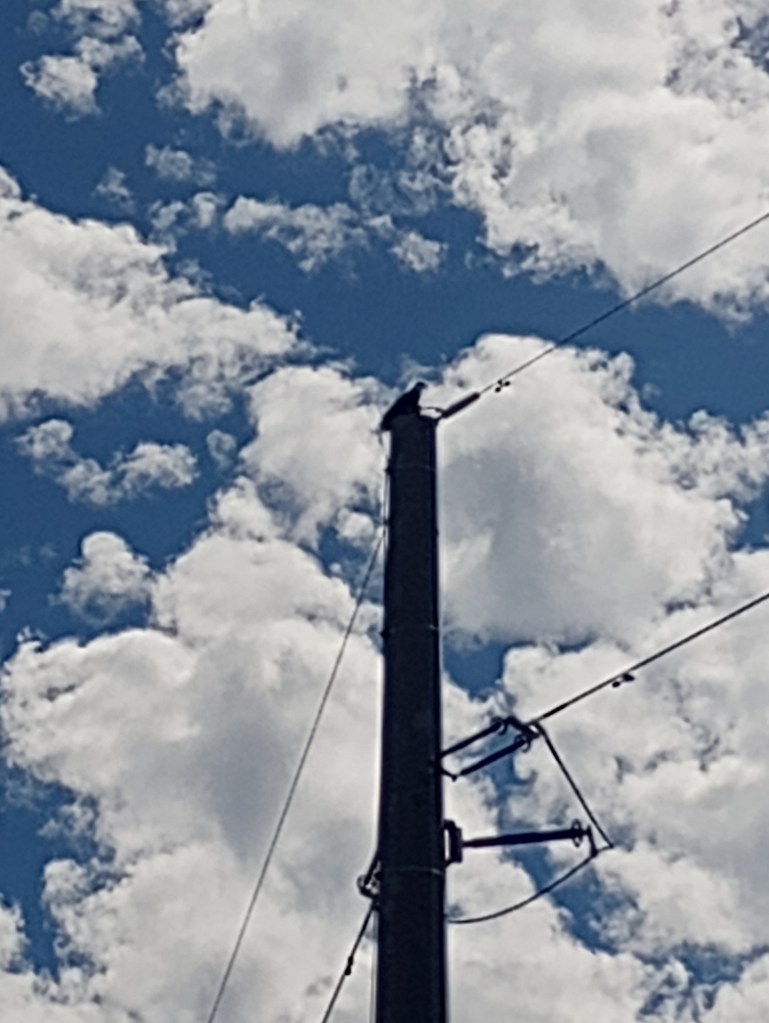
We also had a special visitor this week. It’s the first time I’ve ever seen a Bald Eagle at the farm. When he first flew by, I thought it was one of the Turkey Vultures we see daily. When he got closer, I realized what I was seeing. He was a majestic sight as he flew to perch on the giant utility pole at the south end of the farm.  I tried to get a good picture but honestly, I’m not much of a photographer and I couldn’t get the light right. What you see is what you get unfortunately. I tried later when he was by the river, but he took off before I could capture a good image. I hope he finds us a good space to hunt at Opal’s Farm. We’d love to have him back.

We’d also love to give a shout out to all our volunteers returning after a long winter! The warm days we’ve experienced have brought some our old friends out and more are coming. We hope you can come enjoy Spring planting with us.

I get to see the gorgeous weather outside my office window, but I’m reminded that it’s only March 3rd. North Texas weather has a way of fooling everyone into a false sense of “Spring Fever”. The last frost date is supposed to be March 18th so maybe, just maybe, Spring is setting in…

Bad Weather, Choices, Climate Change, Community, Conservation, Creation, Down On the Farm, Environment, Faith, Food Justice, Gardening, Hope, Neighbors, Non-Profits, Opal's Farm, Plowing, Preparation, Simplicity, Spirituality, Texas, Thoughts From the Porch, Transformation, Unity Unlimited, Inc., Urban Farming, What Can I Do

One Farm at a Time

What a week at Opal’s Farm! We have everything in for fall and winter and have started taking out spring leftovers, rebuilding beds, and solarizing them for weed control in the spring. We finally took out our tomato plants, but not before harvesting about a hundred and fifty pounds of tomatoes – and it’s ten days until Christmas. We love that a hard freeze hasn’t come yet, but we’re also a bit worried as this is another indicator of how strange our weather has become.

The weather is a “frienemy” for farmers – it brings the rain that helps the crops grow or the drought that kills them off. It’s the one thing we can’t control. We may do a rain dance or pray a freeze holds off until the crops come in, but in the end, the weather does what it will.

However, even weather has things it can’t control either – a warming climate changes the weather – leading to warmer average temperatures and more intense weather events. The intensity of our North Texas summer over the last two years is an example. In 2022, the heat came early, and the rain stopped. There was no rain from June 3rd until August 29th. It was much the same this year        with 2023 being the second hottest year on record according to the Texas Tribune and NOAA. Moreover, when it finally did rain, it rained so much and so heavily that Opal’s Farm suffered flash floods both years.

Hardiness Zones – the zones which show the lowest temperature in a zone and determine the growing season – have gradually moved northward. According to Yale Environment 360, hardiness zones were moved northward from 1990 to 2012 and are moving at a rate of just over thirteen miles per year. The heat is headed northward. Fort Worth has shifted from Zone 8b to Zone 8a. What and how much we grow changes as the zones move north.

So, What Do We Do?

Opal’s farms about two-and-a-third acres at present. We are growing into the full five acres granted to us by the Tarrant Regional Water District. We don’t expect to see major changes, the amount of land is negligible in the grand scheme of things. However, there is something we can do that’s consistent with our core values of resilience and regeneration.

First, we can continue to research and try non-native (but non-invasive) varieties of food crops that are both heat tolerant and drought resistant. Our salad mix uses Tokyo Bekana along with other Asian greens. Tokyo Bekana looks and tastes like lettuce (some say even better) but it’s actually related to Chinese cabbage. It fares much better than traditional lettuces that can only be grown in early Spring or late Fall. It can be grown year-round in North Texas.

We use this same practice on other crops as well. We are slowly beginning to turn to south Asian foods like bitter melon, bottle gourds, and yard-long beans. The beans are quite prolific and love the summer heat.

Secondly, we never leave exposed soil. Cover cropping is essential. Always have living roots. We are finishing up cover cropping all all non-food crop beds. We use Austrian Winter Peas and Elbon Rye in the winter time. Legumes like the peas fix nitrogen into the soil and the rye’s root system keep the soil broken up and able to retain water and oxygen better for the soil microbes. We use various mixes that we purchase from Green Cover Seed in the warmer months.

Finally, we sequester carbon in the soil. Our biointensive beds are no-till while the remainder of the farm is minimal till. Dr. Omar Harvey, with the Geosciences Department at Texas Christian University, had students researching carbon sequestration at Opal’s Farm beginning two years ago. The explanation of the methods used is several pages long, so I’ll not bore you with the process, but the results are important. Dr. Harvey’s students were able to quantify the carbon sequestered away on the farm and found it to be 168 metric tons per acre.

Why is that important?

It’s important for two reasons. One, the research confirmed not only the amount but the type of carbon – deep carbon. When the carbon is sequestered deep in the soil it stays there and is less likely to be released into the atmosphere. The carbon sequestered in the upper eight inches of soil is still available for the plants which is a winner for both the climate and us.

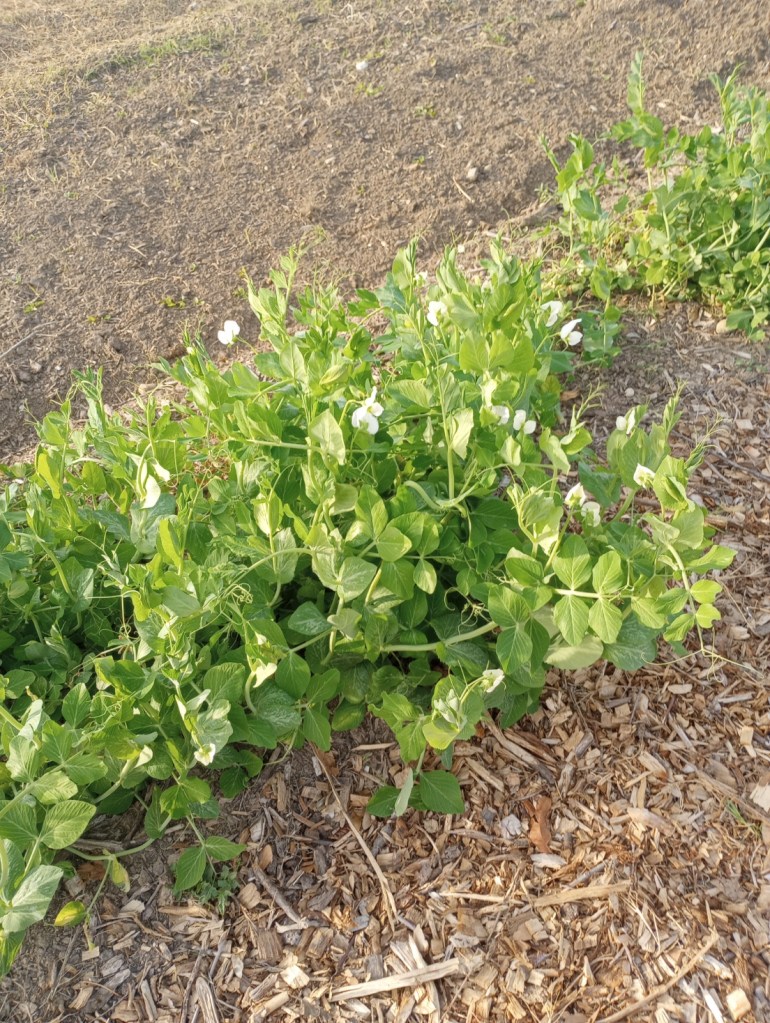
Our Sugar Snap Peas are blooming and will be available shortly!

I have mixed emotions about the second, and most economically beneficial, reason – that being the figure for carbon credits.  At four to five dollars per metric ton Opal’s could generate anywhere from nine to eleven hundred dollars per year in extra revenue. Alternative revenue streams are a must for small farmers.

However, the alternative here seems to be a bit of greenwashing. The idea that a company such as an airline can use carbon credits to meet their climate “goals” while continuing business as usual is somewhat opaque in nature. The bottom line however is that carbon is sequestered and can offset the gases released into the atmosphere. The more regenerative agriculture practiced, the more carbon stored away and an alternative income stream for farmers doing what they do naturally.

Whether for the economic benefits or for the common good, regenerative agriculture can play a large part in facing the climate crisis. Next Spring, we are attending classes to become Carbon Farm Planners. Agriculture can be part of the solution and the more we know the more equipped we are for positive change.

We may not be able to change the weather, but we can do our part to adapt and bring healthy, nutritious produce to Fort Worth and fight climate change in our little piece of Texas. As Ms. Opal often reminds me, “Be a committee of One”. I remember Dad telling me that “everybody complains about the weather, but nobody does anything about it”. Being a Committee of One, one small urban farm, is doing something about it. Join us in the fight. As Mother Teresa said, “If you can’t feed a hundred people then just feed one”…

Awe, Climate Change, Community, Connection, Creation, Down On the Farm, Environment, Opal's Farm, Relationships, Seasons, Simplicity, Spirituality, Summer, Thoughts From the Porch, Trinity River

Egrets, Yep, Egrets

I’m sitting at home alone tonight. That’s not a bad thing. It just is. Margaret has been in the hospital and moved to a rehab hospital for a couple of weeks. I’ve daily trips to the hospital, Opal’s Farm, the hospital, and back home to work. Add to that all the Juneteenth festivities and I can safely say its’ been a crazy busy June!

I’m harvesting between 400 and 600 pounds of tomatoes per week since everything started to come in during May. Sales have been great at the market, but with so many tomatoes I’ve had to start selling them to another non-profit that serves the WIC clinics in Dallas and to the Tarrant Area Food Bank. Delivering to Dallas has not been one of my favorite tasks although I love the folks at Owenwood Farm. I still maintain that the best thing to come out of Dallas is Interstate Thirty West…

Needless to say, this is the first opportunity I’ve had to sit down and write for the last two months. It’s also the first chance I’ve had to catch up with many of the blogs I follow as well and sit down to go through my personal email account. If you haven’t seen a like or comment, please don’t take it personal. I simply haven’t had time to read.

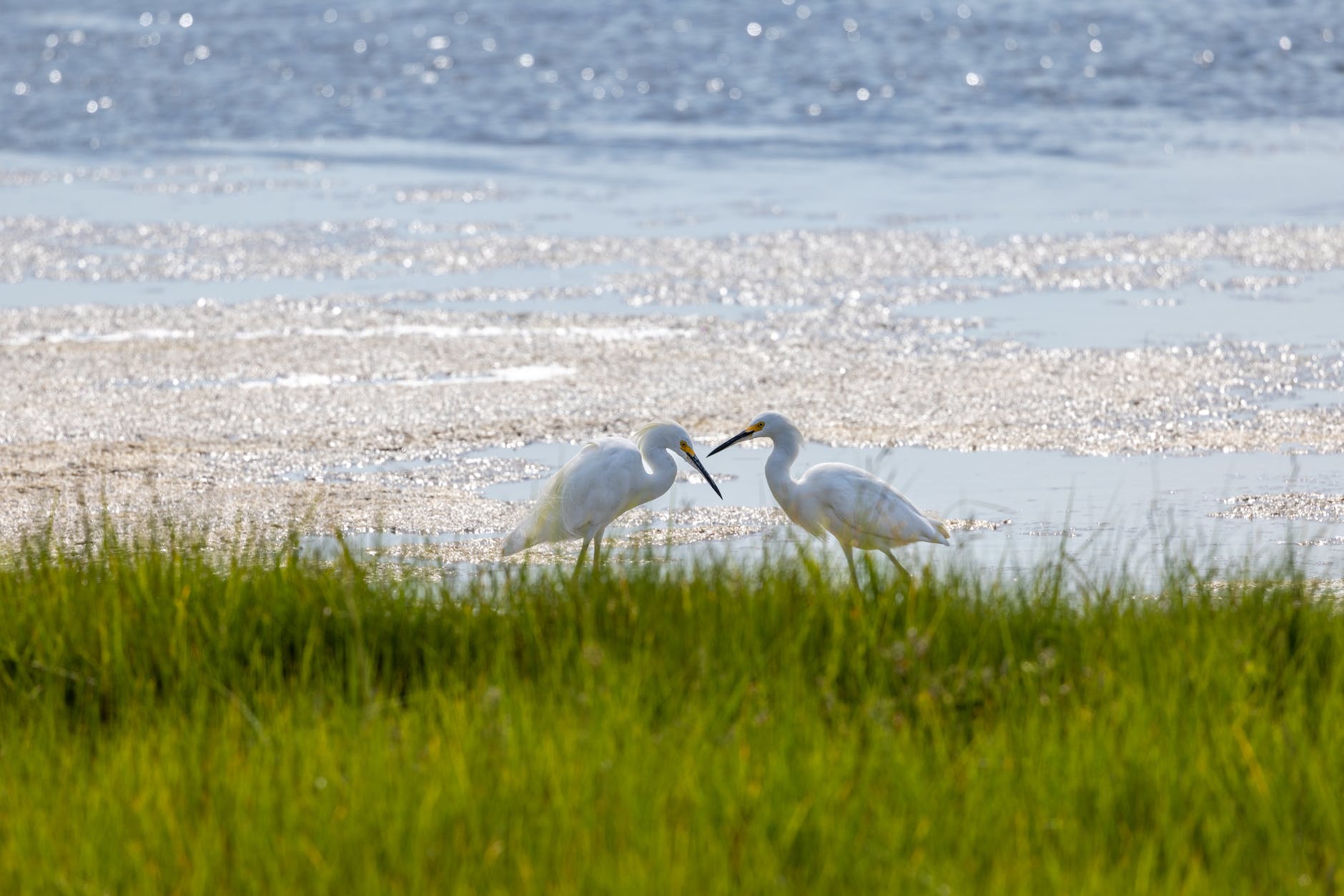
 I’ve said all that so I can now talk about what’s been on my mind the last month – Egrets. Yep, birds. After a couple of months of silence, one would think I have more to say but… Egrets -those beautiful, long-legged white birds related to Herons. We used to call them cowbirds when I was little because of the way they hung around, and on, the cattle to eat insect pests. I see them frequently at the farm. Mostly nesting and wading about searching for food on the far bank of the Trinity River.

Photo by Mohan Nannapaneni on Pexels.com

We even have some state wildlife and research students with a tracker following the birds they’ve tagged. I’m happy to report that they shall have an abundance of birds to tag this year. There was an unusually heavy baby boom this Spring. The farm is often covered in groups of young Egrets walking about and I’ve become acquainted with some of them. At least I think I have…

This probably doesn’t mean anything to anyone else, but since my cataract surgery in May I’ve been able to see better than I have in many years. My vision is so clear now that I’ve been able to see things I’ve never noticed before like Egrets and their personalities. I’m fully aware of the human tendency to anthropomorphize other creatures but I’m convinced they are much like us – at least the young ones anyway.

Juvenile Egrets are smaller in stature as young ones tend to be. Unlike their parents (who by the way both take care of the nesting and young) they aren’t all white. They have a tan section on their head, breast, back feathers. Occasionally they will raise their head feathers to reveal a small, tan mohawk. It fades to white as they grow older. They always hang around in groups of ten to fifteen. They have one young guy who they’ve appointed leader – they seem to follow pretty much everywhere. If he moves north, they all move north, if he takes off, they all take off in file behind him – that is, all except for one.

I love this little guy – I imagine him to be a bird version of me. He’s always the last one to fly or walk away when I come down the road or walk up to the pumphouse. I can relate. I was usually the one picked last or left behind. The others sense danger approaching and tend to take off as soon as I get close, but this little guy hangs around. He’s allowed me to get closer each day. Each day he grows more curious about this big, flightless biped that talks to him as if we share the same language. His head tilts one way and then the other. He’s even ventured a couple of steps toward me if I stand still long enough. I’m sure passers-by would find me a tad insane standing in a field talking to a bird. I’m okay with that. The young fellow makes for good company on a hot day.

Over the last week the groups of young birds have gotten smaller and less frequent. It appears that most have moved on to do what it is that Egrets do. I’d move on too with the triple-digit heat we’ve had of late – at least somewhere with some shade. There’s been some hangers-on. I’m sure they live with mom and dad. Most of the remaining young birds are professional students of some kind – they never seem to graduate and move out on their own. That’s been my experience anyway…

I wish them all well as they move on to adult things. I’ll miss my companions but like everything else in life, there are seasons for everything and everyone. The farm is a great teacher about the cycle of life all flora and fauna, and people, go through. It’s also been a sage, teaching me how interconnected the world is – how interdependent we are. I learn daily the need for responsible stewardship and just how awesome God’s creation is.

With that I’m off to the farm to irrigate. We’re fortunate that our water is virtually free. It takes a lot to survive the Texas summer, especially in the days of climate change and warming temperatures. The UV rays of the sun have been exceptionally strong this year – a constant reminder of the new normal and our responsibility to keep it from getting worse. After all, I want to have the Egrets around to talk to for a long time…

Community, Down On the Farm, Environment, Food Justice, Gratitude, Neighbors, Non-Profits, Opal's Farm, Relationships, Service to Others, Social Justice, Spirituality, Unity Unlimited, Inc., Urban Farming, Volunteers

Good Morning and Happy Martin Luther King, Jr. weekend

Good Morning and Happy Martin Luther King, Jr. weekend from Opal’s Farm. It’s been a great week and we’re taking a deserved day off today. Amber has been hard at work preparing our tomato beds and planting some of the blocks already. The weather has been so up and down that the plants might make an early Spring market!

I’ve been madly preparing the beds for our TCU/SSARE research project. Dr. Omar Harvey, the professor in charge of our grant, has done so much to help us find solid numbers to determine best practices and help us direct our resources in a strategic manner.

We’ve also had some great volunteers over the last couple of weeks. The National Charity League, the Young Men’s Service League, and the Fort Worth BaHa’I Faith Center did an outstanding job building beds this past Saturday.

We’d also like to thank Shelly Young with The Hills Church. Ms. Opal and I were on a panel yesterday talking about food insecurity and what steps each of us can take to address it in our community. Shelly did a great job putting this all together and we’d love to thank the Unity Builders ministry at The Hills for having us.