Activism, Anxiety, Bad Weather, Beatitudes, Belief, Common Sense, Communication, Community, Consequences, Emotional Health, Environment, Freedom, God's Economics, Goodness, Grace, Grandchildren, Gratitude, Hope, Listening, Marginalized, Marriage, Miracles, Neighbors, Peace, Service to Others, Spirituality, Stories, Thoughts From the Porch, Transformation, Trust, What Can I Do

The clock is Ticking Again

It was sometime during the early years of the Reagan Administration. I can’t remember the date exactly, but I’ve never forgotten the events that night. It was clear and despite the city lights, the stars twinkled brightly on the late winter’s night. I had taken a moment to sit on our big front porch to take in the beauty of the evening before going to bed. I smoked my last cigarette of the day and shut off the lights as I walked through the living room, the kitchen, and down the back stairs to the warmth of our small bedroom in the basement.

Our house was an old farmhouse built in 1890 and sat on two large city lots. It was built long before the area known as Washington Park grew up around it and had much different architecture than the Craftsmen and Victorian homes that came in the early 1900s. It was small – only 950 square feet – and finished in stucco with a flat roof. It even had the old concrete path to where the outhouse would’ve been in its early years. The basement had been finished with two small bedrooms my first wife and I shared next to our boy’s bedroom. It always felt so cozy on a long winter’s night, and I rarely had insomnia issues after sliding into the inviting warmth of the covers and my wife’s arms. It wasn’t much but it was our piece of paradise in the middle of Denver’s urban sprawl.

I’m not sure of the exact time it happened but it was in the early morning hours when sleep is so deep that even one’s dreams are on hold. It was the kind of sleep that we all long for: peaceful and restful. It was also the deep sleep that made it virtually impossible to awaken with a clear mind – the mind remained in that state long after the body was jolted awake. That’s when it happened.

The long, loud scream of the warning sirens blew in the basement window; waning and ebbing as the siren made its circular motion. My wife and I sat up in bed. “What in the hell?”, I demanded as we looked at one another trying to figure out what was up.

 I had grown up with warning sirens in Texas, but there we called them tornado sirens. They were tested monthly so if they ever went off other than 1:00 PM on the first Wednesday of the month it meant you needed to head for a place in your home away from windows and doors and hold on. A tornado was nearby and may hit you soon. North Texas marked the southern end of tornado alley. Growing up in Fort Worth meant having a solemn respect for tornado warnings.

The warning sirens were also called Civil Defense sirens. You see, I grew up during the Cold War between the Soviet Union Eastern Bloc and the West. Both sides had a first-strike capability with the ever-growing stockpile of nuclear weapons. The sirens warned us of an imminent attach by the godless communists. We were supposed to file into the basements of buildings marked as Civil Defense shelters if we were downtown working or shopping (this was BM – Before Malls). If we were elsewhere, such as school, we were supposed to “duck and cover” as if our trusty school desks were to help us survive a nuclear blast. I still remember Tommy Turtle and the black-and-white instructional films (this was BV – before video) that told us how to duck low to the ground, cover our heads, and look away from the blast in case of nuclear attack. It mattered little that we were to be vaporized or brutally burned when the bomb went off. The ostrich approach was probably the best way to go…

Unfortunately, this wasn’t North Texas but Denver, Colorado. In the all the years of junior and senior high school and college I had never heard a warning siren. Nor had I ever seen a tornado in Denver, especially in the winter. They just didn’t happen then (climate change changed that scenario years later). Even if they did, the city wouldn’t be testing the sirens at three o’clock in the morning, so something was going on. I reached over to our bedside alarm clock radio and tuned in to see if there was any news about what was happening. There wasn’t. Was this it? Was this the bomb?

The Cold War had a renewed tension after Reagan was elected President. Saber rattling had become the norm and tensions between East and West were at the highest point since the Cuban Missile Crisis in October of 1963. The nuclear arms race was in full swing. I had proudly been arrested for civil disobedience at the Rocky Flats Nuclear Weapons facility numerous times (once with Father Berrigan!). Nuclear disarmament and peace were the subjects of many a demonstration, however small those might be. Most folks were content to live in fear if it didn’t interfere with making a living and going about normal daily life. The warning sirens made everything suddenly real.

Maybe this was it. Denver would be a prime target in any attack scenario. It boasted the largest Federal center of anywhere outside of Washington, D.C. and was surrounded by Rocky Mountain Nuclear Arsenal, an Air Force Base, and several other military facilities. The likelihood that this would be our last few moments was real. My mind raced with memories of a recent movie sensation, “The Day After”.

Finally, the sirens stopped. My wife, though jolted awake by the sudden emergency, drifted back off to sleep. My boys never woke up through the whole affair. All things slowly returned to normal though I never quite made it back to sleep that night. It had all been too unsettling. The morning news carried a story about the event. It seems somehow water had gotten in a control room and shorted out the wiring, causing the alarms to go off. We were never in danger, only inconvenienced. The event was soon forgotten, and life went about as usual.

Several years later, the Berlin Wall came down, the Soviet Union fell apart and became the Russian Federation, and the Cold War was declared over. Anti-nuke demonstrations faded and the news media found plenty of other things to instill more fear and create more demonstrations over. There were new countries joining the nuclear weapon family. Although they had agendas contrary to the West there has not been the intensity of coverage, nor the fearfulness found in the Cold War years.

2024 is an election year. Many on both sides of the political spectrum say it’s the most important election in America history. I’ve lived long enough to have voted in several “most important” elections. This year really is different though, and for a myriad of reasons. I’ve heard all the arguments but the one that’s been missing is the threat of nuclear catastrophe that is now at its highest point since the 1980s. There may no longer be a Soviet Union but the Cold War between East and West has restarted and could become a “hot” war through miscalculation, misunderstanding, and miscommunication.

Authoritarian rulers like Putin have referred to the nuclear option several times over the last two years in his quest to restore Russian Empire. North Korea improves and expands its nuclear program while other international actors seek to be come nuclear powers. More and more uncertainties enter the equation.

I don’t like fear tactics and that’s not what I hope comes from this story. I hope that this is a subject to be taken seriously when considering election choices in the coming year. Whoever is elected will have the final say over whether we live together or die together. It’s important to consider deeply and prayerfully who we give that power to.

Evaluate real character and integrity. Choose those who demonstrate empathy and compassion for the common good rather than those whose decisions are made for themselves. Who holds up and lives out the values we strive for? Making America great again should be making America what it professes to believe in, and not some idea of selfish, power seekers only seek to make others do their will. Choose wisely. You lives may depend on it…

***I also recommend:

Turning Point: The Bomb and the Cold War available on Netflix
Bad Weather, Choices, Climate Change, Community, Conservation, Creation, Down On the Farm, Environment, Faith, Food Justice, Gardening, Hope, Neighbors, Non-Profits, Opal's Farm, Plowing, Preparation, Simplicity, Spirituality, Texas, Thoughts From the Porch, Transformation, Unity Unlimited, Inc., Urban Farming, What Can I Do

One Farm at a Time

What a week at Opal’s Farm! We have everything in for fall and winter and have started taking out spring leftovers, rebuilding beds, and solarizing them for weed control in the spring. We finally took out our tomato plants, but not before harvesting about a hundred and fifty pounds of tomatoes – and it’s ten days until Christmas. We love that a hard freeze hasn’t come yet, but we’re also a bit worried as this is another indicator of how strange our weather has become.

The weather is a “frienemy” for farmers – it brings the rain that helps the crops grow or the drought that kills them off. It’s the one thing we can’t control. We may do a rain dance or pray a freeze holds off until the crops come in, but in the end, the weather does what it will.

However, even weather has things it can’t control either – a warming climate changes the weather – leading to warmer average temperatures and more intense weather events. The intensity of our North Texas summer over the last two years is an example. In 2022, the heat came early, and the rain stopped. There was no rain from June 3rd until August 29th. It was much the same this year        with 2023 being the second hottest year on record according to the Texas Tribune and NOAA. Moreover, when it finally did rain, it rained so much and so heavily that Opal’s Farm suffered flash floods both years.

Hardiness Zones – the zones which show the lowest temperature in a zone and determine the growing season – have gradually moved northward. According to Yale Environment 360, hardiness zones were moved northward from 1990 to 2012 and are moving at a rate of just over thirteen miles per year. The heat is headed northward. Fort Worth has shifted from Zone 8b to Zone 8a. What and how much we grow changes as the zones move north.

So, What Do We Do?

Opal’s farms about two-and-a-third acres at present. We are growing into the full five acres granted to us by the Tarrant Regional Water District. We don’t expect to see major changes, the amount of land is negligible in the grand scheme of things. However, there is something we can do that’s consistent with our core values of resilience and regeneration.

First, we can continue to research and try non-native (but non-invasive) varieties of food crops that are both heat tolerant and drought resistant. Our salad mix uses Tokyo Bekana along with other Asian greens. Tokyo Bekana looks and tastes like lettuce (some say even better) but it’s actually related to Chinese cabbage. It fares much better than traditional lettuces that can only be grown in early Spring or late Fall. It can be grown year-round in North Texas.

We use this same practice on other crops as well. We are slowly beginning to turn to south Asian foods like bitter melon, bottle gourds, and yard-long beans. The beans are quite prolific and love the summer heat.

Secondly, we never leave exposed soil. Cover cropping is essential. Always have living roots. We are finishing up cover cropping all all non-food crop beds. We use Austrian Winter Peas and Elbon Rye in the winter time. Legumes like the peas fix nitrogen into the soil and the rye’s root system keep the soil broken up and able to retain water and oxygen better for the soil microbes. We use various mixes that we purchase from Green Cover Seed in the warmer months.

Finally, we sequester carbon in the soil. Our biointensive beds are no-till while the remainder of the farm is minimal till. Dr. Omar Harvey, with the Geosciences Department at Texas Christian University, had students researching carbon sequestration at Opal’s Farm beginning two years ago. The explanation of the methods used is several pages long, so I’ll not bore you with the process, but the results are important. Dr. Harvey’s students were able to quantify the carbon sequestered away on the farm and found it to be 168 metric tons per acre.

Why is that important?

It’s important for two reasons. One, the research confirmed not only the amount but the type of carbon – deep carbon. When the carbon is sequestered deep in the soil it stays there and is less likely to be released into the atmosphere. The carbon sequestered in the upper eight inches of soil is still available for the plants which is a winner for both the climate and us.

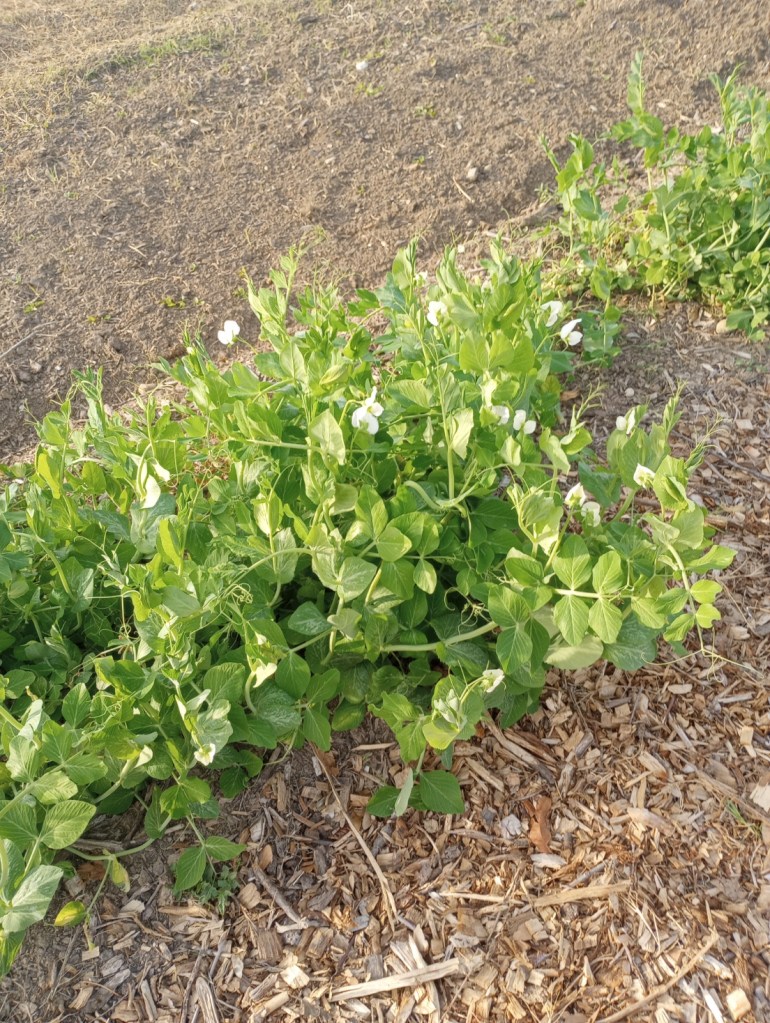
Our Sugar Snap Peas are blooming and will be available shortly!

I have mixed emotions about the second, and most economically beneficial, reason – that being the figure for carbon credits.  At four to five dollars per metric ton Opal’s could generate anywhere from nine to eleven hundred dollars per year in extra revenue. Alternative revenue streams are a must for small farmers.

However, the alternative here seems to be a bit of greenwashing. The idea that a company such as an airline can use carbon credits to meet their climate “goals” while continuing business as usual is somewhat opaque in nature. The bottom line however is that carbon is sequestered and can offset the gases released into the atmosphere. The more regenerative agriculture practiced, the more carbon stored away and an alternative income stream for farmers doing what they do naturally.

Whether for the economic benefits or for the common good, regenerative agriculture can play a large part in facing the climate crisis. Next Spring, we are attending classes to become Carbon Farm Planners. Agriculture can be part of the solution and the more we know the more equipped we are for positive change.

We may not be able to change the weather, but we can do our part to adapt and bring healthy, nutritious produce to Fort Worth and fight climate change in our little piece of Texas. As Ms. Opal often reminds me, “Be a committee of One”. I remember Dad telling me that “everybody complains about the weather, but nobody does anything about it”. Being a Committee of One, one small urban farm, is doing something about it. Join us in the fight. As Mother Teresa said, “If you can’t feed a hundred people then just feed one”…

Activism, Airplanes, Communication, Community, Down On the Farm, Events, Farmers Markets, Food Deserts, Food Equality, Food Insecurity, Food Justice, Food Waste, Gardening, Health, Landfills, Marginalized, Neighbors, Non-Profits, Nutrition, Opal's Farm, Public Policy, Regeneration, Relationships, Service Organizations, Service to Others, Social Justice, Thoughts From the Porch, Transformation, Unity Unlimited, Inc., Urban Farming, Volunteers, What Can I Do

Urban Ag and You

A couple of weeks ago, my Monday morning meeting ended early, so I sat at the Philadelphia Airport waiting for four hours for my plane home. I’m not good at sitting but I have little choice over the next seven hours or so. It was nice to catch up on a few things, but I prefer the open fields and growing plants to rows of chairs and sitting in an airborne cigar…

I was here to attend the Black Urban Growers National Conference, or BUGs as they call it. Philly has a strong urban agriculture movement with many farms and community gardens dotting the city. They even have a Director of Urban Agriculture as part of the Parks and Recreation Department for the city government. It was great to make some connections with folks here. Hopefully, we can begin to move city government in Tarrant County, Fort Worth, and the surrounding cities to move in a positive direction for urban ag and community gardens. Jesse Herrera, Linda Fulmer, and Grow SE have moved us a long way but there’s so much to do to make Fort Worth favorable to urban agriculture and eliminating food insecurity.

Six cities currently have Urban Agriculture leaders in city government – Philadelphia, Atlanta (whose director also spoke at BUGs and was the first city in the nation to appoint a director), New York City, Detroit, Austin, Boston, Seattle, and Portland. These are also areas where there are strong food policy councils. However, each agreed that community member advocacy was essential to the formation of urban ag programs. These positions work through the mayor’s office, sustainability offices, parks, or planning departments. While Tarrant County has a food policy council, they need support from our community to have influence over policy decisions at the county or municipal level. We need is citizen support to drive progress forward for urban agriculture.

Why Urban Agriculture?

There are three primary reasons for establishing urban agriculture policies in Tarrant County municipalities – the number of food deserts, public health, and supply chain issues.

  • In 2020, NBC5 news reported that Tarrant County was one of the Top Ten counties in the country for food insecurity ( https://www.nbcdfw.com/news/local/fighting-hunger-urban-farming-in-fort-worths-food-desert/2292808/ ). Moreover, the USDA identified over forty areas in Tarrant County that qualify as “food deserts” – areas that are over a mile away from a grocery store. Food “desert’ is something of a misnomer. Food apartheid represented the concept far better as most of these areas are in lower income areas or communities of color. Urban agriculture and farmstands or farmers markets can make a significant impact on accessibility to fresh food in these neighborhoods. It can be costly under present urban farm and garden ordinances to build infrastructure needed for urban ag.
  • Public health is drastically affected by lack of access to healthy food. The zip code 76102 is the unhealthiest zip code in the state of Texas. Life expectancy is 66.7 years old – twelve years below the national average ( https://www.star-telegram.com/news/local/fort-worth/article244137362.html ). While lack of access to healthy food is not the only reason for poor health outcomes, it is certainly the root of the problem. In the Southside, Morningside, and Hillside communities there are only a dozen convenience stores that only sell snacks and highly processed canned foods lacking nutritional value. Locally grown, nutrient-dense fresh vegetables help the body’s own defenses against heart disease, high blood pressure, diabetes, cancers, and obesity that lead to shorter lifespans and higher medical costs. Costs borne by all of us.
  • The COVID pandemic revealed serious flaws in our present food systems. Who doesn’t remember the higher food prices and empty store shelves of many items we use every day. Breaks in the supply chain have serious consequences for the retail grocery stores. Our food travels an average of 1500 miles from the farm to your table. To reach your grocer, it has to be picked before it’s ripe, sprayed with preservatives, shipped by rail or by truck to a distribution center and delivered to each individual store. It lacks the flavor and nutrient density so many of us crave. Locally grown produce is a solution to this problem.

Moreover, local urban farmers develop a sense of community around the local farmer’s market or farmstand. The community gets to know their local farmers and their neighbors better. “Screen time”

Is often replaced by real conversations. A sense of neighborhood pride replaces some of the isolation that often plagues our senior citizens. Opal’s Farm has been a member of the Cowtown Farmers Market for five years now. We’ve developed a loyal customer base and we’ve come to know our customers as friends. We’ve been an active part of our community, and many folks have volunteered at the farm as well as become our customers.

What Can I Do?

Access to land is often easier than we think. Learn about urban agriculture in your neighborhood. Are there any community gardens? If not, is there a place for one? Are there vacant lots, churches, or schools that might be good sites for a small urban farm or community garden. Are there local learning gardens to offer growing tips and support to neighborhoods? Do your local schools have school gardens that you might volunteer with? Is there a place to gather to bring local farmers and gardeners together to offer their goods and services to the neighborhood?

Find out what the urban agriculture and community garden ordinances (or if you even have them) are in your municipality. Is zoning an issue? Neighborhood associations are often a great place to start if you have one. If not, local code compliance or development departments can provide guidelines.

Here in Fort Worth, urban agriculture ordinances were almost non-existent and what we did have was more of a barrier than a help. A local initiative by County Commissioner Brooks Office called Grow SE brought local non-profits and urban farmers together to address this issue. Grow SE worked diligently to address and change the city ordinances that limit urban ag and have made it much easier to build the infrastructure to make it successful but – we have a long way to go!

Get involved with your local food policy council. Food Policy Councils were first authorized in the 2014 Farm Bill and re-emphasized in the 2018 Farm Bill. If your city does not have one, then start one. Here in Tarrant County, we are fortunate to have a council with working groups in urban ag and food waste (a significant issue as Fort Worth faces having to build the infrastructure for a new landfill). Food policy councils can have a major effect on local food policy and urban agriculture.

Contact your local city council member and make your voice heard. Attend city council meetings and ask your neighbors to do so as well. Talk to your local officials and let them know this is a big issue to deal with. Changing the food system and delivery to your table begins at the local level!

I’m excited to be home and to continue our Fall growing and prepping for next Spring. I’d love to have you come out and start your urban agriculture journey with Opal’s Farm. Come see the possibilities for positive change here in Fort Worth and Tarrant County. Bring your kids. Kids (and unfortunately many adults) have no idea where their food comes from. Once they learn how good food is grown and distributed to our communities, they get excited to be a part of the process. The fresh air, vitamin D, and “playing in the dirt” is great for them (and for you!) Come and see!

Choices, Community, Conservation, Creation, Elders, Environment, Equal Rights, Heroes, History, Hope, Indigenous Peoples, Monday Mornings, Quotes, Regeneration, Social Justice, Spirituality, Thoughts From the Porch, Transformation, What Can I Do

“If we are to heal our ecological wounds, we need to shift from settler views of individual land ownership to Indigenous views of communal land stewardship.” – Liuan Huska, “Rethinking Property Rights”