Activism, Community, Down On the Farm, Education, Emotional Health, Food Equality, Food Insecurity, Food Justice, Gardening, Gratitude, Marginalized, Neighbors, Non-Profits, Opal's Farm, Relationships, Respect, Service Organizations, Service to Others, Thoughts From the Porch, Unity Unlimited, Inc., Urban Farming, Volunteers, What Can I Do

Volunteer for Opal’s Farm: Making a Difference

Volunteering for Opal’s Farm is a noble pursuit, offering the chance to give back to your community, learn new skills, and make meaningful connections. However, to maximize your impact—not just for the organization, but for yourself as well—it’s important to approach volunteering with intention, preparation, and a spirit of collaboration. This comprehensive guide explores the steps and mindset that can help you become an effective, valued volunteer for Opal’s Farm and Unity Unlimited, Inc.

Is Opal’s Right for You?

One of the cornerstones of effective volunteering is choosing the right organization. To do this, reflect on the causes or issues that resonate most deeply with you. Are you passionate about education, healthcare, the arts, social justice, or environmental sustainability? When your personal interests align with Opal’s mission, you are far more likely to remain committed and enthusiastic.

  • Research: Please visit our website http://www.unityunlimited.org/opalsfarm
  • Assess Needs: Consider the type of work Opal’s Farm does and the roles available for volunteers. Some people say that not everyone is cut out for farming. That may be true to some extent -farming is not always easy, especially in North Texas. July and August may not be the best time to volunteer because of the heat: although we have a wonderful group from KPMG that comes on August 6th (their Founder’s Day) and works all day in the summer sun (Please know how much you’re appreciated KPMG!).

If the field isn’t the place for you there’s other opportunities in both administration and marketing.

  • Contact and Inquire: Don’t hesitate to reach out to our Volunteer Coordinator, Stacey Harwood. Stacey can be reached by phone or text at 817.819.7770 and by email at opalsfarm@unityunlimited.org. Stacey can fill you in on the volunteer days, hours, and special events such as our Volunteer Appreciation Cookout every 4th of July!

Setting Realistic Expectations

Volunteering is rewarding, but it can also be challenging. To avoid burnout or disappointment, set clear, realistic expectations for your involvement.

  • Time Commitment: Some of our regular volunteers come every week, especially on harvest days, some have monthly commitments, while others simply come when they have time. We don’t require a commitment as much as we would just like you to come out and find the joy of “dirt therapy” and serving the community.
  • Skills and Contributions: Reflect on what you bring to the table. Are you offering professional expertise (such as accounting, graphic design, or event planning) or general support (like distributing food or mentoring youth)?
  • Learning and Growth: Be open to learning but also communicate if there are skills or experiences you hope to gain through volunteering. We love to help volunteers expand their farming / gardening skills. Our hope is that our volunteers carry the skills they’ve learned at the farm to their own homes and neighborhoods.
Building Relationships and Collaborating

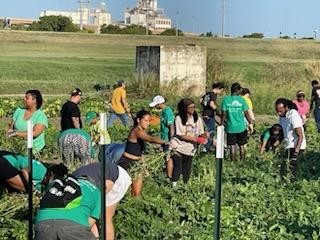
Effective volunteering is about more than just the work you do—it’s about the relationships you build. Cultivate strong, respectful relationships with staff, fellow volunteers, and the people or communities you serve. The farm doesn’t just grow and distribute healthy, fresh produce. We strive for a community of service and fellowship, bringing all our neighbors together in unity.

  • Be Professional and Respectful: Treat everyone with kindness and consideration, regardless of position or background.
  • Communicate Clearly: If issues arise or you are unable to fulfill a commitment, let Stacey know as soon as possible. Stacey will communicate when must shift or cancel volunteer times due to special events and staffing issues as well.
  • Embrace Teamwork: Opal’s loves collaboration. Is there something we can do better or are there positive partnerships we may be missing out on.

Staying Engaged and Motivated

Sustaining motivation in a volunteer role may require effort, especially over the long term. Here are some strategies:

  • Connect with the Mission: Regularly remind yourself why you chose to volunteer. Attend organizational events, read newsletters, and celebrate successes.
  • Seek Feedback: Constructive feedback helps you improve and demonstrates that your contributions are valued.
  • Reflect on Impact: Take time to notice and appreciate the difference your efforts make, whether it’s a smile, a thank-you note, or a tangible change in your community.

Demonstrating Flexibility and Adaptability

Non-profit work can be unpredictable. Program needs may shift, funding may fluctuate, or emergencies may arise. The most effective volunteers are those who can adapt gracefully to change.

  • Be Open-Minded: Embrace new tasks or responsibilities as they come up. Versatility is a valuable asset.
  • Problem-Solve Creatively: When challenges arise, seek solutions proactively rather than focusing solely on obstacles.
  • Support Others: Offer help to fellow volunteers or staff who may be struggling, and ask for assistance when you need it.

Understanding Boundaries and Self-Care

Helping others is rewarding, but it should not come at the expense of your own well-being. Recognize your boundaries and practice self-care.

  • Know Your Limits: Don’t overextend yourself. We don’t want anyone to have issues with the weather – especially the Texas summers. Stay hydrated and take breaks when you need to. We want everyone to have a great day at the farm. Let us know if problems arise or another task is more oriented to your skills and abilities.

Measuring and Celebrating Your Impact

Regularly assessing your contributions can be highly motivating and ensures that your efforts are aligned with the organization’s goals.

  • Track Outcomes: Ask how your work fits into these larger outcomes.
  • Share Stories: Celebrate milestones—both big and small. Sharing stories of impact can inspire others and reaffirm your commitment.
  • Solicit Recognition: Don’t be shy about sharing your accomplishments with your supervisor or team, especially if you believe it may help the farm or enhance your future volunteer roles.

Continuing Your Volunteer Journey

As you grow in your role, you may discover new interests or skills. Consider taking on additional responsibilities, mentoring new volunteers, or even serving on a board or committee. Ongoing learning and engagement deepen your impact and foster a richer, more fulfilling experience.

Remember, the most effective volunteers aren’t just those who give the most time—they are the ones who give with heart, purpose, and adaptability. By approaching your volunteer work thoughtfully and proactively, you help create stronger, more resilient organizations and, ultimately, a more compassionate world.

Conclusion

Volunteering at Opal’s Farm is a powerful way to contribute to the greater good and enrich your own life. Opal’s volunteers often tell us how much it affects their physical, mental, and spiritual heath in amazingly positive ways. Whether you are volunteering for the first time or are a seasoned community member, your efforts truly matter. The journey of service is a continuous learning process, filled with opportunities for growth, connection, and real change.
Acceptance, Aging, Belief, Christianity, Community, Connection, Consequences, Down On the Farm, Emotional Health, Environment, Faith, Farmers Markets, Food Deserts, Food Equality, Food Insecurity, Food Justice, Gardening, Generations, God's Economics, Grace, Gratitude, Health, Neighbors, Non-Profits, Persistence, Practice, Service to Others, Simplicity, Social Justice, Spirituality, Thoughts From the Porch, Unity Unlimited, Inc., Urban Farming, Volunteers

Bumps in the Road

It’s been an interesting Spring at Opal’s Farm. I’ve been busier than a one-armed paper hanger as my uncle used to say.

For one thing, I received a letter from the Social Security Administration this week. It said I’ve reached the age where I am now considered retired. I have to laugh when I realize Ms. Opal “retired” the year after I graduated high school. If that’s what retirement looks like, then I’m grateful for it. It means I can focus on loving and serving others full-time just like her. At ninety-eight, she reminds me that she just keeps running forward so the good Lord can’t catch her to take her home. Besides, there’s so much more to do. Especially now…

The other thing that happened is a little less humorous. My left knee blew out on me last Wednesday as I was putting tools away for the day. That wouldn’t have been unusual as it tends to happen now that I’m old enough to suffer the consequences of an overactive youth. This time was different. It didn’t stop hurting the next day and the pain was in a different part of my knee and increasing rather than decreasing. I decided Friday afternoon I had better go to the ER and have it checked out.

Fortunately, nothing is broken, but since X-rays don’t show cartilage or ligament damage, I’ll be seeing the orthopedic surgeon this week. Moreover, the ER doc said I had a lot of arthritis, and the next step was a knee replacement. I feared that might be the case. I guess I’ll find out this week. It’s a pretty big bump in the road.

He also told me to take steroids and pain medicine, wear the immobilizer, use the crutches, and stay off my knee for a few days. I can take medication. I can use the immobilizer most of the time. I can even use the crutches sometimes. However, for a farmer four days of bed rest isn’t possible this time of year. My doctor and I have an agreement – I don’t tell him how to practice medicine and he doesn’t tell me how to farm.

I went market and “Taste the C.U.R.E” class yesterday. If people ask me what happened I simply tell the truth – I got older!

I guess there’s more news to come and a lot of decisions to be made. I’ll just hobble along and work on the farm until then. I’m going to be much slower so I’m extra grateful for the volunteers we have right now. Spring is the busiest time of year for farmers and Opal’s is no exception. The farm still needs daily care. I’ll be there as long as the good Lord lets me, but we need extra volunteer help right now. Please think of us if you have a little spare time and want to get you’re hands dirty. After all, dirt don’t hurt.

Choices, Community, Down On the Farm, Education, Faith, Farmers Markets, Food Insecurity, Food Justice, Gardening, Health, Neighbors, Non-Profits, Opal's Farm, Public Policy, Quotes, Service Organizations, Service to Others, Social Justice, Spirituality, Spring, Unity Unlimited, Inc., Urban Farming, What Can I Do

Buy Local – Now More Than Ever

I apologize for not posting regularly over the last couple of months. Opal’s Farm is going through several changes right now – most notably in staff. Recent cuts to USDA funding and January resignations have left the farm work to myself, my Volunteer Coordinator, Stacey Harwood, and a small number of volunteers. We are still on track for all our Spring planting and looking forward to a great harvest.

The bipolar Texas weather hasn’t helped even though it has kept things interesting. The freezing weather one week and in the eighties the next caused some of the winter crops to bolt. That was followed by seventy-two hours of sub-freezing weather and the plants took it much harder than the first round of freezes. The good news is that it looks like we’ve had our last hard freeze. Tomatoes are coming on the 17th and the rest of Spring planting is underway. We’re looking forward to bringing the Spring harvest to market!

I would also like to take a moment to talk about the many non-profit organizations working in agriculture and food systems. They have endured financial hardships due to the recent changes at the USDA. Some programs that aid farmers and farm organizations have been shut down indefinitely as funding has been frozen or eliminated entirely. Economic uncertainty faces us all.

The average age of a farmer in Texas is sixty-two. Part of our mission is to incubate new farms and train new farmers. American Farmland Trust has a slogan that says it all: “No farms. No food”. Please consider the importance of our local farmers, the healthy fresh produce they bring to our community, and the education they bring to the next generation of farmers, both urban and rural.

I’ve spent the last two months with our “Taste the C.U.R.E.” students and seen the interest and willingness to be part of the grower’s community. Not only do they want healthy food for themselves, but they want to feed their neighbors. Urban agriculture is a growing alternative to high food prices and the ultra-processed food found at the big grocery stores. We hope the movement continues to grow and that you can become a part of it.

You can support your local farmers and food system through financial donations, calling your elected representatives, volunteering at a local farm, or simply shopping local at your local farmers market or farm stand. Not only is local produce healthier, it ensures that food access is available to your community. Food access is not a “DEI” issue. It should be available to all of us. Healthy food is a basic human right. Your local farmers are working long hours to feed us all. Buy local and support your local farm!

Bad Weather, Choices, Climate Change, Community, Conservation, Creation, Down On the Farm, Environment, Faith, Food Justice, Gardening, Hope, Neighbors, Non-Profits, Opal's Farm, Plowing, Preparation, Simplicity, Spirituality, Texas, Thoughts From the Porch, Transformation, Unity Unlimited, Inc., Urban Farming, What Can I Do

One Farm at a Time

What a week at Opal’s Farm! We have everything in for fall and winter and have started taking out spring leftovers, rebuilding beds, and solarizing them for weed control in the spring. We finally took out our tomato plants, but not before harvesting about a hundred and fifty pounds of tomatoes – and it’s ten days until Christmas. We love that a hard freeze hasn’t come yet, but we’re also a bit worried as this is another indicator of how strange our weather has become.

The weather is a “frienemy” for farmers – it brings the rain that helps the crops grow or the drought that kills them off. It’s the one thing we can’t control. We may do a rain dance or pray a freeze holds off until the crops come in, but in the end, the weather does what it will.

However, even weather has things it can’t control either – a warming climate changes the weather – leading to warmer average temperatures and more intense weather events. The intensity of our North Texas summer over the last two years is an example. In 2022, the heat came early, and the rain stopped. There was no rain from June 3rd until August 29th. It was much the same this year        with 2023 being the second hottest year on record according to the Texas Tribune and NOAA. Moreover, when it finally did rain, it rained so much and so heavily that Opal’s Farm suffered flash floods both years.

Hardiness Zones – the zones which show the lowest temperature in a zone and determine the growing season – have gradually moved northward. According to Yale Environment 360, hardiness zones were moved northward from 1990 to 2012 and are moving at a rate of just over thirteen miles per year. The heat is headed northward. Fort Worth has shifted from Zone 8b to Zone 8a. What and how much we grow changes as the zones move north.

So, What Do We Do?

Opal’s farms about two-and-a-third acres at present. We are growing into the full five acres granted to us by the Tarrant Regional Water District. We don’t expect to see major changes, the amount of land is negligible in the grand scheme of things. However, there is something we can do that’s consistent with our core values of resilience and regeneration.

First, we can continue to research and try non-native (but non-invasive) varieties of food crops that are both heat tolerant and drought resistant. Our salad mix uses Tokyo Bekana along with other Asian greens. Tokyo Bekana looks and tastes like lettuce (some say even better) but it’s actually related to Chinese cabbage. It fares much better than traditional lettuces that can only be grown in early Spring or late Fall. It can be grown year-round in North Texas.

We use this same practice on other crops as well. We are slowly beginning to turn to south Asian foods like bitter melon, bottle gourds, and yard-long beans. The beans are quite prolific and love the summer heat.

Secondly, we never leave exposed soil. Cover cropping is essential. Always have living roots. We are finishing up cover cropping all all non-food crop beds. We use Austrian Winter Peas and Elbon Rye in the winter time. Legumes like the peas fix nitrogen into the soil and the rye’s root system keep the soil broken up and able to retain water and oxygen better for the soil microbes. We use various mixes that we purchase from Green Cover Seed in the warmer months.

Finally, we sequester carbon in the soil. Our biointensive beds are no-till while the remainder of the farm is minimal till. Dr. Omar Harvey, with the Geosciences Department at Texas Christian University, had students researching carbon sequestration at Opal’s Farm beginning two years ago. The explanation of the methods used is several pages long, so I’ll not bore you with the process, but the results are important. Dr. Harvey’s students were able to quantify the carbon sequestered away on the farm and found it to be 168 metric tons per acre.

Why is that important?

It’s important for two reasons. One, the research confirmed not only the amount but the type of carbon – deep carbon. When the carbon is sequestered deep in the soil it stays there and is less likely to be released into the atmosphere. The carbon sequestered in the upper eight inches of soil is still available for the plants which is a winner for both the climate and us.

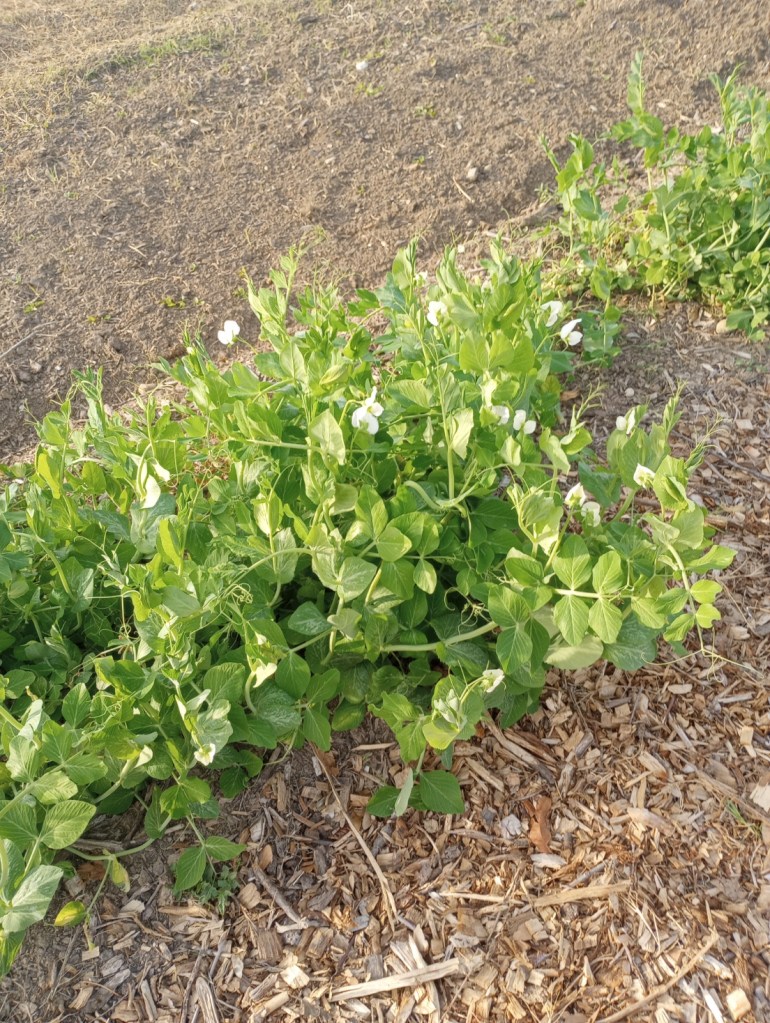
Our Sugar Snap Peas are blooming and will be available shortly!

I have mixed emotions about the second, and most economically beneficial, reason – that being the figure for carbon credits.  At four to five dollars per metric ton Opal’s could generate anywhere from nine to eleven hundred dollars per year in extra revenue. Alternative revenue streams are a must for small farmers.

However, the alternative here seems to be a bit of greenwashing. The idea that a company such as an airline can use carbon credits to meet their climate “goals” while continuing business as usual is somewhat opaque in nature. The bottom line however is that carbon is sequestered and can offset the gases released into the atmosphere. The more regenerative agriculture practiced, the more carbon stored away and an alternative income stream for farmers doing what they do naturally.

Whether for the economic benefits or for the common good, regenerative agriculture can play a large part in facing the climate crisis. Next Spring, we are attending classes to become Carbon Farm Planners. Agriculture can be part of the solution and the more we know the more equipped we are for positive change.

We may not be able to change the weather, but we can do our part to adapt and bring healthy, nutritious produce to Fort Worth and fight climate change in our little piece of Texas. As Ms. Opal often reminds me, “Be a committee of One”. I remember Dad telling me that “everybody complains about the weather, but nobody does anything about it”. Being a Committee of One, one small urban farm, is doing something about it. Join us in the fight. As Mother Teresa said, “If you can’t feed a hundred people then just feed one”…

Activism, Airplanes, Communication, Community, Down On the Farm, Events, Farmers Markets, Food Deserts, Food Equality, Food Insecurity, Food Justice, Food Waste, Gardening, Health, Landfills, Marginalized, Neighbors, Non-Profits, Nutrition, Opal's Farm, Public Policy, Regeneration, Relationships, Service Organizations, Service to Others, Social Justice, Thoughts From the Porch, Transformation, Unity Unlimited, Inc., Urban Farming, Volunteers, What Can I Do

Urban Ag and You

A couple of weeks ago, my Monday morning meeting ended early, so I sat at the Philadelphia Airport waiting for four hours for my plane home. I’m not good at sitting but I have little choice over the next seven hours or so. It was nice to catch up on a few things, but I prefer the open fields and growing plants to rows of chairs and sitting in an airborne cigar…

I was here to attend the Black Urban Growers National Conference, or BUGs as they call it. Philly has a strong urban agriculture movement with many farms and community gardens dotting the city. They even have a Director of Urban Agriculture as part of the Parks and Recreation Department for the city government. It was great to make some connections with folks here. Hopefully, we can begin to move city government in Tarrant County, Fort Worth, and the surrounding cities to move in a positive direction for urban ag and community gardens. Jesse Herrera, Linda Fulmer, and Grow SE have moved us a long way but there’s so much to do to make Fort Worth favorable to urban agriculture and eliminating food insecurity.

Six cities currently have Urban Agriculture leaders in city government – Philadelphia, Atlanta (whose director also spoke at BUGs and was the first city in the nation to appoint a director), New York City, Detroit, Austin, Boston, Seattle, and Portland. These are also areas where there are strong food policy councils. However, each agreed that community member advocacy was essential to the formation of urban ag programs. These positions work through the mayor’s office, sustainability offices, parks, or planning departments. While Tarrant County has a food policy council, they need support from our community to have influence over policy decisions at the county or municipal level. We need is citizen support to drive progress forward for urban agriculture.

Why Urban Agriculture?

There are three primary reasons for establishing urban agriculture policies in Tarrant County municipalities – the number of food deserts, public health, and supply chain issues.

  • In 2020, NBC5 news reported that Tarrant County was one of the Top Ten counties in the country for food insecurity ( https://www.nbcdfw.com/news/local/fighting-hunger-urban-farming-in-fort-worths-food-desert/2292808/ ). Moreover, the USDA identified over forty areas in Tarrant County that qualify as “food deserts” – areas that are over a mile away from a grocery store. Food “desert’ is something of a misnomer. Food apartheid represented the concept far better as most of these areas are in lower income areas or communities of color. Urban agriculture and farmstands or farmers markets can make a significant impact on accessibility to fresh food in these neighborhoods. It can be costly under present urban farm and garden ordinances to build infrastructure needed for urban ag.
  • Public health is drastically affected by lack of access to healthy food. The zip code 76102 is the unhealthiest zip code in the state of Texas. Life expectancy is 66.7 years old – twelve years below the national average ( https://www.star-telegram.com/news/local/fort-worth/article244137362.html ). While lack of access to healthy food is not the only reason for poor health outcomes, it is certainly the root of the problem. In the Southside, Morningside, and Hillside communities there are only a dozen convenience stores that only sell snacks and highly processed canned foods lacking nutritional value. Locally grown, nutrient-dense fresh vegetables help the body’s own defenses against heart disease, high blood pressure, diabetes, cancers, and obesity that lead to shorter lifespans and higher medical costs. Costs borne by all of us.
  • The COVID pandemic revealed serious flaws in our present food systems. Who doesn’t remember the higher food prices and empty store shelves of many items we use every day. Breaks in the supply chain have serious consequences for the retail grocery stores. Our food travels an average of 1500 miles from the farm to your table. To reach your grocer, it has to be picked before it’s ripe, sprayed with preservatives, shipped by rail or by truck to a distribution center and delivered to each individual store. It lacks the flavor and nutrient density so many of us crave. Locally grown produce is a solution to this problem.

Moreover, local urban farmers develop a sense of community around the local farmer’s market or farmstand. The community gets to know their local farmers and their neighbors better. “Screen time”

Is often replaced by real conversations. A sense of neighborhood pride replaces some of the isolation that often plagues our senior citizens. Opal’s Farm has been a member of the Cowtown Farmers Market for five years now. We’ve developed a loyal customer base and we’ve come to know our customers as friends. We’ve been an active part of our community, and many folks have volunteered at the farm as well as become our customers.

What Can I Do?

Access to land is often easier than we think. Learn about urban agriculture in your neighborhood. Are there any community gardens? If not, is there a place for one? Are there vacant lots, churches, or schools that might be good sites for a small urban farm or community garden. Are there local learning gardens to offer growing tips and support to neighborhoods? Do your local schools have school gardens that you might volunteer with? Is there a place to gather to bring local farmers and gardeners together to offer their goods and services to the neighborhood?

Find out what the urban agriculture and community garden ordinances (or if you even have them) are in your municipality. Is zoning an issue? Neighborhood associations are often a great place to start if you have one. If not, local code compliance or development departments can provide guidelines.

Here in Fort Worth, urban agriculture ordinances were almost non-existent and what we did have was more of a barrier than a help. A local initiative by County Commissioner Brooks Office called Grow SE brought local non-profits and urban farmers together to address this issue. Grow SE worked diligently to address and change the city ordinances that limit urban ag and have made it much easier to build the infrastructure to make it successful but – we have a long way to go!

Get involved with your local food policy council. Food Policy Councils were first authorized in the 2014 Farm Bill and re-emphasized in the 2018 Farm Bill. If your city does not have one, then start one. Here in Tarrant County, we are fortunate to have a council with working groups in urban ag and food waste (a significant issue as Fort Worth faces having to build the infrastructure for a new landfill). Food policy councils can have a major effect on local food policy and urban agriculture.

Contact your local city council member and make your voice heard. Attend city council meetings and ask your neighbors to do so as well. Talk to your local officials and let them know this is a big issue to deal with. Changing the food system and delivery to your table begins at the local level!

I’m excited to be home and to continue our Fall growing and prepping for next Spring. I’d love to have you come out and start your urban agriculture journey with Opal’s Farm. Come see the possibilities for positive change here in Fort Worth and Tarrant County. Bring your kids. Kids (and unfortunately many adults) have no idea where their food comes from. Once they learn how good food is grown and distributed to our communities, they get excited to be a part of the process. The fresh air, vitamin D, and “playing in the dirt” is great for them (and for you!) Come and see!